Und dann auf "Zum Home-Bildschirm [+]".

Stöbern
genialokal zum Startbildschirm hinzufügen
Installieren Sie die genialokal App auf Ihrem Startbildschirm für einen schnellen Zugriff und eine komfortable Nutzung.
Installieren Sie die genialokal App auf Ihrem Startbildschirm für einen schnellen Zugriff und eine komfortable Nutzung.


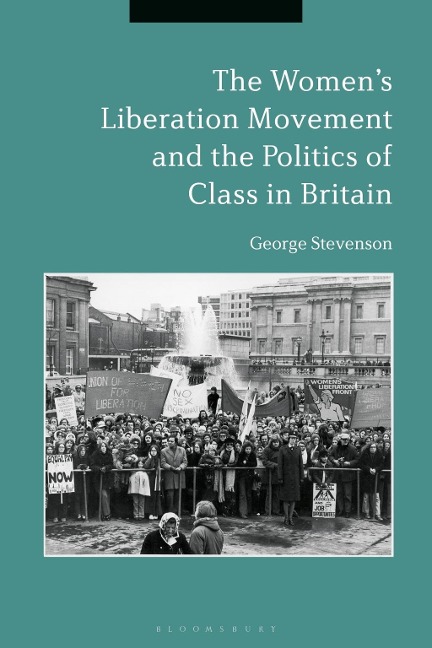
This is the first study of the British Women's Liberation Movement's relationship with class politics. It explores the meaning of class to women's liberationists' identities and activism, both nationally and regionally, using a previously neglected feminist cluster in North East England as a case study.
Stevenson demonstrates that British feminism was shaped fundamentally by its relationship to, synthesis with, and rejection of class politics. Through these processes, feminists recognised how post-war changes in the economy and gender roles were reshaping class and the Women's Liberation Movement attempted to remake class politics in response. However, socio-economic and cultural class differences between the women involved - linked to occupation, education and background - remained intractable obstacles causing tensions within groups, fragmentations into specific class-based groups and the ultimate failure of the movement to coalesce into a coherent coalition with labour politics, despite great levels of solidarity around particular struggles.
Examining regional feminism against the national backdrop, The Women's Liberation Movement and the Politics of Class in Britain provides an engaging exploration of the fruitful but challenging relationship between British feminism and class politics in a capitalist society.
George Stevenson is the Social and Cultural Studies Module Convenor at INTO Newcastle University, UK. He completed a PhD in history at Durham University and was a postdoctoral research fellow at the University of Southampton, UK. He has published articles in the Labour History Review, Women's History Review and History Workshop Online.
List of Illustrations
List of Tables
Introduction
Part I - Production and Reproduction: The Class Politics of Feminism
1. The Women's Liberation Movement and Class Politics
2. Women Workers in the 1970s: Feminists or Part of the Class Struggle?
3. Class Struggle in the Reproductive Sphere
Part II - Individuals in Movement: The Personal, the Political and the Universal
4. Struggling with 'Sisterhood': Class within the WLM
5. Class, Autobiography and Collective Memory in the WLM
Conclusion
Bibliography
Index
Dieses eBook wird im PDF-Format geliefert und ist mit einem Adobe Kopierschutz (DRM) versehen. Sie können dieses eBook mit allen Geräten lesen, die das PDF-Format und den Adobe Kopierschutz (DRM) unterstützen.
Zum Beispiel mit den folgenden Geräten:
• tolino Reader
Laden Sie das eBook direkt über den Reader-Shop auf dem tolino herunter oder übertragen Sie das eBook auf Ihren tolino mit einer kostenlosen Software wie beispielsweise Adobe Digital Editions.
• Sony Reader & andere eBook Reader
Laden Sie das eBook direkt über den Reader-Shop herunter oder übertragen Sie das eBook mit der kostenlosen Software Sony READER FOR PC/Mac oder Adobe Digital Editions auf ein Standard-Lesegeräte mit epub- und Adobe DRM-Unterstützung.
• Tablets & Smartphones
Möchten Sie dieses eBook auf Ihrem Smartphone oder Tablet lesen, finden Sie hier unsere kostenlose Lese-App für iPhone/iPad und Android Smartphone/Tablets.
• PC & Mac
Lesen Sie das eBook direkt nach dem Herunterladen mit einer kostenlosen Lesesoftware, beispielsweise Adobe Digital Editions, Sony READER FOR PC/Mac oder direkt über Ihre eBook-Bibliothek in Ihrem Konto unter „Meine eBooks“ - „online lesen“.
Schalten Sie das eBook mit Ihrer persönlichen Adobe ID auf bis zu sechs Geräten gleichzeitig frei.
Bitte beachten Sie, dass die Kindle-Geräte das Format nicht unterstützen und dieses eBook somit nicht auf Kindle-Geräten lesbar ist.