Und dann auf "Zum Home-Bildschirm [+]".

Stöbern
genialokal zum Startbildschirm hinzufügen
Installieren Sie die genialokal App auf Ihrem Startbildschirm für einen schnellen Zugriff und eine komfortable Nutzung.
Installieren Sie die genialokal App auf Ihrem Startbildschirm für einen schnellen Zugriff und eine komfortable Nutzung.
Ihr gewünschter Artikel ist in 0 Buchhandlungen vorrätig - wählen Sie hier eine Buchhandlung in Ihrer Nähe aus:

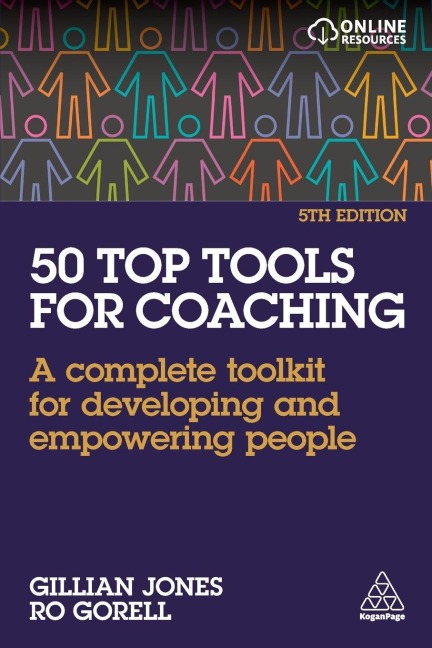

Full of exercises, models, checklists and templates, this book covers how to assess the needs of clients, select the right tool for the circumstance and deliver effective coaching with confidence. A complete resource for both in-house and external coaches, 50 Top Tools for Coaching presents the techniques required for every coaching situation. It focuses on every stage of the coaching process, from setting up and managing the coaching relationship, understanding and resolving conflict, developing client confidence and performance to enhancing leadership styles and coaching during periods of change. Supporting hints and tips are found throughout to maximise the effectiveness and impact of the tools. This fully revised fifth edition of 50 Top Tools for Coaching includes new tools for managers for performance coaching and for building your own coaching practice. It remains an indispensable resource for coaches of all levels of experience and in all remits, as well as managers and leaders looking to improve performance in their organizations through coaching. Online supporting resources include additional tools, interactive templates and videos of the tools in action demonstrated by the authors.
Gillian Jones has travelled widely, first as a teacher and subsequently with the British Council. In 1971, flying from Colombia to Brazil, over endless miles of green forest canopy, she was startled to see a yellow- orange gash in the greenery, a mark which signalled the start of the Amazonian Highway. It was an image that stayed with her and later she would write her screenplay about the destruction of the Amazon rainforest: one which has still to reach the silver screen. She took courses with the Open University on Environmental Ethics and followed up with a novel, Blade of Light, the first of a trilogy of 'stories of suspense with an ecological edge'. Gillian grew up in Kent, surrounded by Kentish cobnut trees. She is a fellow of the Linnean Society of London.
- - Chapter - 00: Introduction;- Section - ONE: Setting up the coaching relationship;- - Chapter - 01: The coaching process- Chapter - 02: Coaching assessment form;- Chapter - 03: Coaching brief and contracting form;- Chapter - 04: Coaching self-assessment questionnaire;- Chapter - 05: Checklist for establishing contract rules;- Chapter - 06: Action plan;- Chapter - 07: Coaching evaluation;- Section - TWO: Foundation tools;- - Chapter - 08: Listening model;- Chapter - 09: Questioning skills and techniques;- Chapter - 10: Feedback techniques and examples;- Chapter - 11: The ORACLE model;- Chapter - 12: Coffee-break coaching;- Chapter - 13: Self-coaching;- Section - THREE: Goal setting;- - Chapter - 14: Creating powerful intentions;- Chapter - 15: Goal setting;- Chapter - 16: Breaking down previous goals;- Chapter - 17: Spatial action planning;- Chapter - 18: Goal visualization;- Chapter - 19: Goal visualization script;- Section - FOUR: Problem resolution;- - Chapter - 20: Logical levels;- Chapter - 21: Positive problem solving (reframing);- Chapter - 22: Problem mapping;- Section - FIVE: Values and beliefs;- - Chapter - 23: Internal conflict negotiation;- Chapter - 24: Helping individuals reduce stress;- Chapter - 25: Changing negative thought patterns;- Chapter - 26: Determining values;- Chapter - 27: Prioritizing values;- Chapter - 28: Belief assessment;- Section - SIX: Confidence strategies;- - Chapter - 29: Reprogramming negative language;- Chapter - 30: Personal centre of excellence;- Section - SEVEN: Working effectively with others;- - Chapter - 31: Behavioural conflict resolution;- Chapter - 32: Analysing and resolving conflict;- Chapter - 33: 360-degree perspective;- Section - EIGHT: Personal impact and influence;- - Chapter - 34: Communication skills audit and skills inventory;- Chapter - 35: 360-degree feedback;- Section - NINE: Enhancing leadership style;- - Chapter - 36: Team climate inventory;- Chapter - 37: Improving the delegation process- Chapter - 38: Planning to delegate;- Chapter - 39: Prioritizing: paired comparison;- Chapter - 40: Prioritizing: importance–urgency grid;- Section - TEN: Planning for the future;- - Chapter - 41: Life events;- Chapter - 42: The discovery model;- Chapter - 43: Ideal work designer;- Chapter - 44: Managing my career;- Section - ELEVEN: Developing women;- - Chapter - 45: Identifying super powers through strengths-based portraits;- Chapter - 46: Reflected strengths portrait exercise;- Chapter - 47: Improving confidence by changing beliefs;- Chapter - 48: Questions to change limiting beliefs (part 1);- Chapter - 49: Questions to change limiting beliefs (part 2);- Chapter - 50: Confidence building;- Chapter - 51: Emotional intelligence through modelling;- Chapter - 52: Managing upwards;- Section - TWELVE: Coaching during change;- - Chapter - 53: Creating a group coaching environment;- Chapter - 54: Creating tools for group coaching;- Chapter - 55: Lean change canvas;- Chapter - 56: Mapping different perspectives;- Chapter - 57: Hot seat coaching;- Section - THIRTEEN: Ten extra tools from our coaches;- - Chapter - 58: Goal setting – ensuring goals are aligned;- Chapter - 59: Targeting what’s important;- Chapter - 60: Guiding others through the change journey;- Chapter - 61: SLOBA model for building credibility;- Chapter - 62: The alignment process;- Chapter - 63: Accountability review;- Chapter - 64: Breaking the gridlock;- Chapter - 65: Building resilience;- Chapter - 66: Building and using a supportive network;- Chapter - 67: Establishing a real purpose, meaning and value for client progress;- Section - FOURTEEN: A manager’s guide to coaching;- - Chapter - 68: Coaching to improve performance;- Chapter - 69: Coaching to retain talent;- Chapter - 70: Coaching people who are in conflict;- Chapter - 71: Coaching upwards;- Chapter - 72: Coaching for resistance to change: Dealing with negativity;- Section - FIFTEEN: Building a coaching practice;- - Chapter - 73: Your value proposition;- Chapter - 74: Creating coaching packages;- Chapter - 75: Pricing your coaching services;- Chapter - 76: Managing your business process;- Chapter - 77: Systems for delivering your coaching services;- Chapter - 78: Coach yourself first: A coach’s guide to self-reflection (by Mark Bisson);- Chapter - 79: Tools for supervision (by Mark Bisson)