Und dann auf "Zum Home-Bildschirm [+]".

Stöbern
genialokal zum Startbildschirm hinzufügen
Installieren Sie die genialokal App auf Ihrem Startbildschirm für einen schnellen Zugriff und eine komfortable Nutzung.
Installieren Sie die genialokal App auf Ihrem Startbildschirm für einen schnellen Zugriff und eine komfortable Nutzung.
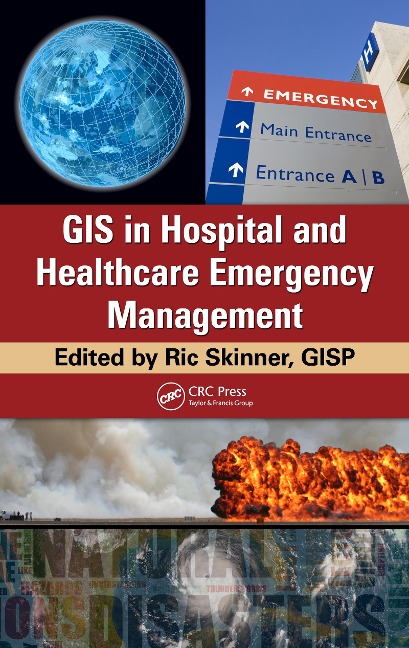
Although many books have been published on the application of GIS in emergency management and disaster response, this is the first one to bring together a comprehensive discussion of the critical role GIS plays in hospital and healthcare emergency management and disaster response. Illustrating a wide range of practical applications, GIS in Hospital
Ric Skinner, a Certified Geographic Information Systems Professional (GISP), is an experienced consultant and researcher whose expertise includes health geographics, hospital & healthcare preparedness, GIS and environmental monitoring and assessment. He is internationally recognized for "pushing the GIS envelope" in diverse hospital/healthcare areas: clinical/medical, health services & resources, and "hospital-land" security. He has fifteen years experience in "Health Geographics", a term he coined in the mid-1990s to recognize the application of GIS technology in hospitals and healthcare. In addition to his career in Health Geographics Ric has 23 years experience as a Certified Fisheries Scientist and Certified Environmental Professional in environmental monitoring and assessment, including fisheries ecology, aquatic bioassay/biomonitoring, state & federal environmental permitting, wetlands assessment & mitigation, and facility siting. During his Health Geographics career (1994-present) Ric has provided independent consulting services to hospitals and a national health information company, held a position as Senior Research Scientist for three years (1999-2001) with the New Jersey Dept. of Health and Senior Services, Cancer Epidemiology Service/State Cancer Registry, and served as the Health Dept.'s representative on the NJ GIS Committee. In 2001, he provided GIS support to CDC during its anthrax bioterrorism investigation at NJ postal facilities by creating internal maps of equipment, personnel areas, and ventilation system for CDC's analysis of FBI and NIOSH anthrax sampling locations. More recently (2002-2007), Ric served as Program Manager at Baystate Medical Center's Health Geographics Program (HGP; Springfield, MA) -- the only hospital-based full time GIS department in the U. S. While there, he managed the HGP team and participated in a variety of GIS projects including epidemiology, autom
The Evolving Role of Geographic Information Systems in Hospital and Healthcare Emergency Management. Conceptual Approaches. A Spatial Approach to Hazard Vulnerability Analysis by Healthcare Facilities. Using GIS to Improve Workplace and Worker Safety Crisis Management. Infectious Disease Surveillance and GIS: Applications for Emergency Management. Role of GIS in Interagency Healthcare Logistical Support during Emergencies. Design Concept for a Location-Based Hazard Vulnerability Assessment Tool for Healthcare Facilities. Applications. Trauma Center Siting, Optimization Modeling, and GIS. Healthcare Facility Disaster Planning: Using GIS to Identify Alternate Care Sites. Multiscale Enterprise GIS for Healthcare Preparedness in South Carolina. Hospital Preparedness Planning for Evacuation and Sheltering with GIS in South Carolina. Making Sense Out of Chaos: Improving Prehospital and Disaster Response. Case Stories. Disaster Preparedness for Influenza at a Community Hospital Network: A Case Study Using GIS. Disaster Preparedness and Response for Vulnerable Populations: Essential Role of GIS for Emergency Medical Services during the San Diego County 2007 Firestorm. Natural Disasters and the Role of GIS in Assessing Need. GIS Application and a Regionalized Approach for Mass Casualty Incident Planning. Building a GIS Common Operating Picture for Integrated Emergency Medical Services and Hospital Emergency Management Response.
Dieses eBook wird im PDF-Format geliefert und ist mit einem Adobe Kopierschutz (DRM) versehen. Sie können dieses eBook mit allen Geräten lesen, die das PDF-Format und den Adobe Kopierschutz (DRM) unterstützen.
Zum Beispiel mit den folgenden Geräten:
• tolino Reader
Laden Sie das eBook direkt über den Reader-Shop auf dem tolino herunter oder übertragen Sie das eBook auf Ihren tolino mit einer kostenlosen Software wie beispielsweise Adobe Digital Editions.
• Sony Reader & andere eBook Reader
Laden Sie das eBook direkt über den Reader-Shop herunter oder übertragen Sie das eBook mit der kostenlosen Software Sony READER FOR PC/Mac oder Adobe Digital Editions auf ein Standard-Lesegeräte mit epub- und Adobe DRM-Unterstützung.
• Tablets & Smartphones
Möchten Sie dieses eBook auf Ihrem Smartphone oder Tablet lesen, finden Sie hier unsere kostenlose Lese-App für iPhone/iPad und Android Smartphone/Tablets.
• PC & Mac
Lesen Sie das eBook direkt nach dem Herunterladen mit einer kostenlosen Lesesoftware, beispielsweise Adobe Digital Editions, Sony READER FOR PC/Mac oder direkt über Ihre eBook-Bibliothek in Ihrem Konto unter „Meine eBooks“ - „online lesen“.
Schalten Sie das eBook mit Ihrer persönlichen Adobe ID auf bis zu sechs Geräten gleichzeitig frei.
Bitte beachten Sie, dass die Kindle-Geräte das Format nicht unterstützen und dieses eBook somit nicht auf Kindle-Geräten lesbar ist.