Und dann auf "Zum Home-Bildschirm [+]".

Stöbern
genialokal zum Startbildschirm hinzufügen
Installieren Sie die genialokal App auf Ihrem Startbildschirm für einen schnellen Zugriff und eine komfortable Nutzung.
Installieren Sie die genialokal App auf Ihrem Startbildschirm für einen schnellen Zugriff und eine komfortable Nutzung.
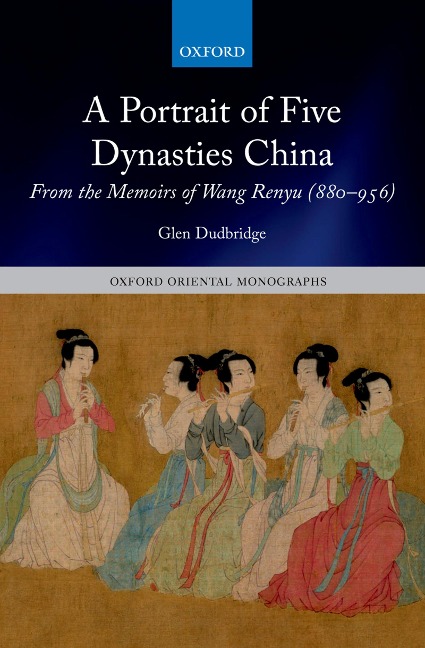
The anecdotal literature of late-medieval China is not unknown, but it is under-used. Glen Dudbridge explores two collections of anecdotal memoirs to construct an intimate portrait of the first half of the tenth century as seen by people who lived through it. The author Wang Renyu's adult life coincided closely with that period, and his memoirs, though not directly transmitted, can be largely recovered from encyclopaedia quotations. His experience led from early life on the north-west border with Tibet, through service with the kingdom of Shu, to a mainstream career under four successive dynasties in northern China. He bore personal witness to some great events, but also travelled widely and transcribed material from a lifetime of conversations with colleagues in the imperial Hanlin Academy. The study first sets Wang's life in its historical context and discusses the nature and value of his memoirs. It then pursues a number of underlying themes that run through the collections, presenting nearly 80 distinct items in translation. Together these offer a characterization of an age of inter-regional warfare in which individual lives, not grand historical narrative, form the focus. A nuanced self-portrait of the author emerges, combining features that seem alien to modern values with others that seem more familiar. Four appendixes give the text of the author's tombstone epitaph; a detailed list of his surviving memoir items; data from Song catalogues on the early transmission of his writings; and Wang Renyu's own definition of the four musical modes inherited from the Tang dynasty.
Raised and schooled in Bristol, followed by National Service in the RAF, Glen Dudbridge began his study of Chinese at Cambridge University, where he graduated as BA in 1962 and as PhD in 1967. He was Lecturer in Modern Chinese at Oxford University from 1965 to 1985; Professor of Chinese at Cambridge from 1985 to 1989; and finally Shaw Professor of Chinese at Oxford until retirement in 2005. He has held visiting posts in USA, at Yale and UC Berkeley, and at the Chinese University of Hong Kong. He became Fellow of the British Academy in 1984, and Honorary Academy Member of the Chinese Academy of Social Sciences in 1996.
- 1: Wang Renyu and his memoirs - 2: Oral history - 3: A world of signs and symbols - 4: In the background of war - 5: Personalities of Shu - 6: The fall of Former Shu in 925 - 7: The Khitan - 8: Music and musicians - 9: The wild - Epilogue: The signature on the portrait - Appendix A: Li Fang's Spirit Road epitaph for Wang Renyu - Appendix B: The memoirs - Appendix C: Catalogues - Appendix D: Wang Renyu and the musical modes
Dieses eBook wird im PDF-Format geliefert und ist mit einem Adobe Kopierschutz (DRM) versehen. Sie können dieses eBook mit allen Geräten lesen, die das PDF-Format und den Adobe Kopierschutz (DRM) unterstützen.
Zum Beispiel mit den folgenden Geräten:
• tolino Reader
Laden Sie das eBook direkt über den Reader-Shop auf dem tolino herunter oder übertragen Sie das eBook auf Ihren tolino mit einer kostenlosen Software wie beispielsweise Adobe Digital Editions.
• Sony Reader & andere eBook Reader
Laden Sie das eBook direkt über den Reader-Shop herunter oder übertragen Sie das eBook mit der kostenlosen Software Sony READER FOR PC/Mac oder Adobe Digital Editions auf ein Standard-Lesegeräte mit epub- und Adobe DRM-Unterstützung.
• Tablets & Smartphones
Möchten Sie dieses eBook auf Ihrem Smartphone oder Tablet lesen, finden Sie hier unsere kostenlose Lese-App für iPhone/iPad und Android Smartphone/Tablets.
• PC & Mac
Lesen Sie das eBook direkt nach dem Herunterladen mit einer kostenlosen Lesesoftware, beispielsweise Adobe Digital Editions, Sony READER FOR PC/Mac oder direkt über Ihre eBook-Bibliothek in Ihrem Konto unter „Meine eBooks“ - „online lesen“.
Schalten Sie das eBook mit Ihrer persönlichen Adobe ID auf bis zu sechs Geräten gleichzeitig frei.
Bitte beachten Sie, dass die Kindle-Geräte das Format nicht unterstützen und dieses eBook somit nicht auf Kindle-Geräten lesbar ist.