Und dann auf "Zum Home-Bildschirm [+]".

Stöbern
genialokal zum Startbildschirm hinzufügen
Installieren Sie die genialokal App auf Ihrem Startbildschirm für einen schnellen Zugriff und eine komfortable Nutzung.
Installieren Sie die genialokal App auf Ihrem Startbildschirm für einen schnellen Zugriff und eine komfortable Nutzung.
Ihr gewünschter Artikel ist in 0 Buchhandlungen vorrätig - wählen Sie hier eine Buchhandlung in Ihrer Nähe aus:

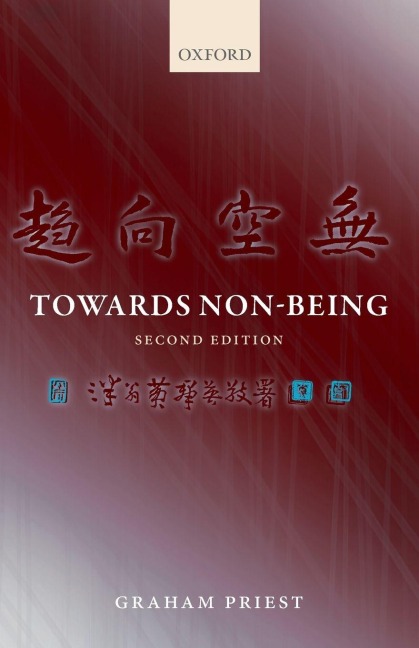
Towards Non-Being presents an account of the semantics of intentional language--verbs such as 'believes', 'fears', 'seeks', 'imagines'. Graham Priest tackles problems concerning intentional states which are often brushed under the carpet in discussions of intentionality, such as their failure to be closed under deducibility. Priest's account draws on the work of the late Richard Routley (Sylvan), and proceeds in terms of objects that may be either existent or non-existent, at worlds that may be either possible or impossible. Since Russell, non-existent objects have had a bad press in Western philosophy; Priest mounts a full-scale defence. In the process, he offers an account of both fictional and mathematical objects as non-existent. The book will be of central interest to anyone who is concerned with intentionality in the philosophy of mind or philosophy of language, the metaphysics of existence and identity, the philosophy or fiction, the philosophy of mathematics, or cognitive representation in AI. This updated second edition adds ten new chapters to the original eight. These further develop the ideas of the first edition, reply to critics, and explore new areas of relevance. New topics covered include: conceivability, realism/antirealism concerning non-existent objects, self-deception, and the verb to be.
Graham Priest is Distinguished Professor of Philosophy at the Graduate Center, City University of New York. He has held professorial positions at a number of universities in Australia, the UK, and the USA. He is well known for his work on non-classical logic, and its application to metaphysics and the history of philosophy.
I. Semantics for Intentionality
1: Intentional Operators
2: Identity
3: Objects of Thought
4: Characterization and Descriptions
II. In Defence of Non-Being
5: On What There Isn't
6: Fiction
7: Mathematical Objects and Worlds
8: Multiple Denotation
III. Impossible Worlds and (other) Non-existent Objects
9: Possibility, Impossibility, and Conceivability
10: Lost in Translation
11: Phenomenological Pointing
12: Poor Non-Existent Objects
13: Other Issues from the First Edition
IV: Et Cetera
14: Creating Non-Existents
15: Neighbourhood Semantics
16: Self-Deception
17: Sein Language
18: How the Particular Quantified Become Existentially Loaded Behind Our Backs