Und dann auf "Zum Home-Bildschirm [+]".

Stöbern
genialokal zum Startbildschirm hinzufügen
Installieren Sie die genialokal App auf Ihrem Startbildschirm für einen schnellen Zugriff und eine komfortable Nutzung.
Installieren Sie die genialokal App auf Ihrem Startbildschirm für einen schnellen Zugriff und eine komfortable Nutzung.
Ihr gewünschter Artikel ist in 0 Buchhandlungen vorrätig - wählen Sie hier eine Buchhandlung in Ihrer Nähe aus:

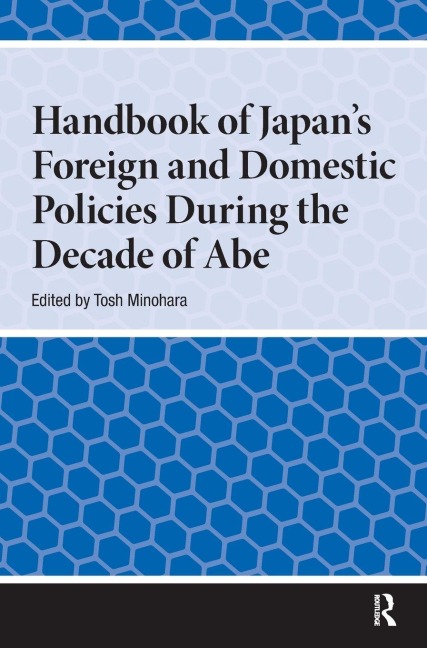
No Japanese leader has dominated Japan's recent political landscape more than the late Abe Shinzo. This book is much more than a mere study of Abe's leadership, however, as it ventures far beyond the traditional scope of diplomatic and political history by incorporating a multidisciplinary approach.
Tosh Minohara is a Professor of International Relations and Security Studies at the Graduate School of Law and Politics, Kobe University where he holds a joint appointment with the Graduate School of International Cooperation Studies. He is also the founder and chairman of the Japanese Cabinet Office-recognized nonprofit organization, Research Institute for Indo-Pacific Affairs (RIIPA). He has been a lecturer at the Japan Self-Defense Force Command and Staff College for both the Japan Maritime and Air Self Defense Forces. In addition, he serves in the capacity as senior advisor to KREAB and external advisor to the Japanese Ministry of Foreign Affairs. His primary research focus is on the diplomatic, political, and security relations of US-Japan relations, both prewar and postwar. His major works include, Hainichiiminh. to Nichibeikankei [The Japanese exclusion act and US-Japan relations] (Iwanami Shoten, 2002) and Dait.ryo kara yomu Amerikashi [American history from the perspective of the presidents] (Daisanbunmei, 2023) among many others. His books have received the Shimizu Hiroshi Award and the Japan Research Prize.
Introduction (Tosh Minohara), Part 1: Japan's External Relations, 1. The Coming of a New Age in US-Japan Relations (Tosh Minohara, 2. Japan's Relations with China (Chisako T. Masuo), 3. Japan-India Relations: A Defining Partnership in the Indo-Pacific (Sana Hashmi), 4. Essential Cooperation: Historical and Prospective Implications of Japan-Korea Relations (Yunho Kim), 5. Japan-Taiwan Relations: Evolving but Still Challenging (Yuko Mukai), 6. A Decade of Strategic Alignment and the Deepening of Japan-Australia Ties (Shiro Armstrong, Benjamin Ascione, and Yuma Osaki), 7. Eternal Stalemate?: The Complexities of Japan-Russia Relations (Eshonkulova Shakhnoza), 8. Forging a Strategic Relationship: Japan and Brazil (João Ernesto Christófolo and Roberto Wazima Szatmari), 9. Navigating National Interests: Japan-Middle East Relations (Vanessa Abou-Khalil), Part 2: Japan's Interaction with Regional and International Organizations, 10. Japan and ASEAN: Pursuing a Dual-Core Diplomacy (Ayame Suzuki), 11. Constructing a Framework of Shared Values: Japan-EU Bilateral Relations (Débora Simões), 12. Tokyo International Conference on African Development (TICAD) under the Abe Administration (Kweku Ampiah), 13. Japan and the United Nations: Strategic Venue for Global Leadership Negotiation (Aleksandra Babovic), Part 3: Japan's Internal Policies, 14. Japan's Economic Policy (Linus Yamane), 15. The Resurgence of Human Security in Japan's Foreign Policy (Kenki Adachi), 16. Contribution or Exploitation?: Japan's Immigration Policy in the Context of Globalization (Chika Shiohara), 17. Defense of Japan: Revision of Article 9 (Arbenita Sopaj).