Und dann auf "Zum Home-Bildschirm [+]".

Stöbern
genialokal zum Startbildschirm hinzufügen
Installieren Sie die genialokal App auf Ihrem Startbildschirm für einen schnellen Zugriff und eine komfortable Nutzung.
Installieren Sie die genialokal App auf Ihrem Startbildschirm für einen schnellen Zugriff und eine komfortable Nutzung.
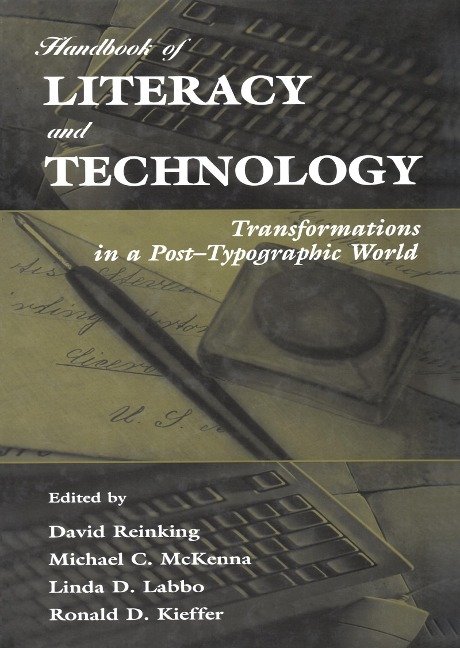
The major shift going on today in the technologies of reading and writing raises important questions about conventional conceptions of literacy and its role in education, society, and culture. What are the important characteristics of electronic forms of reading and writing distinguishing them from printed forms? To what extent and in what ways is literacy being transformed by new technologies? This central question is addressed in this volume from diverse, multidisciplinary perspectives. The contributing authors focus on a guiding question in one of the following areas, which correspond to the major sections of the book: *Transforming Texts. What are the new differences between printed and electronic texts, and what are the implications of new textual forms for defining literacy, especially in regard to teaching and learning in schools? *Transforming Readers and Writers. How do electronic reading and writing change conceptualizations of literacy development from childhood through adulthood? *Transforming Classrooms and Schools. What are the effects of introducing new reading and writing technologies into schools and classrooms? *Transforming Instruction. How can instruction be adapted in response to the changing literacy landscape, and how can teachers and students exploit forms of reading and writing to enhance teaching and learning? *Transforming Society. What are the broad societal implications of the increasing prevalence of electronic forms of reading and writing? *Transforming Literacy Research. What are the questions that must be addressed as digital reading and writing become more common, and what approaches to research will be most useful in addressing those questions? This volume is the result of an interactive process. The contributors met as a group to discuss drafts of their chapters at a one-day meeting convened and sponsored by the National Reading Research Center, and had read each others' chapters prior to this gathering. That meeting was followed by a two-day conference attended by approximately 180 researchers, educators, and policymakers who responded to an open invitation to present papers and to attend sessions focusing on the six major themes of the book. Contributors then revised their chapters based on interactions with fellow contributors, conference participants, and volume editors. Thus, this work is more than just a compilation of the individual authors' views. Rather, it represents a synthesis of a broad range of current thinking about how literacy is being and may be transformed by technology.
David Reinking, Michael C. McKenna, Linda D. Labbo, Ronald D. Kieffer
Contents: D. Reinking, Introduction: Synthesizing Technological Transformations of Literacy in a Post-Typographic World. Part I:Transforming Text.J.D. Bolter, Hypertext and the Question of Visual Literacy. L. Anderson-Inman, M.A. Horney, Transforming Text for At-Risk Readers. M.C. McKenna, Electronic Texts and the Transformation of Beginning Reading. Part II:Transforming Readers and Writers.J. Myers, R. Hammett, A.M. McKillop, Opportunities for Critical Literacy and Pedagogy in Student-Authored Hypermedia. L.D. Labbo, M. Kuhn, Electronic-Symbol Making: Young Children's Computer-Related Emerging Concepts About Literacy. R. Beach, D. Lundell, Early Adolescents' Use of Computer-Mediated Communication in Writing and Reading. Part III:Transforming Schools and Classrooms.G. Fawcett, S. Snyder, Transforming Schools Through Systemic Change: New Work, New Knowledge, New Technology. L. Neilsen, Coding the Light: Rethinking Generational Authority in a Rural High School Telecommunications Project. R.D. Kieffer, M.E. Hale, A. Templeton, Electronic Literacy Portfolios: Technology Transformations in a First-Grade Classroom. Part IV:Transforming Instruction.E.N. Askov, B. Bixler, Transforming Adult Literacy Instruction Through Computer-Assisted Instruction. C.K. Kinzer, V.J. Risko, Multimedia and Enhanced Learning: Transforming Preservice Education. D.J. Leu, M. Hillinger, P.H. Loseby, M.L. Balcom, J. Dinkin, M.L. Eckels, J. Johnson, K. Matthews, R. Raegler, Grounding the Design of New Technologies for Literacy and Learning in Teachers' Instructional Needs. R. Garner, M. Gillingham, The Internet in the Classroom: Is It the End of Transmission-Oriented Pedagogy? Part V:Transforming Society.A. Purves, Files in the Web of Hypertext. R. Tierney, S. Damarin, Technology as Enfranchisement and Cultural Development: Crisscrossing Symbol Systems, Paradigm Shifts, and Social-Cultural Considerations. B.C. Bruce, M.P. Hogan, The Disappearance of Technology: Toward an Ecological Model of Literacy. J.L. Lemke, Metamedia Literacy: Transforming Meanings and Media. L. Mikulecky, J.R. Kirkley, Changing Workplaces, Changing Classes: The New Role of Technology in Workplace Literacy. Part VI:Transforming Literacy Research.M.L. Kamil, D.M. Lane, Researching the Relationship Between Technology and Literacy: An Agenda for the 21st Century. L. Miller, J. Olson, Literacy Research Oriented Toward Features of Technology and Classrooms.
Dieses eBook wird im PDF-Format geliefert und ist mit einem Adobe Kopierschutz (DRM) versehen. Sie können dieses eBook mit allen Geräten lesen, die das PDF-Format und den Adobe Kopierschutz (DRM) unterstützen.
Zum Beispiel mit den folgenden Geräten:
• tolino Reader
Laden Sie das eBook direkt über den Reader-Shop auf dem tolino herunter oder übertragen Sie das eBook auf Ihren tolino mit einer kostenlosen Software wie beispielsweise Adobe Digital Editions.
• Sony Reader & andere eBook Reader
Laden Sie das eBook direkt über den Reader-Shop herunter oder übertragen Sie das eBook mit der kostenlosen Software Sony READER FOR PC/Mac oder Adobe Digital Editions auf ein Standard-Lesegeräte mit epub- und Adobe DRM-Unterstützung.
• Tablets & Smartphones
Möchten Sie dieses eBook auf Ihrem Smartphone oder Tablet lesen, finden Sie hier unsere kostenlose Lese-App für iPhone/iPad und Android Smartphone/Tablets.
• PC & Mac
Lesen Sie das eBook direkt nach dem Herunterladen mit einer kostenlosen Lesesoftware, beispielsweise Adobe Digital Editions, Sony READER FOR PC/Mac oder direkt über Ihre eBook-Bibliothek in Ihrem Konto unter „Meine eBooks“ - „online lesen“.
Schalten Sie das eBook mit Ihrer persönlichen Adobe ID auf bis zu sechs Geräten gleichzeitig frei.
Bitte beachten Sie, dass die Kindle-Geräte das Format nicht unterstützen und dieses eBook somit nicht auf Kindle-Geräten lesbar ist.