Und dann auf "Zum Home-Bildschirm [+]".

Stöbern
genialokal zum Startbildschirm hinzufügen
Installieren Sie die genialokal App auf Ihrem Startbildschirm für einen schnellen Zugriff und eine komfortable Nutzung.
Installieren Sie die genialokal App auf Ihrem Startbildschirm für einen schnellen Zugriff und eine komfortable Nutzung.
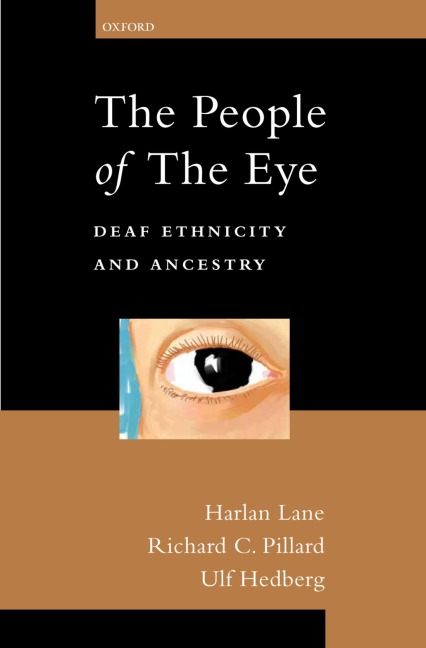
What are ethnic groups? Are Deaf people who sign American Sign Language (ASL) an ethnic group? In The People of the Eye, Deaf studies, history, cultural anthropology, genetics, sociology, and disability studies are brought to bear as the authors compare the values, customs, and social organization of the Deaf World to those in ethnic groups. Arguing against the common representation of ASL signers as a disability group, the authors discuss the many challenges to Deaf ethnicity in this first book-length examination of these issues. Stepping deeper into the debate around ethnicity status, The People of the Eye also describes, in a compelling narrative, the story of the founding families of the Deaf World in the US. Tracing ancestry back hundreds of years, the authors reveal that Deaf people's preference to marry other Deaf people led to the creation of Deaf clans, and thus to shared ancestry and the discovery that most ASL signers are born into the Deaf World, and many are kin. In a major contribution to the historical record of Deaf people in the US, The People of the Eye portrays how Deaf people- and hearing people, too- lived in early America. For those curious about their own ancestry in relation to the Deaf World, the figures and an associated website present pedigrees for over two hundred lineages that extend as many as three hundred years and are unique in genealogy research. The book contains an every-name index to the pedigrees, providing a rich resource for anyone who is interested in Deaf culture.
Harlan Lane is Distinguished University Professor of Psychology, Northeastern University. Richard C. Pillard is Professor of Psychiatry, Boston University. Ulf Hedberg is Director, Deaf Library Collections and Archives, Gallaudet University.
List of Illustrations Introduction Part I. Ethnicity and the Deaf-World Chapter 1. Cultural Cohesive Forces Chapter 2. Ethnic Boundaries Chapter 3.Yes, But
Part II: Deaf Ancestry: Henniker, N. H., and Martha's Vineyard, Mass. Chapter 4. Settling the New World Chapter 5. The Brown family of Henniker, N. H. Chapter 6. Martha's Vineyard, Mass Chapter 7. Assimilating and Differentiating Societies
Part III: Deaf Ancestry in Maine: Northern Cluster Chapter 8. Migration from the Vineyard to Maine Chapter 9. Other Northern Settlers
Part IV: Deaf Ancestry in Maine: Southern Cluster Chapter 10. Southern Cluster
Part V. Deaf Ancestry: Summary and Reflections
Appendices Appendix A. Briefly Noted Lineages Appendix B. What the Pedigrees Reveal about Genetic Transmission Appendix C. Pedigree Methods Appendix D. Every Name Index to Pedigrees at our Website Index
Dieses eBook wird im PDF-Format geliefert und ist mit einem Adobe Kopierschutz (DRM) versehen. Sie können dieses eBook mit allen Geräten lesen, die das PDF-Format und den Adobe Kopierschutz (DRM) unterstützen.
Zum Beispiel mit den folgenden Geräten:
• tolino Reader
Laden Sie das eBook direkt über den Reader-Shop auf dem tolino herunter oder übertragen Sie das eBook auf Ihren tolino mit einer kostenlosen Software wie beispielsweise Adobe Digital Editions.
• Sony Reader & andere eBook Reader
Laden Sie das eBook direkt über den Reader-Shop herunter oder übertragen Sie das eBook mit der kostenlosen Software Sony READER FOR PC/Mac oder Adobe Digital Editions auf ein Standard-Lesegeräte mit epub- und Adobe DRM-Unterstützung.
• Tablets & Smartphones
Möchten Sie dieses eBook auf Ihrem Smartphone oder Tablet lesen, finden Sie hier unsere kostenlose Lese-App für iPhone/iPad und Android Smartphone/Tablets.
• PC & Mac
Lesen Sie das eBook direkt nach dem Herunterladen mit einer kostenlosen Lesesoftware, beispielsweise Adobe Digital Editions, Sony READER FOR PC/Mac oder direkt über Ihre eBook-Bibliothek in Ihrem Konto unter „Meine eBooks“ - „online lesen“.
Schalten Sie das eBook mit Ihrer persönlichen Adobe ID auf bis zu sechs Geräten gleichzeitig frei.
Bitte beachten Sie, dass die Kindle-Geräte das Format nicht unterstützen und dieses eBook somit nicht auf Kindle-Geräten lesbar ist.