Und dann auf "Zum Home-Bildschirm [+]".

Stöbern
genialokal zum Startbildschirm hinzufügen
Installieren Sie die genialokal App auf Ihrem Startbildschirm für einen schnellen Zugriff und eine komfortable Nutzung.
Installieren Sie die genialokal App auf Ihrem Startbildschirm für einen schnellen Zugriff und eine komfortable Nutzung.
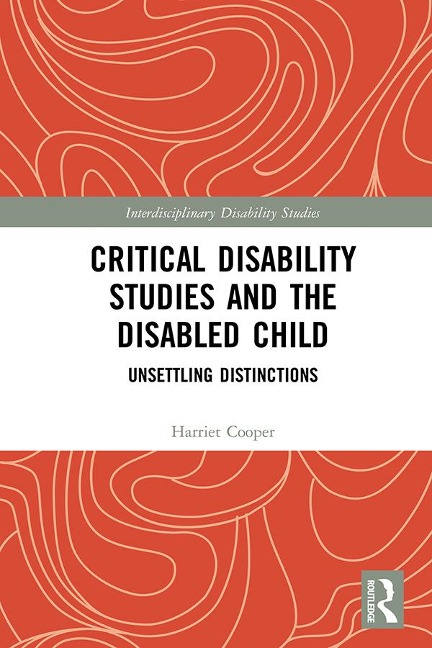
This book examines the relationship between contemporary cultural representations of disabled children on the one hand, and disability as a personal experience of internalised oppression on the other. In focalising this debate through an exploration of the politically and emotionally charged figure of the disabled child, Harriet Cooper raises questions both about what it means to 'speak for' the other and about what resistance means when one is unknowingly invested in one's own abjection. Drawing on both the author's personal experience of growing up with a physical impairment and on a range of critical theories and cultural objects - from Frances Hodgson Burnett's novel The Secret Garden to Judith Butler's work on injurious speech - the book theorises the making of disabled and 'rehabilitated' subjectivities. With a conceptual framework informed by both psychoanalysis and critical disability studies, it investigates the ways in which cultural anxieties about disability come to be embodied and lived by the disabled child. Posing new questions for disability studies and for identity politics about the relationships between lived experiences, cultural representations and dominant discourses - and demonstrating a new approach to the concept of 'internalised oppression' - this book will be of interest to scholars and students of disability studies, medical humanities, sociology and psychosocial studies, as well as to those with an interest in identity politics more generally.
Harriet Cooper is currently Senior Research Associate in Health and Medical Humanities at the University of East Anglia, UK. Having worked across both critical disability studies and health sociology, she is interested in how (inter)disciplinarity imagines itself and polices its operations, as well as in the ways in which concepts of inclusivity, involvement and democracy animate and shape academic agendas. The themes of disability and emancipation connect all of Harriet's work to date, yet as a methodologist she continues to be irked by the question of how best to combine academia and activism.
Introduction; 1. The look which made me: The early gazing relationship and the construction of disabled subjectivity; 2. Making her better? Denaturalising the notion of the 'developing child'; 3. (Un)making the child, making the future: On gifts, commodities and diagnostic speech acts; 4. Making, unmaking, remaking? Finding a position from which to resist; Conclusion.
Dieses eBook wird im PDF-Format geliefert und ist mit einem Adobe Kopierschutz (DRM) versehen. Sie können dieses eBook mit allen Geräten lesen, die das PDF-Format und den Adobe Kopierschutz (DRM) unterstützen.
Zum Beispiel mit den folgenden Geräten:
• tolino Reader
Laden Sie das eBook direkt über den Reader-Shop auf dem tolino herunter oder übertragen Sie das eBook auf Ihren tolino mit einer kostenlosen Software wie beispielsweise Adobe Digital Editions.
• Sony Reader & andere eBook Reader
Laden Sie das eBook direkt über den Reader-Shop herunter oder übertragen Sie das eBook mit der kostenlosen Software Sony READER FOR PC/Mac oder Adobe Digital Editions auf ein Standard-Lesegeräte mit epub- und Adobe DRM-Unterstützung.
• Tablets & Smartphones
Möchten Sie dieses eBook auf Ihrem Smartphone oder Tablet lesen, finden Sie hier unsere kostenlose Lese-App für iPhone/iPad und Android Smartphone/Tablets.
• PC & Mac
Lesen Sie das eBook direkt nach dem Herunterladen mit einer kostenlosen Lesesoftware, beispielsweise Adobe Digital Editions, Sony READER FOR PC/Mac oder direkt über Ihre eBook-Bibliothek in Ihrem Konto unter „Meine eBooks“ - „online lesen“.
Schalten Sie das eBook mit Ihrer persönlichen Adobe ID auf bis zu sechs Geräten gleichzeitig frei.
Bitte beachten Sie, dass die Kindle-Geräte das Format nicht unterstützen und dieses eBook somit nicht auf Kindle-Geräten lesbar ist.