Und dann auf "Zum Home-Bildschirm [+]".

Stöbern
genialokal zum Startbildschirm hinzufügen
Installieren Sie die genialokal App auf Ihrem Startbildschirm für einen schnellen Zugriff und eine komfortable Nutzung.
Installieren Sie die genialokal App auf Ihrem Startbildschirm für einen schnellen Zugriff und eine komfortable Nutzung.

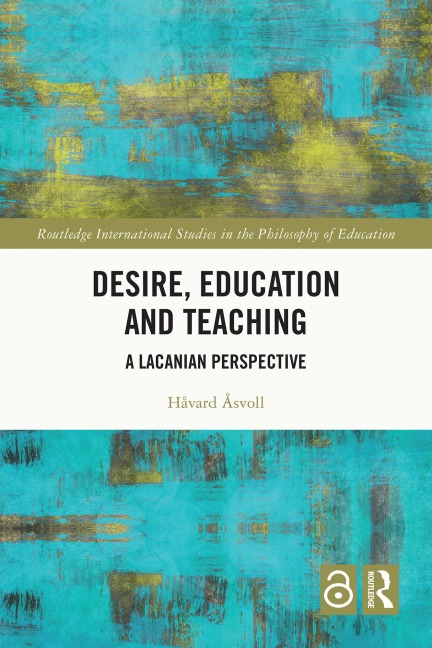
Exploring the implications of a novel theory of educational desire on the prevailing modes of educational research and theory, this book contextualises the realm of education studies through the challenging philosophies and theories of Lacan, thereby providing a genuinely alternative approach to the study of education. Structured into three main parts, the book provides a discussion of Lacanian ideas within educational research by setting out a description and analysis of how a theory of desire may work in educational settings and practice. Using vignettes and examples to drive the discussion, chapters explore the pivotal aspects of desire, which could be imaginary, symbolic, or real, elucidated by a mapping of discourses and exploring the reluctance of educational studies to engage with themes related to desire and psychoanalysis. Ultimately, the book argues for the need to disrupt the theoretical and practical logics and models that limit teacher practice, such as accountability, visible learning, competencies, pedagogical knowledge, and professional development, and how these can be better understood from a Lacanian perspective. This book will be of use to scholars, researchers, and academics in the fields of the philosophy of education, the theory of education, and teachers and teacher education more broadly. Those specifically interested in Lacanian psychoanalysis and a Lacanian view on how the concept of desire may influence educational research and practice will also find the book of use.
Håvard Åsvoll is a Professor in the Faculty of Education, Department of Educational Studies in Teacher Education, University of Inland Norway, Norway.
Preface PART 1 Introduction and theorising desire 1. Introduction 2. Towards a theory of desire in education and teaching 3. Narrowing the scope: The enjoyable desire 4. What forms could this desire take in education? 5. How, then, does one respond to desire? 6. Lacanian-oriented literature on teaching and education PART 2 Desire in teaching 7. Vignettes of desire in teaching Section 1 The dynamics of teachers discourse Section 2 The "fixation of the other" and "the appearances of disruptive real" in teacher practice Section 3 Remarks on vignetttes Section 4 Summary and reflection PART 3 Implications and reflections on desire for educational theory and practice 8. Implications for theory: Theory as different modes of the gaze 9. Implications for teaching 10. Concluding considerations: Desire as the revitalising education and teacher practice