Und dann auf "Zum Home-Bildschirm [+]".

Stöbern
genialokal zum Startbildschirm hinzufügen
Installieren Sie die genialokal App auf Ihrem Startbildschirm für einen schnellen Zugriff und eine komfortable Nutzung.
Installieren Sie die genialokal App auf Ihrem Startbildschirm für einen schnellen Zugriff und eine komfortable Nutzung.
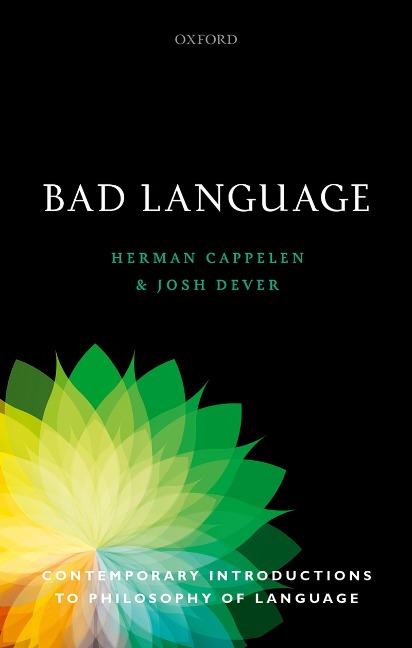
When theorizing about language, we tend to assume that speakers are cooperative, honest, helpful, and so on. This, of course, isn't remotely true of a lot of real-world language use. Bad Language is the first textbook to explore non-idealized language use, the linguistic behaviour of those who exploit language for malign purposes. Two eminent philosophers of language present a lively and accessible introduction to a wide range of topics including lies and bullshit, slurs and insults, coercion and silencing: Cappelen and Dever offer theoretical frameworks for thinking about these all too common linguistic behaviours. As the text does not assume prior training in philosophy or linguistics, it is ideal for use as part of a philosophy of language course for philosophy students or for linguistics students. Bad Language belongs to the series Contemporary Introductions to Philosophy of Language, in which each book introduces an important area of the philosophy of language, suitable for students at any level.
Herman Cappelen is a professor of philosophy at the University of Oslo and at the University of St Andrews. He is a Co-Director at CSMN (in Oslo), and the Editor-in-Chief of Inquiry. He has written, co-authored, or edited more than ten books and many articles. He works in all areas of systematic philosophy. Josh Dever is a professor of philosophy at the University of Texas at Austin and a professorial fellow at the Arche research centre at the University of St Andrews. He has co-written three books and many articles on the philosophy of language.
- 1: Idealized Communication - 2: Three Forms of Non-Ideal Language - 3: Messing with the Truth - 4: Bullshitting and Deep Bullshitting - 5: Conceptual Engineering - 6: Slurs and Pejoratives - 7: Lexical Effects: The Non-Cognitive, Associative, Effects of Words - 8: Generics and Defective Reasoning - 9: Non-Ideal Speech Acts - 10: Linguistic Oppressing and Linguistic Silencing - 11: The Speech Act of Consent - 12: Thoughts on Ideal vs. Non-Ideal Theories of Language
Dieses eBook wird im PDF-Format geliefert und ist mit einem Adobe Kopierschutz (DRM) versehen. Sie können dieses eBook mit allen Geräten lesen, die das PDF-Format und den Adobe Kopierschutz (DRM) unterstützen.
Zum Beispiel mit den folgenden Geräten:
• tolino Reader
Laden Sie das eBook direkt über den Reader-Shop auf dem tolino herunter oder übertragen Sie das eBook auf Ihren tolino mit einer kostenlosen Software wie beispielsweise Adobe Digital Editions.
• Sony Reader & andere eBook Reader
Laden Sie das eBook direkt über den Reader-Shop herunter oder übertragen Sie das eBook mit der kostenlosen Software Sony READER FOR PC/Mac oder Adobe Digital Editions auf ein Standard-Lesegeräte mit epub- und Adobe DRM-Unterstützung.
• Tablets & Smartphones
Möchten Sie dieses eBook auf Ihrem Smartphone oder Tablet lesen, finden Sie hier unsere kostenlose Lese-App für iPhone/iPad und Android Smartphone/Tablets.
• PC & Mac
Lesen Sie das eBook direkt nach dem Herunterladen mit einer kostenlosen Lesesoftware, beispielsweise Adobe Digital Editions, Sony READER FOR PC/Mac oder direkt über Ihre eBook-Bibliothek in Ihrem Konto unter „Meine eBooks“ - „online lesen“.
Schalten Sie das eBook mit Ihrer persönlichen Adobe ID auf bis zu sechs Geräten gleichzeitig frei.
Bitte beachten Sie, dass die Kindle-Geräte das Format nicht unterstützen und dieses eBook somit nicht auf Kindle-Geräten lesbar ist.