Und dann auf "Zum Home-Bildschirm [+]".

Stöbern
genialokal zum Startbildschirm hinzufügen
Installieren Sie die genialokal App auf Ihrem Startbildschirm für einen schnellen Zugriff und eine komfortable Nutzung.
Installieren Sie die genialokal App auf Ihrem Startbildschirm für einen schnellen Zugriff und eine komfortable Nutzung.


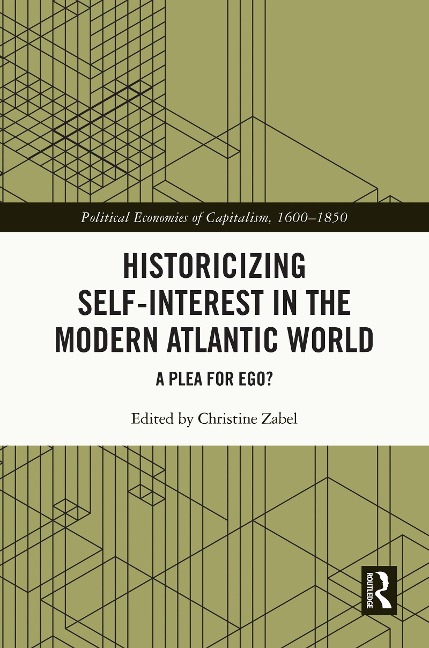
This volume historicizes the use of the notion of self-interest that at least since Bernard de Mandeville and Adam Smith's theories is considered a central component of economic theory. Having in the twentieth century become one of the key-features of rational choice models, and thus is seen as an idealized trait of human behavior, self-interest has, despite Albert O. Hirschman's pivotal analysis of self-interest, only marginally been historicized. A historicization(s) of self-interest, however, offers new insights into the concept by asking why, when, for what reason and in which contexts the notion was discussed or referred to, how it was employed by contemporaries, and how the different usages developed and changed over time. This helps us to appreciate the various transformations in the perception of the notion, and also to explore how and in what ways different people at different times and in different regions reflected on or realized the act of considering what was in their best interest. The volume focuses on those different usages, knowledges, and practices concerned with self-interest in the modern Atlantic World from the seventeenth to twentieth centuries, by using different approaches, including political and economic theory, actuarial science, anthropology, or the history of emotions. Offering a new perspective on a key component of Western capitalism, this is the ideal resource for researches and scholars of intellectual, political and economic history in the modern Atlantic World.
Christine Zabel is Director of the Early Modern Department at the German Historical Institute in Paris, France. She is currently completing a book on the economic and financial history of speculation, especially in early modern France. She is particularly interested in the history of political economy, financial mathematics, the history of knowledge and early modern republicanism(s). She is the author of the book Polis und Politesse. Der Diskurs über das antike Athen in England und Frankreich, 1630-1760 (2016).
Introduction: The Search for Self-Interest and the Problems with its Historicization Part 1: Creating, Inspiring and Calculating Self-Interest 1. Improvement, Projecting, and Self-Interest in the Hartlib Circle, c. 1640-1660 2. Reckoning Self-Interest at the French Revolutionary Comité des Finances Part 2: Understanding, Teaching, and Learning about Self-Interest 3. Commercial Sociability and the Management of Self-Interest in Isaac de Pinto's Letter on Card-Playing 4. The Concept of Self-interest in Eighteenth Century Anthropology and Economic Theory. From Richard Cumberland to Adam Smith 5. The Problem of Embeddedness Revisited. Self-Interest as a Challenge in Ethnographic and Historical Research Part 3: Embodying, Feeling and Practicing Self-Interest 6. Commercial Desires in a Web of Interest. Dutch Discourses on (Self-)interest, 1600-1830 7. Practical Knowledge of Self-Interest: The Disembedding of Agency in Rural Areas, Eighteenth and Early Nineteenth Centuries 8. Pursuing Self-Interest: Stock Market Speculation in the Early Twentieth-Century United States Part 4: Taming Self-Interest, Self-Interest as Limitation 9. Interest as an Enduring Political Problem in Early Modern France 10. Self-Interest, Speculation, and Gambling in Nineteenth-Century America 11. Against Self-interest: The Codification of "Disinterestedness" as an Axiological Operator, in Religion, Aesthetics, and the Ethics of Intellectual Professions
Dieses eBook wird im PDF-Format geliefert und ist mit einem Adobe Kopierschutz (DRM) versehen. Sie können dieses eBook mit allen Geräten lesen, die das PDF-Format und den Adobe Kopierschutz (DRM) unterstützen.
Zum Beispiel mit den folgenden Geräten:
• tolino Reader
Laden Sie das eBook direkt über den Reader-Shop auf dem tolino herunter oder übertragen Sie das eBook auf Ihren tolino mit einer kostenlosen Software wie beispielsweise Adobe Digital Editions.
• Sony Reader & andere eBook Reader
Laden Sie das eBook direkt über den Reader-Shop herunter oder übertragen Sie das eBook mit der kostenlosen Software Sony READER FOR PC/Mac oder Adobe Digital Editions auf ein Standard-Lesegeräte mit epub- und Adobe DRM-Unterstützung.
• Tablets & Smartphones
Möchten Sie dieses eBook auf Ihrem Smartphone oder Tablet lesen, finden Sie hier unsere kostenlose Lese-App für iPhone/iPad und Android Smartphone/Tablets.
• PC & Mac
Lesen Sie das eBook direkt nach dem Herunterladen mit einer kostenlosen Lesesoftware, beispielsweise Adobe Digital Editions, Sony READER FOR PC/Mac oder direkt über Ihre eBook-Bibliothek in Ihrem Konto unter „Meine eBooks“ - „online lesen“.
Schalten Sie das eBook mit Ihrer persönlichen Adobe ID auf bis zu sechs Geräten gleichzeitig frei.
Bitte beachten Sie, dass die Kindle-Geräte das Format nicht unterstützen und dieses eBook somit nicht auf Kindle-Geräten lesbar ist.