Und dann auf "Zum Home-Bildschirm [+]".

Stöbern
genialokal zum Startbildschirm hinzufügen
Installieren Sie die genialokal App auf Ihrem Startbildschirm für einen schnellen Zugriff und eine komfortable Nutzung.
Installieren Sie die genialokal App auf Ihrem Startbildschirm für einen schnellen Zugriff und eine komfortable Nutzung.
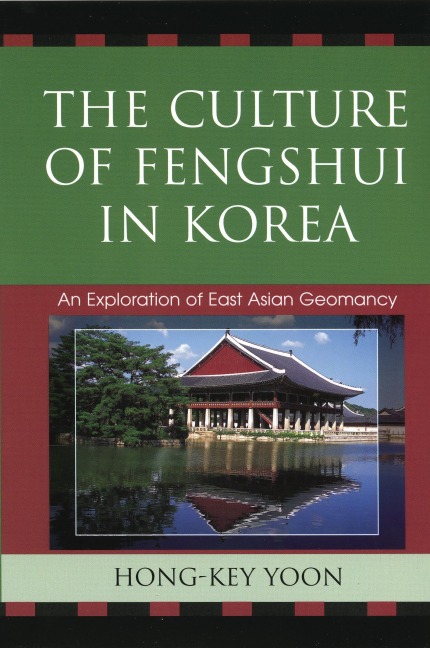
The term Fengshui, which literally means 'wind and water,' is the ancient Chinese art of selecting an auspicious site to provide the most harmonious relationship between human and earth. The term is generally translated as "geomancy," and has had a deep and extensive impact on Korean, Chinese, and other East Asian cultures. Hong-key Yoon's book explores the nature of geomantic principles and the culture of practicing them in Korean cultural contexts.
Yoon first examines the nature and historical background of geomancy, geomantic principles for auspicious sites (houses, graves, and cities) and provides an interpretation of geomantic principles as practiced in Korea. Yoon looks at geomancy's influence on cartography, religion and philosophy, and urban development in both Korea and China. Finally, Yoon debates the role of geomancy in the iconographical warfare between Japanese colonialism and Korean nationalism as it affected the cultural landscape of Kyongbok Palace in Seoul.
Hong-key Yoon is associate professor in the School of Geography and Environmental Science at the University of Auckland, New Zealand.
Chapter 1 Preface
Part 2 Part I: The Nature And Historical Background Of Geomancy
Chapter 3 Chapter 1: Introduction
Chapter 4 Chapter 2: The Origin and Evolution of Geomancy in Korea
Chapter 5 Chapter 3: The Introduction and Development of Geomancy in Korea
Part 6 Part II: Geomantic Principles Into Practice
Chapter 7 Chapter 4: Yin-Yang Theory and Geomancy
Chapter 8 Chapter 5: The Geomantic Principles for and Auspicious Site
Chapter 9 Chapter 6: The Principles of House Geomancy
Chapter 10 Chapter 7: Grave Geomancy Landscape
Chapter 11 Chapter 8: An Interpretation of Geomantic Principles
Chapter 12 Chapter 9: The Cartography of Geomancy
Part 13 Part III: Geomancy And Religion
Chapter 14 Chapter 10: Geomancy's Interaction with Buddhism
Chapter 15 Chapter 11: Confucian Ethos and Geomancy
Part 16 Part IV: Geomancy And Settlement
Chapter 17 Chapter 12: The Use of Geomantic Ideas in Chinese, Japanese, and Korean Cities
Chapter 18 Chapter 13: Seoul: A New Dynasty's Search for an Auspicious Site
Chapter 19 Chapter 14: The Social Construction of Kaesong
Part 20 Part V: Geomancy and Iconography
Chapter 21 Chapter 15: Iconographic Warfare and the Geomantic Landscape of Seoul
Chapter 22 Chapter 16: Conclusion
Dieses eBook wird im PDF-Format geliefert und ist mit einem Adobe Kopierschutz (DRM) versehen. Sie können dieses eBook mit allen Geräten lesen, die das PDF-Format und den Adobe Kopierschutz (DRM) unterstützen.
Zum Beispiel mit den folgenden Geräten:
• tolino Reader
Laden Sie das eBook direkt über den Reader-Shop auf dem tolino herunter oder übertragen Sie das eBook auf Ihren tolino mit einer kostenlosen Software wie beispielsweise Adobe Digital Editions.
• Sony Reader & andere eBook Reader
Laden Sie das eBook direkt über den Reader-Shop herunter oder übertragen Sie das eBook mit der kostenlosen Software Sony READER FOR PC/Mac oder Adobe Digital Editions auf ein Standard-Lesegeräte mit epub- und Adobe DRM-Unterstützung.
• Tablets & Smartphones
Möchten Sie dieses eBook auf Ihrem Smartphone oder Tablet lesen, finden Sie hier unsere kostenlose Lese-App für iPhone/iPad und Android Smartphone/Tablets.
• PC & Mac
Lesen Sie das eBook direkt nach dem Herunterladen mit einer kostenlosen Lesesoftware, beispielsweise Adobe Digital Editions, Sony READER FOR PC/Mac oder direkt über Ihre eBook-Bibliothek in Ihrem Konto unter „Meine eBooks“ - „online lesen“.
Schalten Sie das eBook mit Ihrer persönlichen Adobe ID auf bis zu sechs Geräten gleichzeitig frei.
Bitte beachten Sie, dass die Kindle-Geräte das Format nicht unterstützen und dieses eBook somit nicht auf Kindle-Geräten lesbar ist.