Und dann auf "Zum Home-Bildschirm [+]".

Stöbern
genialokal zum Startbildschirm hinzufügen
Installieren Sie die genialokal App auf Ihrem Startbildschirm für einen schnellen Zugriff und eine komfortable Nutzung.
Installieren Sie die genialokal App auf Ihrem Startbildschirm für einen schnellen Zugriff und eine komfortable Nutzung.
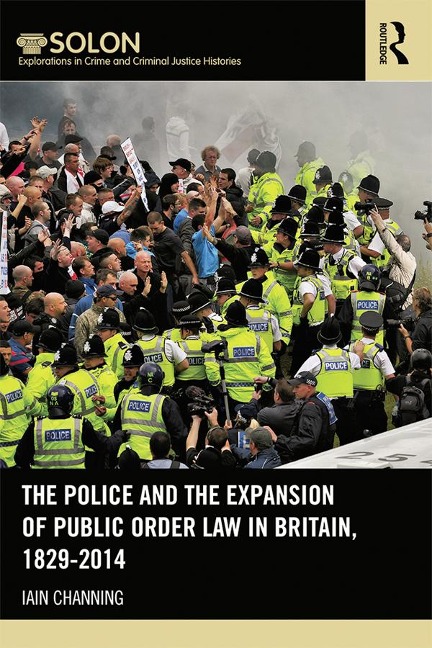
Incidences of public disorder, and the manner in which they have been suppressed, have repeatedly ignited debate on the role of policing, the effectiveness of current legislation and the implications for human rights and civil liberties. These same issues have reverberated throughout British history, and have frequently resulted in the enactment of new legislation that reactively aimed to counter the specific concern of that era. This book offers a detailed analysis of the expansion of public order law in the context of the historical and political developments in British society. The correlation of key historical events and the enactment of consequent legislation is a key theme that resonates throughout the book, and demonstrates the expanding influence of the law on public assemblies and protest, which has continued to criminalise and prohibit certain social behaviours. Crucial movements in Britain's social and political history who have all engaged in, or have provoked public disorder, are examined in the book. Other incidents of riot and disorder, such as the Featherstone Riot (1893), the Battle of Cable Street (1936), the Inner City Riots (1980s) and the UK riots (2011) are also covered. By positioning legal developments within their historical context, the book demonstrates the ebb and flow between the prominence of the competing demands of the liberties of free expression and assembly on the one hand and the protection of the general public and property on the other. This book is essential reading for academics and students in the fields of criminology, history and law.
Iain Channing is an interdisciplinary researcher at Plymouth University. Dr. Channing's research traverses the fields of Law, Criminology and History and he has presented his research at various conferences around the UK. He is the Membership Secretary of SOLON and has a particular interest in the history of public order, political extremism and the police.
Introduction Chapter 1. The Development of Public Order Law Chapter 2. 'I Predict a Breach of the Peace': Police Discretion and the Tension between Liberty and Order Chapter 3. Riot and Violent Disorder: Controlling Spontaneous Disorder and Excessive Police Violence Chapter 4. Freedom of Assembly and Public Processions: Issues related to promoting opinions and provoking disorder Chapter 5. Policing Public Processions after the Public Order Act 1936 Chapter 6. Public Meetings and Freedom of Expression: The Criminalisation of Words and Political Censorship Chapter 7. Public Meetings held on Private Premises: The roles of the steward and the police Chapter 8. Dressed for Disorder: The Criminalisation of Political Uniforms Conclusion.
Dieses eBook wird im PDF-Format geliefert und ist mit einem Adobe Kopierschutz (DRM) versehen. Sie können dieses eBook mit allen Geräten lesen, die das PDF-Format und den Adobe Kopierschutz (DRM) unterstützen.
Zum Beispiel mit den folgenden Geräten:
• tolino Reader
Laden Sie das eBook direkt über den Reader-Shop auf dem tolino herunter oder übertragen Sie das eBook auf Ihren tolino mit einer kostenlosen Software wie beispielsweise Adobe Digital Editions.
• Sony Reader & andere eBook Reader
Laden Sie das eBook direkt über den Reader-Shop herunter oder übertragen Sie das eBook mit der kostenlosen Software Sony READER FOR PC/Mac oder Adobe Digital Editions auf ein Standard-Lesegeräte mit epub- und Adobe DRM-Unterstützung.
• Tablets & Smartphones
Möchten Sie dieses eBook auf Ihrem Smartphone oder Tablet lesen, finden Sie hier unsere kostenlose Lese-App für iPhone/iPad und Android Smartphone/Tablets.
• PC & Mac
Lesen Sie das eBook direkt nach dem Herunterladen mit einer kostenlosen Lesesoftware, beispielsweise Adobe Digital Editions, Sony READER FOR PC/Mac oder direkt über Ihre eBook-Bibliothek in Ihrem Konto unter „Meine eBooks“ - „online lesen“.
Schalten Sie das eBook mit Ihrer persönlichen Adobe ID auf bis zu sechs Geräten gleichzeitig frei.
Bitte beachten Sie, dass die Kindle-Geräte das Format nicht unterstützen und dieses eBook somit nicht auf Kindle-Geräten lesbar ist.