Und dann auf "Zum Home-Bildschirm [+]".

Stöbern
genialokal zum Startbildschirm hinzufügen
Installieren Sie die genialokal App auf Ihrem Startbildschirm für einen schnellen Zugriff und eine komfortable Nutzung.
Installieren Sie die genialokal App auf Ihrem Startbildschirm für einen schnellen Zugriff und eine komfortable Nutzung.
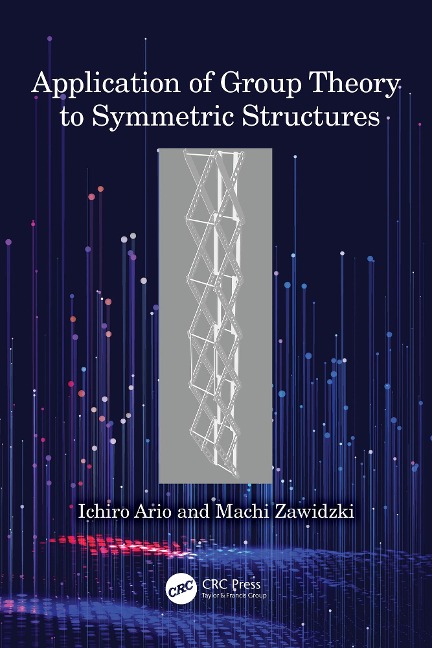
Ario and Zawidzki show readers how to handle symmetric structures in engineering using group-theoretic bifurcation theory as a mathematical tool for the finite element analysis of symmetric structures. They guide the reader from the initial mathematical concepts through to application examples. Readers will gain a solid theoretical grounding in group theory and strong working knowledge of the use of computational frameworks for structural analysis using mathematical representations of symmetry and physical symmetry. First, the authors elaborate an outline of symmetric structures in engineering and then describe the representation of symmetry and group theory. They then discuss block diagonalization theory and finite element analysis models. This provides readers with the base knowledge needed for Chapter 6, which is based on numerical analysis examples of invariant, static FEM model systems and dynamic model systems of the dihedral group. This unique approach is a vital method that will enable readers to reduce the time and computation needed for accurate analysis so that they can better design such structures. The focus on finite element methods and practical examples and case studies throughout provides a strong practical foundation for anyone studying or working in this field. The book is a valuable resource for undergraduate and postgraduate students on various courses such as civil and mechanical engineering, architecture, structural engineering, applied mathematics, and physics. Additionally, it describes vital practical solutions for structural engineers, structural system manufacturers, fabricators of prefabricated elements, and developers of computational mechanics and so on.
Ichiro Ario is an assistant professor in the Graduate School of Advanced Science and Engineering, Hiroshima University. He obtained his Doctor of Engineering degree from Nagaoka University of Technology in Japan. Machi Zawidzki is an assistant professor in the Department of Intelligent Technologies, Institute of Fundamental Technological Research of the Polish Academy of Sciences. He obtained his Doctor of Engineering degree from Ritsumeikan University in Japan.
Part 1: This is fundamental part 1. Introduction 2. Symmetry and its representation 3. Group Theory and Structural Mechanics 4. Basics of the finite element method Part 2: This is the application of group theory to symmetric structures 5. Block Diagonalization Theory for Dihedral Groups 6. Numerical Analysis of Dihedral Group Invariant Systems 7. Numerical Efficiency Evaluation of Parallel Computing Method 8. Group products A D3. invariant plate element B D2. invariant bending plate element
Dieses eBook wird im PDF-Format geliefert und ist mit einem Adobe Kopierschutz (DRM) versehen. Sie können dieses eBook mit allen Geräten lesen, die das PDF-Format und den Adobe Kopierschutz (DRM) unterstützen.
Zum Beispiel mit den folgenden Geräten:
• tolino Reader
Laden Sie das eBook direkt über den Reader-Shop auf dem tolino herunter oder übertragen Sie das eBook auf Ihren tolino mit einer kostenlosen Software wie beispielsweise Adobe Digital Editions.
• Sony Reader & andere eBook Reader
Laden Sie das eBook direkt über den Reader-Shop herunter oder übertragen Sie das eBook mit der kostenlosen Software Sony READER FOR PC/Mac oder Adobe Digital Editions auf ein Standard-Lesegeräte mit epub- und Adobe DRM-Unterstützung.
• Tablets & Smartphones
Möchten Sie dieses eBook auf Ihrem Smartphone oder Tablet lesen, finden Sie hier unsere kostenlose Lese-App für iPhone/iPad und Android Smartphone/Tablets.
• PC & Mac
Lesen Sie das eBook direkt nach dem Herunterladen mit einer kostenlosen Lesesoftware, beispielsweise Adobe Digital Editions, Sony READER FOR PC/Mac oder direkt über Ihre eBook-Bibliothek in Ihrem Konto unter „Meine eBooks“ - „online lesen“.
Schalten Sie das eBook mit Ihrer persönlichen Adobe ID auf bis zu sechs Geräten gleichzeitig frei.
Bitte beachten Sie, dass die Kindle-Geräte das Format nicht unterstützen und dieses eBook somit nicht auf Kindle-Geräten lesbar ist.