Und dann auf "Zum Home-Bildschirm [+]".

Stöbern
genialokal zum Startbildschirm hinzufügen
Installieren Sie die genialokal App auf Ihrem Startbildschirm für einen schnellen Zugriff und eine komfortable Nutzung.
Installieren Sie die genialokal App auf Ihrem Startbildschirm für einen schnellen Zugriff und eine komfortable Nutzung.
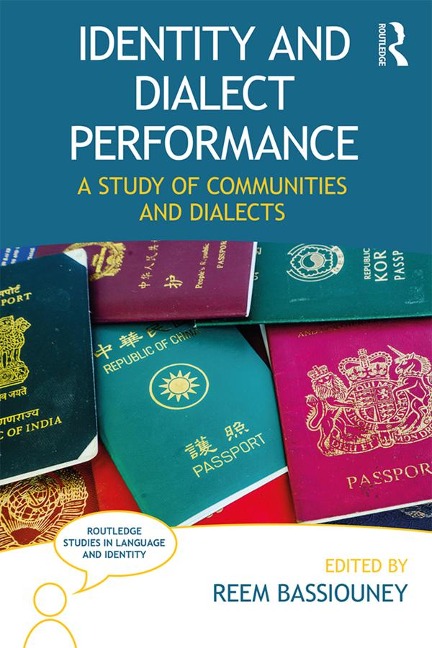
Identity and Dialect Performance discusses the relationship between identity and dialects. It starts from the assumption that the use of dialect is not just a product of social and demographic factors, but can also be an intentional performance of identity. Dialect performance is related to identity construction and in a highly globalised world, the linguistic repertoire has increased rapidly, thereby changing our conventional assumptions about dialects and their usage. The key outstanding feature of this particular book is that it spans an extensive range of communities and dialects; Italy, Hong Kong, Morocco, Egypt, Syria, Japan, Germany, The Sudan, The Netherlands, Nigeria, Spain, US, UK, French Guiana, Colombia,and Libya.
Reem Bassiouney is Professor of Linguistics at The American University of Cairo. Her recent book publications include Functions of Code-Switching in Egypt (2006), Arabic Sociolinguistics (2008), Arabic and the Media (2010, editor), Arabic language and Linguistics (2012, co-editor), Language and Identity in Modern Egypt (2014), and The Routledge Handbook of Arabic Linguistics (forthcoming, co-editor).
Contents List of Figures List of Tables List of Contributors Introduction I. Dialects in Localised Delocalised Contexts 1. Nonstandard dialect and identity John Edwards (St. Francis Xavier University) 2. The elusive dialect border Dick Smakman & Marten van der Meulen (Universiteit Leiden) 3. Dialect performances in super diverse communities: the case for ethnographic approaches to language variation Anna De Fina (Georgetown University) II. Nation-States and Identity Construction in Relation to a Standard and a Dialect 4. The construction of linguistic borders and the rise of national identity in South Sudan: some insights into Juba Arabic (árabi júba) Stefano Manfredi (Centre national de la recherche scientifique, SeDyL-CELIA) 5. From language to dialect and back: the case of Piedmontese Mauro Tosco (Università degli Studi di Torino) 6. Darija and the construction of "Moroccanness" Dominique Caubet (INALCO, Paris, and Centre Jacques Berque, CNRS - MAE, Rabat) 7. 'Sloppy speech is like sloppy dress': folk attitudes towards non-standard British English Carmen Ebner (Universiteit Leiden) III. Contact, Variation, Performance and Metalinguistic Discourse 8. From varieties in contact to the selection of linguistic features in multilingual settings Isabelle Leglise & Santiago Sanchez Moreano (Centre national de la recherche scientifique, SeDyL-CELIA) 9. 'You live in the United States, you speak English', decían las maestras: how New Mexican Spanish speakers enact, ascribe and reject ethnic identities Katherine O'Donnell Christoffersen & Naomi Shin (University of New Mexico) 10. The social meanings of Wolof and French: contact dialects, language ideology, and competing modernities in Senegal Fiona Mc Laughlin 11. The social value of variation in Tétouan and Ghomara (Northwestern Morocco) Angeles Vicente & Amina Naciri-Azzouz (Universidad de Zaragoza) 12. New presentations of self in everyday life: Linguistic transgressions in England, Germany and Japan Patrick Heinrich (Università Ca' Foscari) 13. Language and identity in Siwa Oasis: Indexing belonging, localness and authenticity in a small minority community Valentina Serreli IV. The Media, Dialect Performance and Language Variation 14. Youtube Yinzers: Stancetaking and the performance of Pittsburghese Scott F. Kielsing (University of Pittsburgh) 15. Performing Scottish identity on Screen: Language, Identity, and Humour in Scottish Television Comedy Natalie Braber (Nottingham Trent University) 16. Identity, Repertoire, and Performance: The Case of an Egyptian Poet Reem Bassiouney (The American University in Cairo) 17. Ruination and amusement - dialect, youth and revolution in Naija Anne Storch (Universität zu Köln) 18. Dialectal variation and identity in post-revolutionary Libyan media: The case of Dragunov (2014) Luca D'Anna (University of Mississippi) 19. The effect of TV and internal versus external contact on variation in Syrian rural child language Rania Habib (Syracuse University) Index
Dieses eBook wird im PDF-Format geliefert und ist mit einem Adobe Kopierschutz (DRM) versehen. Sie können dieses eBook mit allen Geräten lesen, die das PDF-Format und den Adobe Kopierschutz (DRM) unterstützen.
Zum Beispiel mit den folgenden Geräten:
• tolino Reader
Laden Sie das eBook direkt über den Reader-Shop auf dem tolino herunter oder übertragen Sie das eBook auf Ihren tolino mit einer kostenlosen Software wie beispielsweise Adobe Digital Editions.
• Sony Reader & andere eBook Reader
Laden Sie das eBook direkt über den Reader-Shop herunter oder übertragen Sie das eBook mit der kostenlosen Software Sony READER FOR PC/Mac oder Adobe Digital Editions auf ein Standard-Lesegeräte mit epub- und Adobe DRM-Unterstützung.
• Tablets & Smartphones
Möchten Sie dieses eBook auf Ihrem Smartphone oder Tablet lesen, finden Sie hier unsere kostenlose Lese-App für iPhone/iPad und Android Smartphone/Tablets.
• PC & Mac
Lesen Sie das eBook direkt nach dem Herunterladen mit einer kostenlosen Lesesoftware, beispielsweise Adobe Digital Editions, Sony READER FOR PC/Mac oder direkt über Ihre eBook-Bibliothek in Ihrem Konto unter „Meine eBooks“ - „online lesen“.
Schalten Sie das eBook mit Ihrer persönlichen Adobe ID auf bis zu sechs Geräten gleichzeitig frei.
Bitte beachten Sie, dass die Kindle-Geräte das Format nicht unterstützen und dieses eBook somit nicht auf Kindle-Geräten lesbar ist.