Und dann auf "Zum Home-Bildschirm [+]".

Stöbern
genialokal zum Startbildschirm hinzufügen
Installieren Sie die genialokal App auf Ihrem Startbildschirm für einen schnellen Zugriff und eine komfortable Nutzung.
Installieren Sie die genialokal App auf Ihrem Startbildschirm für einen schnellen Zugriff und eine komfortable Nutzung.


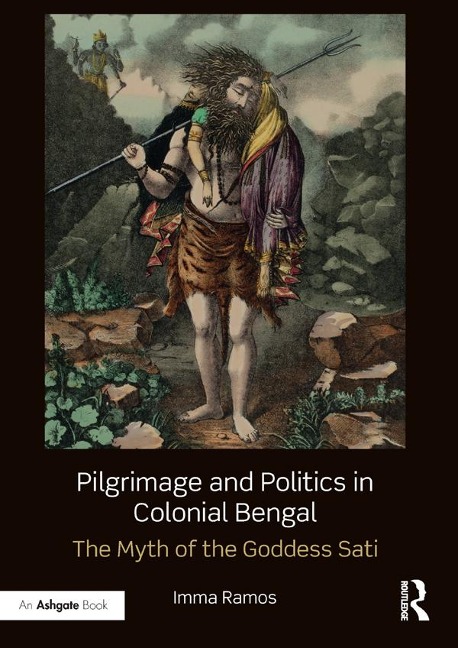
From the late nineteenth century onwards the concept of Mother India assumed political significance in colonial Bengal. Reacting against British rule, Bengali writers and artists gendered the nation in literature and visual culture in order to inspire patriotism amongst the indigenous population. This book will examine the process by which the Hindu goddess Sati rose to sudden prominence as a personification of the subcontinent and an icon of heroic self-sacrifice. According to a myth of cosmic dismemberment, Sati's body parts were scattered across South Asia and enshrined as Shakti Pithas, or Seats of Power. These sacred sites were re-imagined as the fragmented body of the motherland in crisis that could provide the basis for an emergent territorial consciousness. The most potent sites were located in eastern India, Kalighat and Tarapith in Bengal, and Kamakhya in Assam. By examining Bengali and colonial responses to these temples and the ritual traditions associated with them, including Tantra and image worship, this book will provide the first comprehensive study of this ancient network of pilgrimage sites in an art historical and political context.
Imma Ramos is curator of the South Asia collections at the British Museum in London. Her research interests revolve around the relationship between religion, politics and gender in South Asian visual culture.
Contents Introduction A myth of dismemberment Sati and her rise as a patriotic icon The formation of Hindu identity: From cultural to revolutionary nationalism Layout of the book Chapter One Kalighat souvenirs and the creation of Sati's iconography Sati's place in the visual rhetoric of motherland Sati's portrayal in Kalighat pilgrimage souvenirs The invocation and reinvention of Sati The romanticisation of martyrdom Subverting Christian iconography Shiva, asceticism and Bengali masculinity Sati, suttee and the story of Padmini The enduring power of Sati Chapter Two Kamakhya's erotic-apotropaic potency and the forging of sacred geography Martial and maternal: Kamakhya's sculptures The promotion of fertility and protection: Kamakhya's female archers Subversive sexuality: The reception of Kamakhya during the colonial period Colonial mapping versus sacred geography Bengal's love affair with Kamakhya: Pilgrimage as a nationalist device Chapter Three Tantra's revolutionary potential: Tarapith and Bamakhepa's visualisation of Tara Understanding Tara Understanding Tantric ritual through Tara Bamakhepa, Tantra and revolutionary potential Terrifying and benevolent: Visions of Tara The sweetening of death Chapter Four Contesting the colonial gaze: Image worship debates in nineteenth-century Bengal Murtipuja, darshan and rituals of consecration Ram Mohan Roy and the Brahmo Samaj movement 'Inconsistent with the moral order of the universe': The Reverend Hastie's views on murtipuja The backlash: Bengali responses to Hastie The Saligram idol case: Murti and artefact The Attahas and Khirogram Pithas: The charisma of antique murtis Conclusion Epilogue Reviving Sati's corpse: Mother India tours and Hindutva in the twenty-first century Bibliography
Dieses eBook wird im PDF-Format geliefert und ist mit einem Adobe Kopierschutz (DRM) versehen. Sie können dieses eBook mit allen Geräten lesen, die das PDF-Format und den Adobe Kopierschutz (DRM) unterstützen.
Zum Beispiel mit den folgenden Geräten:
• tolino Reader
Laden Sie das eBook direkt über den Reader-Shop auf dem tolino herunter oder übertragen Sie das eBook auf Ihren tolino mit einer kostenlosen Software wie beispielsweise Adobe Digital Editions.
• Sony Reader & andere eBook Reader
Laden Sie das eBook direkt über den Reader-Shop herunter oder übertragen Sie das eBook mit der kostenlosen Software Sony READER FOR PC/Mac oder Adobe Digital Editions auf ein Standard-Lesegeräte mit epub- und Adobe DRM-Unterstützung.
• Tablets & Smartphones
Möchten Sie dieses eBook auf Ihrem Smartphone oder Tablet lesen, finden Sie hier unsere kostenlose Lese-App für iPhone/iPad und Android Smartphone/Tablets.
• PC & Mac
Lesen Sie das eBook direkt nach dem Herunterladen mit einer kostenlosen Lesesoftware, beispielsweise Adobe Digital Editions, Sony READER FOR PC/Mac oder direkt über Ihre eBook-Bibliothek in Ihrem Konto unter „Meine eBooks“ - „online lesen“.
Schalten Sie das eBook mit Ihrer persönlichen Adobe ID auf bis zu sechs Geräten gleichzeitig frei.
Bitte beachten Sie, dass die Kindle-Geräte das Format nicht unterstützen und dieses eBook somit nicht auf Kindle-Geräten lesbar ist.