Und dann auf "Zum Home-Bildschirm [+]".

Stöbern
genialokal zum Startbildschirm hinzufügen
Installieren Sie die genialokal App auf Ihrem Startbildschirm für einen schnellen Zugriff und eine komfortable Nutzung.
Installieren Sie die genialokal App auf Ihrem Startbildschirm für einen schnellen Zugriff und eine komfortable Nutzung.
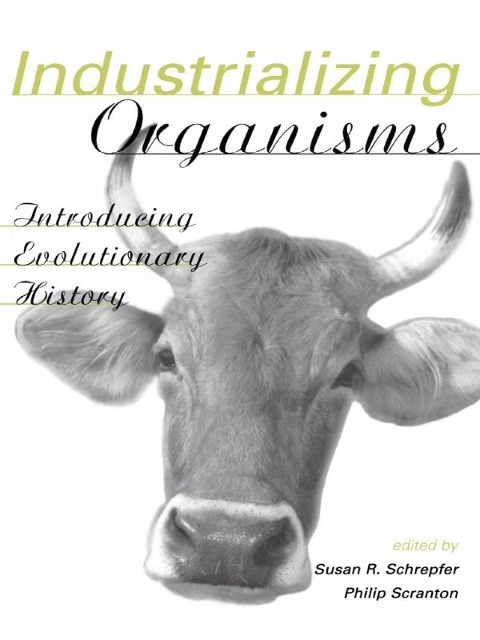
Scientists have developed a featherless chicken designed to make industrial chicken production more efficient, while specially trained Pacific bottlenose dolphins are being deployed in the Persian Gulf to disarm mines and protect our Navy. Everyone knows Darwin's theory of natural selection, but what about his idea of artificial selection--how humans, not nature, rework natural organisms to meet our needs? Industrializing Organisms brings us to the threshold of the new field of evolutionary history--from the mobilization of war horses in the 19th century to today's engineered plants and manipulated animals.
Susan Schrepfer is Associate Professor of History at Rutgers University and Director of the Institute for Secondary Teachers Philip Scranton is the Board of Governors Professor of History at Rutgers University, and Director of Research at the Hagley Museum and Library.
Preface, Philip Scranton Introduction: The Garden in the Machine: The Anatomy of Evolutionary History, Edmund Russell Part One: Plants, Profits, Politics, and Power For Profit and Pleasure: Peter Henderson and the Commercialization of Horticulture in 19th Century America, Susan Lanman Biological Innovation in American Wheat Production: Science, Policy, and Environmental Adaptation, Alan Olmstead and Paul Rhode Nature and Profit: A Cuban Sugar Plantation in the Early Twentieth Century, Mark J. Smith Manufacturing Green Gold: A History of Industrial Tree Improvement in the United States, William Boyd and Scott Prudham Part Two: Animals, Aggression, Arrogance, and Analysis War Horses: Markets, Myths, and Equine Technology in the American Civil War, Ann Greene Turbo-Cows: Producing a Competitive Animal in 19th and Early 20th Century Switzerland, Barbara Orland Modeling Animals as Technologies and Patients: The Historical Production of Hemophiliac Dogs in American Biomedicine, Stephen Pemberton Making the Chicken of Tomorrow: Reworking Poultry as Commodities and as Creatures, 1945-1990, Roger Horowitz Hogs, Antibiotics, and the Industrial Environments of Postwar Agriculture, Mark R. Finlay Afterword, Susan Schrepfer
Dieses eBook wird im PDF-Format geliefert und ist mit einem Adobe Kopierschutz (DRM) versehen. Sie können dieses eBook mit allen Geräten lesen, die das PDF-Format und den Adobe Kopierschutz (DRM) unterstützen.
Zum Beispiel mit den folgenden Geräten:
• tolino Reader
Laden Sie das eBook direkt über den Reader-Shop auf dem tolino herunter oder übertragen Sie das eBook auf Ihren tolino mit einer kostenlosen Software wie beispielsweise Adobe Digital Editions.
• Sony Reader & andere eBook Reader
Laden Sie das eBook direkt über den Reader-Shop herunter oder übertragen Sie das eBook mit der kostenlosen Software Sony READER FOR PC/Mac oder Adobe Digital Editions auf ein Standard-Lesegeräte mit epub- und Adobe DRM-Unterstützung.
• Tablets & Smartphones
Möchten Sie dieses eBook auf Ihrem Smartphone oder Tablet lesen, finden Sie hier unsere kostenlose Lese-App für iPhone/iPad und Android Smartphone/Tablets.
• PC & Mac
Lesen Sie das eBook direkt nach dem Herunterladen mit einer kostenlosen Lesesoftware, beispielsweise Adobe Digital Editions, Sony READER FOR PC/Mac oder direkt über Ihre eBook-Bibliothek in Ihrem Konto unter „Meine eBooks“ - „online lesen“.
Schalten Sie das eBook mit Ihrer persönlichen Adobe ID auf bis zu sechs Geräten gleichzeitig frei.
Bitte beachten Sie, dass die Kindle-Geräte das Format nicht unterstützen und dieses eBook somit nicht auf Kindle-Geräten lesbar ist.