Und dann auf "Zum Home-Bildschirm [+]".

Stöbern
genialokal zum Startbildschirm hinzufügen
Installieren Sie die genialokal App auf Ihrem Startbildschirm für einen schnellen Zugriff und eine komfortable Nutzung.
Installieren Sie die genialokal App auf Ihrem Startbildschirm für einen schnellen Zugriff und eine komfortable Nutzung.
Ihr gewünschter Artikel ist in 0 Buchhandlungen vorrätig - wählen Sie hier eine Buchhandlung in Ihrer Nähe aus:

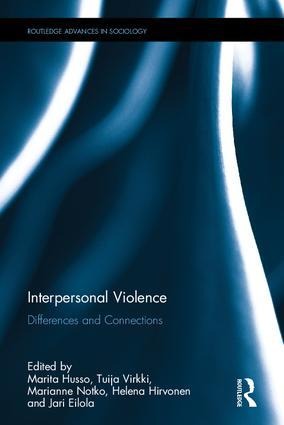
This collection offers perspectives on various forms of interpersonal violence, from early modernity to today. It presents international, multidisciplinary research considering areas from Europe and Russia to Africa, America and Asia. The authors offer tools to understand the phenomenon and cultural conceptions of interpersonal violence.
Marita Husso PhD, Docent, University lecturer (tenure), Department of Social Sciences and Philosophy, University of Jyväskylä, Finland. Tuija Virkki PhD, Docent, University lecturer, Department of Social Sciences and Philosophy at the University of Jyväskylä, Finland. Marianne Notko PhD, postdoctoral researcher, Family Research Centre, University of Jyväskylä, Finland. Helena Hirvonen PhD. lecturer, Department of Social Sciences, University of Eastern Finland, Finland. Jari Eilola PhD, Docent, Academy Research Fellow, Department of History and Ethnology, University of Jyväskylä, Finland.
INTRODUCTION A spatial-temporal, intersectional and institutional approach to interpersonal violence (Marita Husso, TuijaVirkki, Helena Hirvonen, Jari Eilola & Marianne Notko) PART 1 HISTORIES Chapter 1. Intersections of rape crime and child protection in early modern courts (Satu Lidman) Chapter 2. Offences of the flesh? Cryptic pregnancy infanticide in eighteenth and nineteenth century Finland (Mona Rautelin) Chapter 3. Lethal chastisement of children in pre-industrial Finland (ca 1700-1860): reasons, practices and control (Anu Koskivirta) PART 2 CULTURES Chapter 4. Honour, Dishonour and Homicides in Britain, Namibia and Turkey. Historical and Contemporary Perspectives (Ville Sarkamo, Cyril Eshareturi, Günes Koc & Kari Miettinen) Chapter 5. Woman-to-woman violence: Impact of traditional practices on women and girls in the Lake Zone Regions of Tanzania, East Africa (Regina Opoku) Chapter 6. Exploring interpersonal violence and intimate partner violence issues in the Japanese legal and socio-cultural contexts (Mutsuko Takahashi) Chapter 7. Gendering responsibility. Finnish and Russian helping professionals' views on responsible agency in the context of intimate partner violence (Tuija Virkki & Maija Jäppinen)PART 3 RELATIONSHIPS Chapter 8. The murder of women (Russell P. Dobash & R. Emerson Dobash) Chapter 9. Children's voices, children's agency, and the development of knowledge about children exposed to intimate partner violence (Maria Eriksson) Chapter 10. Interethnic conflicts and ethnic victimization in Slovenian schools (Ana Kralj & Tjaša Žakelj) Chapter 11. Self-reporting by older adults as victims of violence in Portugal: the remaining taboo issue (Ana Paula Gil, Ana João Santos & Irina Kislaya) Chapter 12. Want, dare and be able to - Abused women's experiences of support during the preliminary investigation and criminal trial procedure (Veronica Ekström) PART 4 DISCOURSES Chapter 13. Love and fire: The role of passion in representations of intimate partner violence (Stephanie J. Brommer) Chapter 14. Reading, interventions. States of interpersonal and intrapersonal violence in Bessie Head's A Question of Power (Saara Jäntti) CONCLUSION From rejection to understanding: Towards a synthetic approach (Marita Husso, Helena Hirvonen & Marianne Notko)