Und dann auf "Zum Home-Bildschirm [+]".

Stöbern
genialokal zum Startbildschirm hinzufügen
Installieren Sie die genialokal App auf Ihrem Startbildschirm für einen schnellen Zugriff und eine komfortable Nutzung.
Installieren Sie die genialokal App auf Ihrem Startbildschirm für einen schnellen Zugriff und eine komfortable Nutzung.
Ihr gewünschter Artikel ist in 0 Buchhandlungen vorrätig - wählen Sie hier eine Buchhandlung in Ihrer Nähe aus:

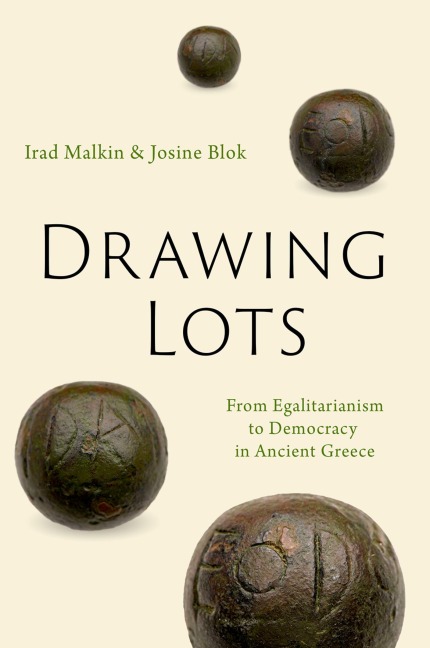
This book offers the first comprehensive study of drawing lots as a central, ubiquitous institution of ancient Greek society. Led by an egalitarian mindset, Greeks drew lots as a matter of course to distribute inheritance, booty, sacrificial meat, and lands, to mix groups, select individuals, and set turns. Lot-oracles were used for divination; otherwise, the gods guarded the justice of the procedure but rarely determined the outcome. When drawing lots was gradually applied to polis governance, classical Athens made sortition the basis of the first democracy in human history. A Greek innovation, drawing lots for governance inspires new democratic politics today.
Irad Malkin is Emeritus Professor of History at Tel Aviv University, a Foreign Member of the Athens National Academy, a member of the European Network for the Study of Ancient Greek History, and the author of numerous books, including A Small Greek World.
Josine Blok is Professor Emeritus of Ancient History and Classical Civilization at Utrecht University, a member of the Royal Dutch Academy of Sciences, and co-founder and chair of the European Network for the Study of Ancient Greek History. Her previous books include Citizenship in Classical Athens.
List of abbreviations
Preface
Introduction Greeks drawing lots: the practice and the mindset of egalitarianism
Part I The lottery mindset: religion and society
1. Lotteries divine and human: the world of the Homeric epics
2. When does the lot reflect the will of the gods? Lots, oracles, divination, and the notion of moira
3. Sacrifice and feast: social values and the distribution of meat by lot
Part II Equal and fair: inheritance, colonization, and mixture
4. Partible Inheritance by lot
5. Drawing lots on the Athenian stage
6. Founding cities and sharing in the polis: equality, allotment, and civic mixture
Part III Drawing lots in polis governance
7. Setting the stage
8. Drawing lots for polis office
9. Drawing lots for governance: a political innovation
Part IV Conclusions
10. Conclusions and implications
11. Drawing lots today: fair distribution and a stronger democracy
Appendix A Lexicographical survey: lottery practices in the archaic and classical periods
Bibliography
Index
Index locorum