Und dann auf "Zum Home-Bildschirm [+]".

Stöbern
genialokal zum Startbildschirm hinzufügen
Installieren Sie die genialokal App auf Ihrem Startbildschirm für einen schnellen Zugriff und eine komfortable Nutzung.
Installieren Sie die genialokal App auf Ihrem Startbildschirm für einen schnellen Zugriff und eine komfortable Nutzung.
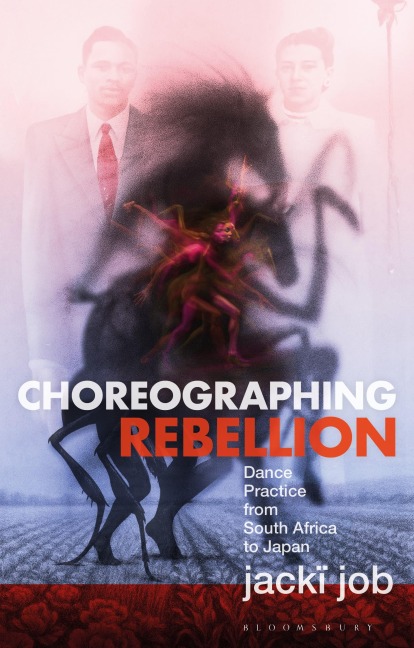
An auto-ethnographic account of a choreographic praxis developed outside of a Western framework, which engages with identity, decoloniality and transformation from a feminist perspective.
Choreographing Rebellion details the methodologies employed in the dramaturgy and performance of 25 choreographic works produced by the author over three decades in South Africa and Japan.
Drawing on these lived experiences, jackï job's starting point is the crafting of a signature dance language in 1994, called Daai za Lady, to respond to the oppressive and unjust socio-political system of apartheid in South Africa.
The second part speaks to choreographies created in Japan between 2003-2011, where elements of daily life and principles of Butoh are applied to making dance performance. As a South African, the author uniquely offers a first-hand understanding of Butoh in the line of Kazuo and Yoshito Ohno.
Her journey returns to South Africa, where the assimilation of Butoh into job's already existent and ongoing dance practice synergises and enables new meanings of personhood and transformation.
Choreographing Rebellion resists singular categorisations of identity too often ascribed to dance performances and communities of people. It draws on psycho-physical practices and personal philosophies of the body, which are placed in dialogue with Giorgio Agamben and Henri Bergson, and argues for the transgressing of human-centric approaches to race, gender and class through a specific animal-human crafting of dance practice.
jackï job has been working as a dancer and choreographer since 1990 and has created more than 80 productions with artists in Africa, Asia and Europe. She is tenured as an academic researcher at the University of Cape Town, South Africa.
Introduction
Chapter One: Briefly Looking Back to Move Forward
Prelude to Daai za Lady
Approaching Alternative Identities
Chapter Two: Emergence
Dawn: Birth of Daai za Lady
The Revelation of an Animist Spirit: A Matriarchal Chair, Carcasses and Masks
The Political Emergence
Chapter Three: Germination & Growth
Improvisation Techniques: Releasing Notions of Self
Japanese Codes of Daily Life: Unbuilding Western Perceptions of Structure
Enacting Love as a Strategy of Resistance
The Otherworldly Attunement of Daai za Lady's Ontology
Chapter Four: Blossoming & Fullness
Blossoming: Finding Connections through Difference
Developing New Methodologies in Performance
A Brief Note on Resisting Language
Fullness: Multiple Translations of Daai za Lady and Butoh in South Africa
Chapter Five: And Then...
Becoming the Praying Mantis
Following the Lines of Life
Looking Back at Daai za Lady
Dissipation: What Happens Next?
Bibliography
Index
Dieses eBook wird im PDF-Format geliefert und ist mit einem Adobe Kopierschutz (DRM) versehen. Sie können dieses eBook mit allen Geräten lesen, die das PDF-Format und den Adobe Kopierschutz (DRM) unterstützen.
Zum Beispiel mit den folgenden Geräten:
• tolino Reader
Laden Sie das eBook direkt über den Reader-Shop auf dem tolino herunter oder übertragen Sie das eBook auf Ihren tolino mit einer kostenlosen Software wie beispielsweise Adobe Digital Editions.
• Sony Reader & andere eBook Reader
Laden Sie das eBook direkt über den Reader-Shop herunter oder übertragen Sie das eBook mit der kostenlosen Software Sony READER FOR PC/Mac oder Adobe Digital Editions auf ein Standard-Lesegeräte mit epub- und Adobe DRM-Unterstützung.
• Tablets & Smartphones
Möchten Sie dieses eBook auf Ihrem Smartphone oder Tablet lesen, finden Sie hier unsere kostenlose Lese-App für iPhone/iPad und Android Smartphone/Tablets.
• PC & Mac
Lesen Sie das eBook direkt nach dem Herunterladen mit einer kostenlosen Lesesoftware, beispielsweise Adobe Digital Editions, Sony READER FOR PC/Mac oder direkt über Ihre eBook-Bibliothek in Ihrem Konto unter „Meine eBooks“ - „online lesen“.
Schalten Sie das eBook mit Ihrer persönlichen Adobe ID auf bis zu sechs Geräten gleichzeitig frei.
Bitte beachten Sie, dass die Kindle-Geräte das Format nicht unterstützen und dieses eBook somit nicht auf Kindle-Geräten lesbar ist.