Und dann auf "Zum Home-Bildschirm [+]".

Stöbern
genialokal zum Startbildschirm hinzufügen
Installieren Sie die genialokal App auf Ihrem Startbildschirm für einen schnellen Zugriff und eine komfortable Nutzung.
Installieren Sie die genialokal App auf Ihrem Startbildschirm für einen schnellen Zugriff und eine komfortable Nutzung.
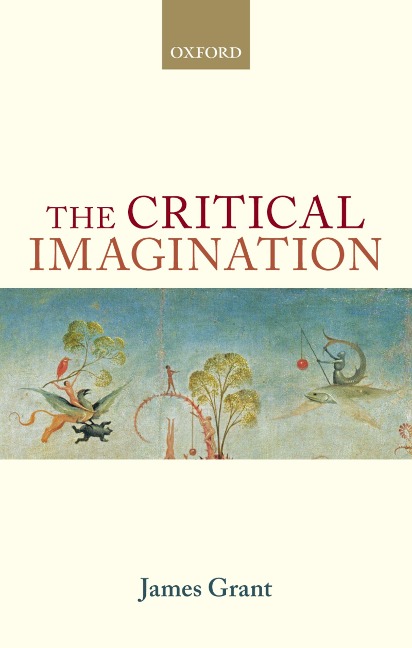
The Critical Imagination is a study of metaphor, imaginativeness, and criticism of the arts. Since the eighteenth century, many philosophers have argued that appreciating art is rewarding because it involves responding imaginatively to a work. Literary works can be interpreted in many ways; architecture can be seen as stately, meditative, or forbidding; and sensitive descriptions of art are often colourful metaphors: music can 'shimmer', prose can be 'perfumed', and a painter's colouring can be 'effervescent'. Engaging with art, like creating it, seems to offer great scope for imagination. Hume, Kant, Oscar Wilde, Roger Scruton, and others have defended variations on this attractive idea. In this book, James Grant critically examines it. The first half explains the role imaginativeness plays in criticism. To do this, Grant answers three questions that are of interest in their own right. First, what are the aims of criticism? Is the point of criticizing a work to evaluate it, to explain it, to modify our response to it, or something else? Second, what is it to appreciate art? Third, what is imaginativeness? He gives new answers to all three questions, and uses them to explain the role of imaginativeness in criticism. The book's second half focuses on metaphor. Why are some metaphors so effective? How do we understand metaphors? Are some thoughts expressible only in metaphor? Grant's answers to these questions go against much current thinking in the philosophy of language. He uses these answers to explain why imaginative metaphors are so common in art criticism. The result is a rigorous and original theory of metaphor, criticism, imaginativeness, and their interrelations.
James Grant is a Tutorial Fellow of Exeter College, Oxford.
- Introduction - 1: The Aims of Criticism - 2: Criticism and Appreciation - 3: Criticism and Imagination - 4: Metaphor and Likeness - 5: The Dispensability of Metaphor - 6: Metaphor and Criticism - Conclusion - Bibliography
Dieses eBook wird im PDF-Format geliefert und ist mit einem Adobe Kopierschutz (DRM) versehen. Sie können dieses eBook mit allen Geräten lesen, die das PDF-Format und den Adobe Kopierschutz (DRM) unterstützen.
Zum Beispiel mit den folgenden Geräten:
• tolino Reader
Laden Sie das eBook direkt über den Reader-Shop auf dem tolino herunter oder übertragen Sie das eBook auf Ihren tolino mit einer kostenlosen Software wie beispielsweise Adobe Digital Editions.
• Sony Reader & andere eBook Reader
Laden Sie das eBook direkt über den Reader-Shop herunter oder übertragen Sie das eBook mit der kostenlosen Software Sony READER FOR PC/Mac oder Adobe Digital Editions auf ein Standard-Lesegeräte mit epub- und Adobe DRM-Unterstützung.
• Tablets & Smartphones
Möchten Sie dieses eBook auf Ihrem Smartphone oder Tablet lesen, finden Sie hier unsere kostenlose Lese-App für iPhone/iPad und Android Smartphone/Tablets.
• PC & Mac
Lesen Sie das eBook direkt nach dem Herunterladen mit einer kostenlosen Lesesoftware, beispielsweise Adobe Digital Editions, Sony READER FOR PC/Mac oder direkt über Ihre eBook-Bibliothek in Ihrem Konto unter „Meine eBooks“ - „online lesen“.
Schalten Sie das eBook mit Ihrer persönlichen Adobe ID auf bis zu sechs Geräten gleichzeitig frei.
Bitte beachten Sie, dass die Kindle-Geräte das Format nicht unterstützen und dieses eBook somit nicht auf Kindle-Geräten lesbar ist.