Und dann auf "Zum Home-Bildschirm [+]".

Stöbern
genialokal zum Startbildschirm hinzufügen
Installieren Sie die genialokal App auf Ihrem Startbildschirm für einen schnellen Zugriff und eine komfortable Nutzung.
Installieren Sie die genialokal App auf Ihrem Startbildschirm für einen schnellen Zugriff und eine komfortable Nutzung.



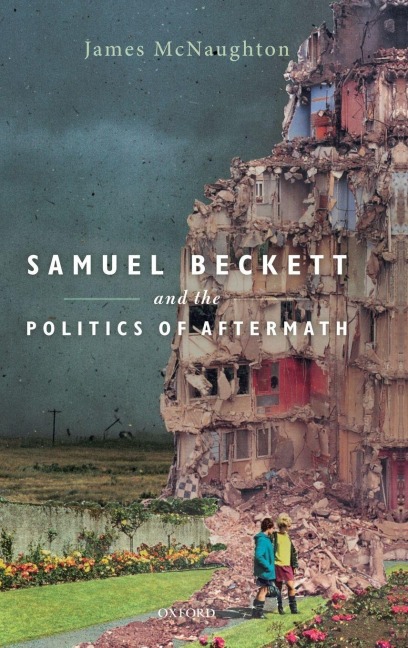
Samuel Beckett and the Politics of Aftermath explores Beckett's literary responses to the political maelstroms of his formative and middle years: the Irish civil war and the crisis of commitment in 1930s Europe, the rise of fascism and the atrocities of World War II. Archive yields a Beckett who monitored propaganda in speeches and newspapers, and whose creative work engages with specific political strategies, rhetoric, and events. Finally, Beckett's political aesthetic sharpens into focus. Deep within form, Beckett models ominous historical developments as surely as he satirizes artistic and philosophical interpretations that overlook them. He burdens aesthetic production with guilt: imagination and language, theater and narrative, all parallel political techniques. Beckett comically embodies conservative religious and political doctrines; he plays Irish colonial history against contemporary European horrors; he examines aesthetic complicity in effecting atrocity and covering it up. This book offers insightful, original, and vivid readings of Beckett's work up to Three Novels and Endgame.
James McNaughton is an Associate Professor of English at the University of Alabama. Indebted to archival research, Dr. McNaughton's work examines the intersections among history, politics, and modernist aesthetics. His areas of specialty include twentieth-century Irish writing, British and Irish poetry, and international modernisms. He has previously published in the Journal of Modern Literature, Modern Fiction Studies, and elsewhere. He also writes non-fiction essays.
- Introduction: 'Reduced to doing a lap with Führer': Beckett's Political Aesthetic
- 1: 'The same old mouldy words': Beckett, Modernism, and the Irish Free State
- 2: 'Echo's Bones': Sex, Politics, and Entailment in the Irish Free-State
- 3: Beckett in History: German Diaries, Watt, and the Problem of Propaganda
- 4: Taking Them at their Word: Politics of the Body in Malone Dies
- 5: 'It all boils down to a question of words': The Unnamable and History's Abattoirs
- 6: 'Prophetic Relish': Famine Politics in Beckett's Endgame
- Bibliography