Und dann auf "Zum Home-Bildschirm [+]".

Stöbern
genialokal zum Startbildschirm hinzufügen
Installieren Sie die genialokal App auf Ihrem Startbildschirm für einen schnellen Zugriff und eine komfortable Nutzung.
Installieren Sie die genialokal App auf Ihrem Startbildschirm für einen schnellen Zugriff und eine komfortable Nutzung.
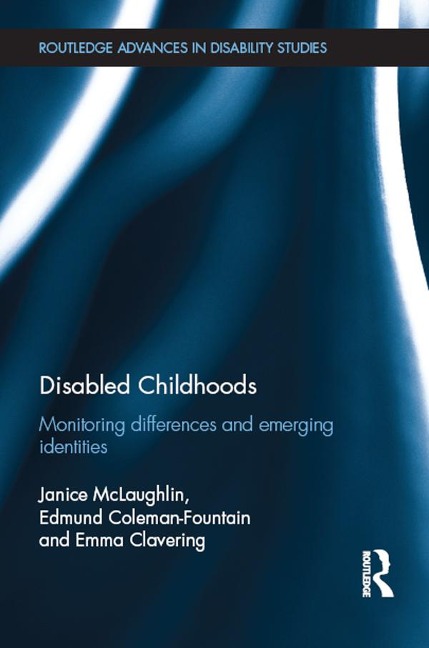
A crucial contemporary dynamic around children and young people in the Global North is the multiple ways that have emerged to monitor their development, behaviour and character. In particular disabled children or children with unusual developmental patterns can find themselves surrounded by multiple practices through which they are examined. This rich book draws on a wide range of qualitative research to look at how disabled children have been cared for, treated and categorised. Narrative and longitudinal interviews with children and their families, along with stories and images they have produced and notes from observations of different spaces in their lives - medical consultation rooms, cafes and leisure centres, homes, classrooms and playgrounds amongst others - all make a contribution. Bringing this wealth of empirical data together with conceptual ideas from disability studies, sociology of the body, childhood studies, symbolic interactionism and feminist critical theory, the authors explore the multiple ways in which monitoring occurs within childhood disability and its social effects. Their discussion includes examining the dynamics of differentiation via medicine, social interaction, and embodiment and the multiple actors - including children and young people themselves - involved. The book also investigates the practices that differentiate children into different categories and what this means for notions of normality, integration, belonging and citizenship. Scrutinising the multiple forms of monitoring around disabled children and the consequences they generate for how we think about childhood and what is 'normal', this volume sits at the intersection of disability studies and childhood studies.
Janice McLaughlin is a Professor at the University of Newcastle, UK, and Subject Head of Sociology.She researches childhood disability with a particular focus on family life and on the social implications of medical intervention and diagnosis. She works across disability studies, social and medical anthropology, and childhood/youth studies in order to understand the multiple factors shaping childhood and disability, and the role of children themselves in shaping their lives. There is a strong focus on the significance of social interaction, narrative and embodiment in the development and maintenance of identity, but this is mediated by a need to consider questions of inequality, marginalisation and injustice. Edmund Coleman-Fountain is Research Fellow in Social Policy Research Unit, University of York. He received his PhD in sociology from Newcastle University in 2011 after which he worked in the Policy, Ethics and Life Sciences Research Centre. His research has focused on questions of difference, citizenship and equality in the identity narratives of lesbian and gay youths and disabled youths. His publications include Understanding Narrative Identity through Lesbian and Gay Youth (Palgrave Macmillan, 2014). Emma Clavering is currently a Teaching Fellow in Sociology, School of Geography, Politics and Sociology at Newcastle University. Her key research interests explore narratives of social and cultural identity in everyday worlds of family, kinship and self, with particular focus on consumer culture, particularly in relation to embodiment and notions of health and difference. She is a co-author, along with Janice McLaughlin, of Families Raising Disabled Children: Enabling Care and Social Justice (Palgrave 2008).
Introduction Part 1: Theoretical and Methodological Practices 1. Theorising Disabled Childhoods 2. Methodological Approaches Part 2: Monitoring Institutions 3. Institutional Norms and Transitions 4. Engagements with Medical Diagnosis and Intervention Part 3: Relational Identity and Practice 5. Embodied Practices and Valued Identities 6. Making Family Part 4: Implications 7. Embodied and Relational Citizenship
Dieses eBook wird im PDF-Format geliefert und ist mit einem Adobe Kopierschutz (DRM) versehen. Sie können dieses eBook mit allen Geräten lesen, die das PDF-Format und den Adobe Kopierschutz (DRM) unterstützen.
Zum Beispiel mit den folgenden Geräten:
• tolino Reader
Laden Sie das eBook direkt über den Reader-Shop auf dem tolino herunter oder übertragen Sie das eBook auf Ihren tolino mit einer kostenlosen Software wie beispielsweise Adobe Digital Editions.
• Sony Reader & andere eBook Reader
Laden Sie das eBook direkt über den Reader-Shop herunter oder übertragen Sie das eBook mit der kostenlosen Software Sony READER FOR PC/Mac oder Adobe Digital Editions auf ein Standard-Lesegeräte mit epub- und Adobe DRM-Unterstützung.
• Tablets & Smartphones
Möchten Sie dieses eBook auf Ihrem Smartphone oder Tablet lesen, finden Sie hier unsere kostenlose Lese-App für iPhone/iPad und Android Smartphone/Tablets.
• PC & Mac
Lesen Sie das eBook direkt nach dem Herunterladen mit einer kostenlosen Lesesoftware, beispielsweise Adobe Digital Editions, Sony READER FOR PC/Mac oder direkt über Ihre eBook-Bibliothek in Ihrem Konto unter „Meine eBooks“ - „online lesen“.
Schalten Sie das eBook mit Ihrer persönlichen Adobe ID auf bis zu sechs Geräten gleichzeitig frei.
Bitte beachten Sie, dass die Kindle-Geräte das Format nicht unterstützen und dieses eBook somit nicht auf Kindle-Geräten lesbar ist.