Und dann auf "Zum Home-Bildschirm [+]".

Stöbern
genialokal zum Startbildschirm hinzufügen
Installieren Sie die genialokal App auf Ihrem Startbildschirm für einen schnellen Zugriff und eine komfortable Nutzung.
Installieren Sie die genialokal App auf Ihrem Startbildschirm für einen schnellen Zugriff und eine komfortable Nutzung.
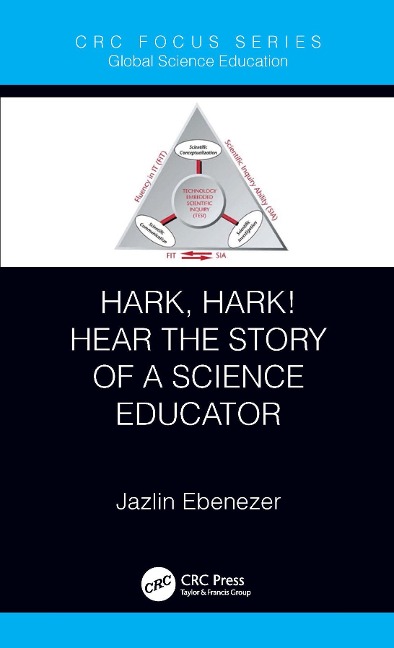
Hark, Hark! Hear the Story of a Science Educator highlights some compelling ideas on science teaching and learning through the author's journey and includes evolution and revolution in the growth of scientific knowledge. The book discusses views of McComas et al. and Lederman et al. on the nature of science, as well as the learning theories of Piaget (1926), Vygotsky (1978), and Marton (1981). The three theories of learning frame methods in teaching science. The author is well known in the science education research community for her groundbreaking work in student conceptions and conceptual change, particularly as related to phenomenography. Key Features: - Helps science educators explore new avenues related to various innovative curricula, teaching, and learning - Presents abstract learning theories, such as social constructivism in personal stories and experiences - Bridges the divide between the science education community and the general public on significant ideas of science teaching and learning - Uncovers relational conceptual change inquiry learning - Discusses current socioscientific community-based issues-other-centeredness-through scientific investigation and engineering design challenges
Jazlin Ebenezer, Ed. D., Charles H. Gershensen Distinguished Faculty Fellow, is a Professor of Science Education and Curriculum Studies at Wayne State University, Detroit, Michigan, USA. Professor Ebenezer has been researching students' conceptions of science phenomena and the integration of innovative technologies into relational conceptual change inquiry of science. In collaboration with a computer science educator, she has currently designed and developed Students' Ideas App (SIA) Machine Learning, which explores and categorizes students' ideas and integrates them into the science curriculum. She has published numerous scholarly articles and some books related to science and its teaching in schools. She has been an invited keynote speaker in Australia, Bangladesh, China, India, South Africa, and Turkey. Her awards include Charles H. Gershensen Distinguished Faculty Fellow in 2019, WSU, Fulbright Specialist Award by the U.S. Department of State in 2017, and 2000 Rh award Research and Development, Research Merit Award, and Outstanding Students Honoring Outstanding Teachers Award, from the University of Manitoba. Professor Ebenezer was the founder of the Shuswap Seventh-day Adventist School, Salmon Arm, British Columbia, Canada, established in 1982. The school is operated by the Seventh-day Adventist Church, British Columbia, Canada. Together with her family, she has educated school and university students at various levels in Bangladesh, India, and Sri Lanka. Professor Ebenezer has also established Dr. Jazlin Ebenezer Research Fund, a Wider Church Ministries endowment fund, in gratitude for the education she had received at Lady Doak College, Madurai, Tamil Nadu, India. The Fund provides a grant to small teams of multi-disciplinary faculty members at Lady Doak College to conduct research on how women learn science, and to disseminate findings at national and international conferences. She completed B.Sc. in Special Chemistry at a premier women's college, Lady Doak College, Madurai University, Tamil Nadu, India, BA in Education and Masters in Education with a concentration in Physical Science at Western Washington University, Bellingham, Washington State, USA, and Ed. D. in Science Education at the prestigious University of British Columbia, Vancouver Canada. She can be contacted via e-mail: aj9570@wayne.edu.
Chapter One: Treading the Academic Waters Chapter Two: You are Too Lazy! Chapter Three: Evolving Educator Chapter Four: The Science Banqueting Table Chapter Five: A Multitude of 60-Watts, Amber Light Bulbs Glowing on Earth Chapter Six: HyperCard to Artificial Intelligence for Relational Learning Chapter Seven: Engineering for Learning Science Embedded in Societal Issues Chapter Eight: Pythagorean Theorem: An Architecture for Curriculum Design
Dieses eBook wird im PDF-Format geliefert und ist mit einem Adobe Kopierschutz (DRM) versehen. Sie können dieses eBook mit allen Geräten lesen, die das PDF-Format und den Adobe Kopierschutz (DRM) unterstützen.
Zum Beispiel mit den folgenden Geräten:
• tolino Reader
Laden Sie das eBook direkt über den Reader-Shop auf dem tolino herunter oder übertragen Sie das eBook auf Ihren tolino mit einer kostenlosen Software wie beispielsweise Adobe Digital Editions.
• Sony Reader & andere eBook Reader
Laden Sie das eBook direkt über den Reader-Shop herunter oder übertragen Sie das eBook mit der kostenlosen Software Sony READER FOR PC/Mac oder Adobe Digital Editions auf ein Standard-Lesegeräte mit epub- und Adobe DRM-Unterstützung.
• Tablets & Smartphones
Möchten Sie dieses eBook auf Ihrem Smartphone oder Tablet lesen, finden Sie hier unsere kostenlose Lese-App für iPhone/iPad und Android Smartphone/Tablets.
• PC & Mac
Lesen Sie das eBook direkt nach dem Herunterladen mit einer kostenlosen Lesesoftware, beispielsweise Adobe Digital Editions, Sony READER FOR PC/Mac oder direkt über Ihre eBook-Bibliothek in Ihrem Konto unter „Meine eBooks“ - „online lesen“.
Schalten Sie das eBook mit Ihrer persönlichen Adobe ID auf bis zu sechs Geräten gleichzeitig frei.
Bitte beachten Sie, dass die Kindle-Geräte das Format nicht unterstützen und dieses eBook somit nicht auf Kindle-Geräten lesbar ist.