Und dann auf "Zum Home-Bildschirm [+]".

Stöbern
genialokal zum Startbildschirm hinzufügen
Installieren Sie die genialokal App auf Ihrem Startbildschirm für einen schnellen Zugriff und eine komfortable Nutzung.
Installieren Sie die genialokal App auf Ihrem Startbildschirm für einen schnellen Zugriff und eine komfortable Nutzung.
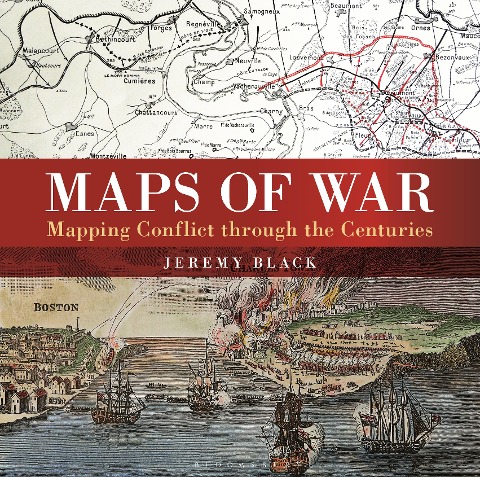
A magnificent visual survey of how conflict was recorded and planned, using maps produced at the time to reveal how warfare and its documentation has changed through the centuries.
There is little documented mapping of conflict prior to the Renaissance period, but, from the 17th century onwards, military commanders and strategists began to document the wars in which they were involved and later, to use mapping to actually plan the progress of a conflict. Using contemporary maps, this sumptuous new volume covers the history of the mapping of war on land and shows the way in which maps provide a guide to the history of war.
Content includes:
- The beginnings of military mapping up to 1600 including the impact of printing and the introduction of gunpowder
- The seventeenth century: The focus is on maps to illustrate war, rather than as a planning tool and the chapter considers the particular significance of maps of fortifications.
- The eighteenth century: The growing need for maps on a world scale reflects the spread of European power and of transoceanic conflict between Europeans. This chapter focuses in particular on the American War of Independence.
- The nineteenth century: Key developments included contouring and the creation of military surveying. Subjects include the Napoleonic Wars and the American Civil War
- The twentieth century including extended features on the First and Second World Wars including maps showing trench warfare and aerial reconnaissance. Much of the chapter focuses on the period from 1945 to the present day including special sections on the Vietnam War and the Gulf Wars.
Jeremy Black, internationally known military historian and Professor of History at the University of Exeter, is the author of The Cold War: A Military History, Rethinking World War Two: The Conflict and its Legacy and Metropolis, among many others. He is also a keen writer on maps and their history. This book brings together his two main interests.
THE SIXTEENTH CENTURY: FIRST NOTIONS OF MILITARY MAPPING
Maps in the Classical world
Early Asian mapping
Ottoman Empire
Fifteenth-century developments
Sixteenth-century expansion
Printed maps
Firearms and fortification
Religious dimension
THE SEVENTEENTH CENTURY: MAPPING FOR SIEGES
Maps and pictures
Maps for the French State
Fortresses and siege warfare
Swedish and Russian efforts
Increased precision
Military adaptation rather than revolution
FIRST WORLD WAR: TOTAL WAR
Geopolitics
Trench warfare
Use of aircraft
Coordination
Wartime cartography
Information and propaganda
SECOND WORLD WAR: GLOBAL CONFLICT
Unprecedented scale
Three dimensions
Restrictions and the media
Engaging the American public
MODERN WARFARE: 1945 TO THE PRESENT DAY - FROM THE SECOND WORLD WAR TO THE PRESENT
Projection
Surveys and serveillance
Satellites
Local level
Modern challenges
Index
Picture Credits
Dieses eBook wird im PDF-Format geliefert und ist mit einem Adobe Kopierschutz (DRM) versehen. Sie können dieses eBook mit allen Geräten lesen, die das PDF-Format und den Adobe Kopierschutz (DRM) unterstützen.
Zum Beispiel mit den folgenden Geräten:
• tolino Reader
Laden Sie das eBook direkt über den Reader-Shop auf dem tolino herunter oder übertragen Sie das eBook auf Ihren tolino mit einer kostenlosen Software wie beispielsweise Adobe Digital Editions.
• Sony Reader & andere eBook Reader
Laden Sie das eBook direkt über den Reader-Shop herunter oder übertragen Sie das eBook mit der kostenlosen Software Sony READER FOR PC/Mac oder Adobe Digital Editions auf ein Standard-Lesegeräte mit epub- und Adobe DRM-Unterstützung.
• Tablets & Smartphones
Möchten Sie dieses eBook auf Ihrem Smartphone oder Tablet lesen, finden Sie hier unsere kostenlose Lese-App für iPhone/iPad und Android Smartphone/Tablets.
• PC & Mac
Lesen Sie das eBook direkt nach dem Herunterladen mit einer kostenlosen Lesesoftware, beispielsweise Adobe Digital Editions, Sony READER FOR PC/Mac oder direkt über Ihre eBook-Bibliothek in Ihrem Konto unter „Meine eBooks“ - „online lesen“.
Schalten Sie das eBook mit Ihrer persönlichen Adobe ID auf bis zu sechs Geräten gleichzeitig frei.
Bitte beachten Sie, dass die Kindle-Geräte das Format nicht unterstützen und dieses eBook somit nicht auf Kindle-Geräten lesbar ist.