Und dann auf "Zum Home-Bildschirm [+]".

Stöbern
genialokal zum Startbildschirm hinzufügen
Installieren Sie die genialokal App auf Ihrem Startbildschirm für einen schnellen Zugriff und eine komfortable Nutzung.
Installieren Sie die genialokal App auf Ihrem Startbildschirm für einen schnellen Zugriff und eine komfortable Nutzung.
Ihr gewünschter Artikel ist in 0 Buchhandlungen vorrätig - wählen Sie hier eine Buchhandlung in Ihrer Nähe aus:

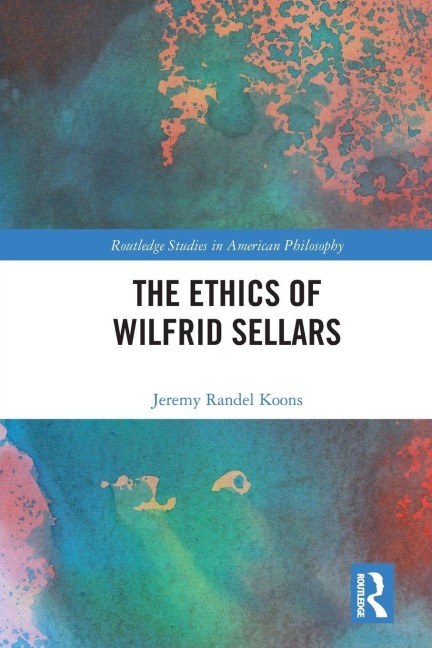

Wilfrid Sellars's ethical theory was rich and deeply innovative. On Sellars's view, moral judgments express a special kind of shared intention. Thus, we should see Sellars as an early advocate of an expressivism of plans and intentions, and an early theorist of collective intentionality. He supplemented this theory with a sophisticated logic of intentions, a robust theory of the categorical validity of normative expressions, a subtle way of reconciling the cognitive and motivating aspects of moral judgment, and much more-all within a strict nominalism that preserves Sellars's commitment to naturalism. The Ethics of Wilfrid Sellars offers the first systematic treatment of this sadly-neglected aspect of Sellars's work, and demonstrates that his ethical theory-just like his more widely-discussed epistemology-has much to contribute to current debates.
Jeremy Randel Koons is Associate Professor of Philosophy at the Georgetown University School of Foreign Service in Qatar. He has published widely in epistemology, metaethics, philosophy of religion, and other areas. His most recent book, The Normative and the Natural (co-authored with Michael P. Wolf) appeared in 2016.
Introduction: Situating Sellars's Ethical Theory in the Contemporary Landscape Chapter 1: Sellars's Synoptic Vision Chapter 2: A New Naturalism Chapter 3: Moral Judgments as Shared Intentions Chapter 4: What Are Sellarsian We-Intentions? Chapter 5: Practical Reasoning and the Logic of Intentions Chapter 6: Material Practical Inference Chapter 7: Cooperative Rationality and We-Intentions Chapter 8: Defeasible Rules and the Particularist Challenge Chapter 9: Rules, Pattern-Governed Behavior, and Collective Attitudes Chapter 10: Moral Motivation 1-Against the Humean Account Chapter 11: Moral Motivation 2-Sellars's Kantian Account Chapter 12: Against Moral Foundationalism Chapter 13: Categorical Validity and the Necessity of Community Chapter 14: Sellars's Mistaken Formalism Chapter 15: Sellars's Ethical Naturalism