Und dann auf "Zum Home-Bildschirm [+]".

Stöbern
genialokal zum Startbildschirm hinzufügen
Installieren Sie die genialokal App auf Ihrem Startbildschirm für einen schnellen Zugriff und eine komfortable Nutzung.
Installieren Sie die genialokal App auf Ihrem Startbildschirm für einen schnellen Zugriff und eine komfortable Nutzung.
Ihr gewünschter Artikel ist in 0 Buchhandlungen vorrätig - wählen Sie hier eine Buchhandlung in Ihrer Nähe aus:

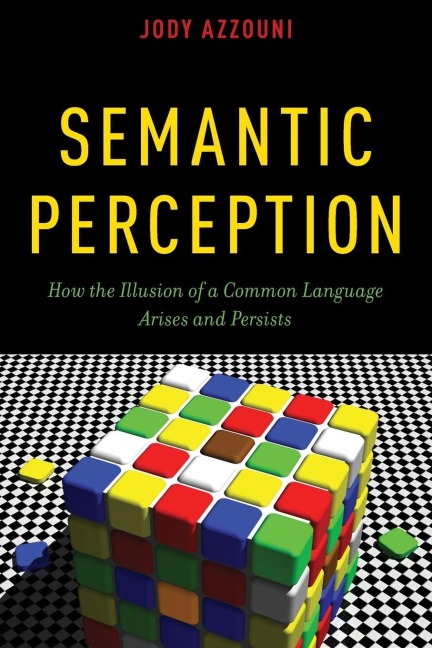
Jody Azzouni argues that we involuntarily experience certain physical items, certain products of human actions, and certain human actions themselves as having meaning-properties. We understand these items as possessing meaning or as having (or being capable of having) truth values. For example, a sign on a door reading "Drinks Inside" strikes native English speakers as referring to liquids in the room behind the door. The sign has a truth value--if no drinks are found in the room, the sign is misleading. Someone pointing in a direction has the same effect: we experience her gesture as significant. Azzouni does not suggest that we don't recognize the expectations or intentions of speakers (including ourselves); we do recognize that the person pointing in a certain direction intends for us to understand her gesture's significance. Nevertheless, Azzouni asserts that we experience that gesture as having significance independent of her intentions. The gesture is meaningful on its own. The same is true of language, both spoken and written. We experience the meanings of language artifacts as independent of their makers' intentions in the same way that we experience an object's shape as a property independent of the object's color. There is a distinctive phenomenology to the experience of understanding language, and Semantic Perception shows how this phenomenology can be brought to bear as evidence for and against competing theories of language.
Jody Azzouni is Professor of Philosophy at Tufts University. He is the author of Deflating Existential Consequence (OUP, 2004), Tracking Reason (OUP, 2006), and Talking about Nothing (OUP, 2010).
General Introduction
Methodological preliminaries
1. The experience of understanding expressions
2. Illusions of meaning
3. The phenomenological what is said
4. The experienced distinction between what is said and implicated content
First Methodological Interlude: Special Sciences and Evidence
5. Strict content
6. Truth-content
Second Methodological Interlude
7. The use and misuse of communicative intentions: Grand-style neo-Griceanism
8. Opportunistic applications of posited communicative intentions
9. Artificial extensions of natural language
General Conclusion
Bibliography