Und dann auf "Zum Home-Bildschirm [+]".

Stöbern
genialokal zum Startbildschirm hinzufügen
Installieren Sie die genialokal App auf Ihrem Startbildschirm für einen schnellen Zugriff und eine komfortable Nutzung.
Installieren Sie die genialokal App auf Ihrem Startbildschirm für einen schnellen Zugriff und eine komfortable Nutzung.
Ihr gewünschter Artikel ist in 0 Buchhandlungen vorrätig - wählen Sie hier eine Buchhandlung in Ihrer Nähe aus:

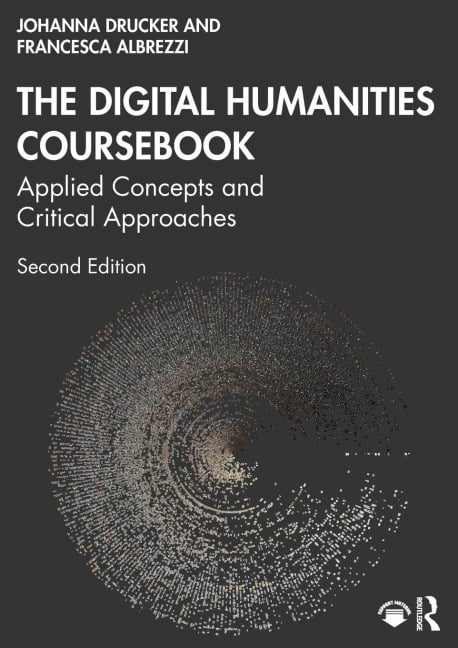
This second edition of The Digital Humanities Coursebook provides critical frameworks for the application of digital humanities tools and platforms, which have become an integral part of work across a wide range of disciplines.
Johanna Drucker is Breslauer and Distinguished Professor Emerita in the Department of Information Studies, UCLA. She is internationally known for her work in the history of writing, experimental typography, visual poetry, and artists' books as well as information visualization and digital humanities. Her most recent publications include Inventing the Alphabet (2022), Iliazd: Metabiography of a Modernist (2023), and Affluvia: The Toxic Off-Gassing of Affluent Culture (2025). Francesca Albrezzi, PhD, is a digital research specialist and manager of the GIS and Visualization Research Technology Group at the Office of Advanced Research Computing at UCLA. She is also an Editor-in-Chief and Director of the Virtual Gallery for the International Journal for Digital Art History. Her research focuses on spectrums of immersive experience in GLAM organizations as offered by technologies such as virtual reality, augmented reality, and 360 photo and video capture. She also has significant experience developing digital tools and projects, such as The Getty Scholars' Workspace(TM), for conducting collaborative arts research and preservation.
List of figures and tables; Preface to the Second Edition; 1 Digital humanities overview; 2 Data modeling and use; 3 Digitization; 4 Metadata, markup, and data description; 5 Database design; 6 Multimodal analysis and Data Mining; 7 Information visualization; 8 Mapping and GIS; 9 Immersive and Extended Reality (XR) Technologies; 10 Interface: UI, UX, HCI, and User Testing; 11 Web presentation formats and networked resources; 12 Artificial Intelligence and Machine Learning; 13 Project design and intellectual property; 14 Pedagogy and advanced topics; Index.