Und dann auf "Zum Home-Bildschirm [+]".

Stöbern
genialokal zum Startbildschirm hinzufügen
Installieren Sie die genialokal App auf Ihrem Startbildschirm für einen schnellen Zugriff und eine komfortable Nutzung.
Installieren Sie die genialokal App auf Ihrem Startbildschirm für einen schnellen Zugriff und eine komfortable Nutzung.
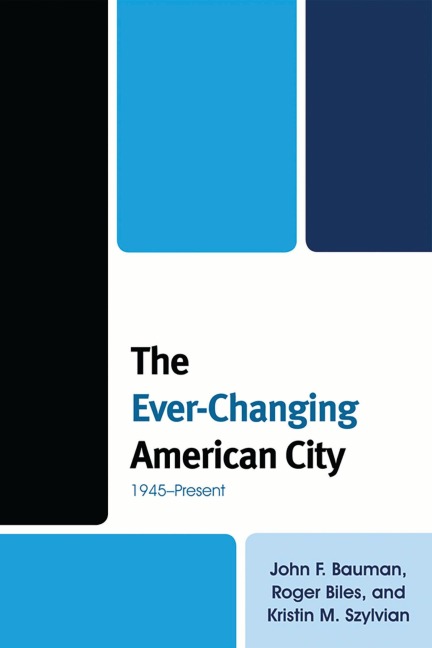
The Ever-Changing American City seeks to help readers understand the marked changes since 1945 in what constitutes a city in the United States and who lives and works in them. The story of the postwar American city is not a simple tale of decline and rebirth. Nor is it a straightforward account of the struggle between the old urban core or central business district and the suburbs on the urban periphery, for both have had their economic ups and downs. In the decades after World War II, the cityscape was altered to better accommodate the automobile, and the city gradually transformed from a place of production to a place of consumption. During the 1980s, city neighborhoods once occupied by migrants from the American South and immigrants from Southern and Eastern Europe began to house newcomers from Asia, Africa, and Central and South America. The economic, environmental, and social issues now facing American cities from Portland, Maine, to Portland, Oregon, will require them to continue the process of remaking or reinventing themselves.
John F. Bauman is visiting professor of community planning and development at the Muskie School of Public Service, University of Southern Maine, and professor emeritus of history at California University of Pennsylvania.
Roger Biles is professor of history at Illinois State University.
Kristin M. Szylvian is associate professor of history at St. John's University.
Chapter 1 The Electronic City
Chapter 2 Shaping the Postwar City: 1945-1960
Chapter 3 Federal Policy and the American City
Chapter 4 The Tarnished Face of the American City
Chapter 5 The American City in the Age of Limits: 1968-1990
Chapter 6 The City and the Image Made Real? The 1990s and 2000s
Conclusion
Suggestions for Urban History Research, Writing, and Public History Projects
Dieses eBook wird im PDF-Format geliefert und ist mit einem Adobe Kopierschutz (DRM) versehen. Sie können dieses eBook mit allen Geräten lesen, die das PDF-Format und den Adobe Kopierschutz (DRM) unterstützen.
Zum Beispiel mit den folgenden Geräten:
• tolino Reader
Laden Sie das eBook direkt über den Reader-Shop auf dem tolino herunter oder übertragen Sie das eBook auf Ihren tolino mit einer kostenlosen Software wie beispielsweise Adobe Digital Editions.
• Sony Reader & andere eBook Reader
Laden Sie das eBook direkt über den Reader-Shop herunter oder übertragen Sie das eBook mit der kostenlosen Software Sony READER FOR PC/Mac oder Adobe Digital Editions auf ein Standard-Lesegeräte mit epub- und Adobe DRM-Unterstützung.
• Tablets & Smartphones
Möchten Sie dieses eBook auf Ihrem Smartphone oder Tablet lesen, finden Sie hier unsere kostenlose Lese-App für iPhone/iPad und Android Smartphone/Tablets.
• PC & Mac
Lesen Sie das eBook direkt nach dem Herunterladen mit einer kostenlosen Lesesoftware, beispielsweise Adobe Digital Editions, Sony READER FOR PC/Mac oder direkt über Ihre eBook-Bibliothek in Ihrem Konto unter „Meine eBooks“ - „online lesen“.
Schalten Sie das eBook mit Ihrer persönlichen Adobe ID auf bis zu sechs Geräten gleichzeitig frei.
Bitte beachten Sie, dass die Kindle-Geräte das Format nicht unterstützen und dieses eBook somit nicht auf Kindle-Geräten lesbar ist.