Und dann auf "Zum Home-Bildschirm [+]".

Stöbern
genialokal zum Startbildschirm hinzufügen
Installieren Sie die genialokal App auf Ihrem Startbildschirm für einen schnellen Zugriff und eine komfortable Nutzung.
Installieren Sie die genialokal App auf Ihrem Startbildschirm für einen schnellen Zugriff und eine komfortable Nutzung.
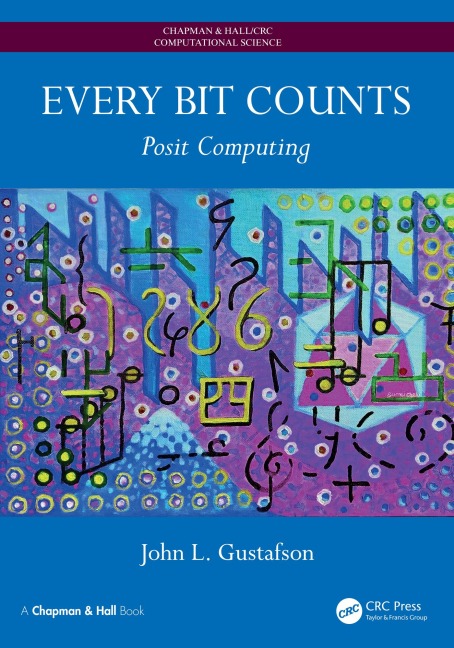
Written by one of the foremost experts in high-performance computing and the inventor of Gustafson's law, Every Bit Counts: Posit Computing explains the foundations of a new way for computers to calculate that saves time, storage, energy, and power by packing more information into every bit than do legacy approaches. Both the AI and HPC communities are increasingly using the posit approach that Gustafson introduced in 2017, which may be the future of technical computing. What may seem like a dry subject is made engaging by including the human and historical side of the struggle to represent numbers on machines. The book is richly illustrated in full color throughout, with every effort made to make the material as clear and accessible as possible, and even humorous. Starting with the simplest form of the idea, the chapters gradually add concepts according to stated mathematical and engineering design principles, building a robust tool kit for creating application-specific number systems. There is also a thorough explanation of the Posit(TM) Standard (2022), with motivations and examples that expand on that terse 12-page document.
Prof. John L. Gustafson is a pioneer in high-performance computing, known for a breakthrough in parallel processing (Gustafson's law) for which he received the inaugural Gordon Bell Prize. He is a former Director at Intel Labs and a former Senior Fellow and Chief Product Architect at AMD. He now leads efforts to replace legacy computer arithmetic with high-efficiency next-generation approaches.
Preface Acknowledgements How to Read this Book 1. The Posit Number Format 2. Inaccuracy Done Right 3. More Power! 4. How We Got Into This Mess 5. The Posit Standard, Annotated 6. Preaching About the Quire 7. A Bridge to Sane Floats 8. Logarithmic Systems, The Musical 9. The Fastest Arithmetic Ever? 10. The Minefield Method 11. Matrix Multiply, Visualized 12. Linear Solvers that Suck Less 13. The Future of Posit Computing Glossary Answers to Exercises Appendix A: Posit Code Listings Appendix B: Float Code Listings Appendix C: The hypot Function Appendix D: L Table for 8-Bit Posits Appendix E: Linear Solver Tests Appendix F: Linear Solvers Appendix G: Takum Format Index
Dieses eBook wird im PDF-Format geliefert und ist mit einem Adobe Kopierschutz (DRM) versehen. Sie können dieses eBook mit allen Geräten lesen, die das PDF-Format und den Adobe Kopierschutz (DRM) unterstützen.
Zum Beispiel mit den folgenden Geräten:
• tolino Reader
Laden Sie das eBook direkt über den Reader-Shop auf dem tolino herunter oder übertragen Sie das eBook auf Ihren tolino mit einer kostenlosen Software wie beispielsweise Adobe Digital Editions.
• Sony Reader & andere eBook Reader
Laden Sie das eBook direkt über den Reader-Shop herunter oder übertragen Sie das eBook mit der kostenlosen Software Sony READER FOR PC/Mac oder Adobe Digital Editions auf ein Standard-Lesegeräte mit epub- und Adobe DRM-Unterstützung.
• Tablets & Smartphones
Möchten Sie dieses eBook auf Ihrem Smartphone oder Tablet lesen, finden Sie hier unsere kostenlose Lese-App für iPhone/iPad und Android Smartphone/Tablets.
• PC & Mac
Lesen Sie das eBook direkt nach dem Herunterladen mit einer kostenlosen Lesesoftware, beispielsweise Adobe Digital Editions, Sony READER FOR PC/Mac oder direkt über Ihre eBook-Bibliothek in Ihrem Konto unter „Meine eBooks“ - „online lesen“.
Schalten Sie das eBook mit Ihrer persönlichen Adobe ID auf bis zu sechs Geräten gleichzeitig frei.
Bitte beachten Sie, dass die Kindle-Geräte das Format nicht unterstützen und dieses eBook somit nicht auf Kindle-Geräten lesbar ist.