Und dann auf "Zum Home-Bildschirm [+]".

Stöbern
genialokal zum Startbildschirm hinzufügen
Installieren Sie die genialokal App auf Ihrem Startbildschirm für einen schnellen Zugriff und eine komfortable Nutzung.
Installieren Sie die genialokal App auf Ihrem Startbildschirm für einen schnellen Zugriff und eine komfortable Nutzung.
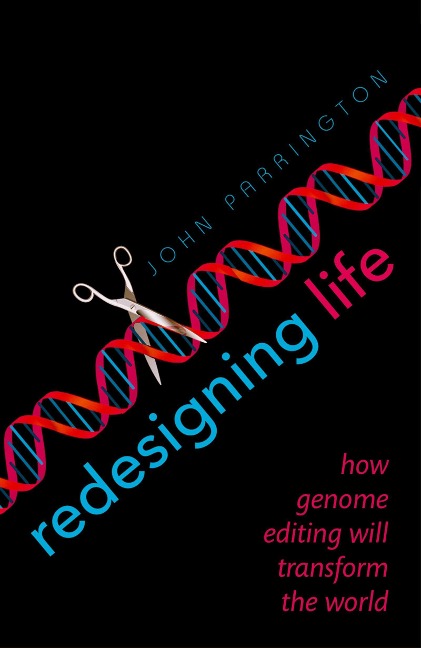
Since the birth of civilisation, human beings have manipulated other life-forms. We have selectively bred plants and animals for thousands of years to maximise agricultural production and cater to our taste in pets. The observation of the creation of artificial animal and plant variants was a key stimulant for Charles Darwin's theory of evolution. The ability to directly engineer the genomes of organisms first became possible in the 1970s, when the gene for human insulin was introduced into bacteria to produce this protein for diabetics. At the same time, mice were modified to produce human growth hormone, and grew huge as a result. But these were only our first tottering steps into the possibilities of genetic engineering. In the past few years, the pace of progress has accelerated enormously. We can now cut and paste genes using molecular scissors with astonishing ease, and the new technology of genome editing can be applied to practically any species of plants or animals. 'Mutation chain reaction' can be used to alter the genes of a population of pests, such as flies; as the modified creatures breed, the mutation is spread through the population, so that within a few generations the organism is almost completely altered. At the same time, scientists are also beginning to synthesize new organisms from scratch. These new technologies hold much promise for improving lives. Genome editing has already been used clinically to treat AIDS patients, by genetically modifying their white blood cells to be resistant to HIV. In agriculture, genome editing could be used to engineer species with increased food output, and the ability to thrive in challenging climates. New bacterial forms may be used to generate energy. But these powerful new techniques also raise important ethical dilemmas and potential dangers, pressing issues that are already upon us given the speed of scientific developments. To what extent should parents be able to manipulate the genetics of their offspring - and would designer babies be limited to the rich? Can we effectively weigh up the risks from introducing synthetic lifeforms into complex ecosystems? In this extensively revised paperback edition, John Parrington explains the nature and possibilities of these new scientific developments, which could usher in a brave, new world. We must rapidly come to understand its implications if we are to direct its huge potential to the good of humanity and the planet.
John Parrington is an Associate Professor in Molecular and Cellular Pharmacology at the University of Oxford, and a Tutorial Fellow in Medicine at Worcester College, Oxford. He has published over 80 peer-reviewed articles in science journals including Nature, Current Biology, Journal of Cell Biology, Journal of Clinical Investigation, The EMBO Journal, Development, Developmental Biology, and Human Reproduction. He has extensive experience writing popular science, having published articles in The Guardian, New Scientist, Chemistry World, and The Biologist. He has also written science reports for the Wellcome Trust, British Council, and Royal Society. He is the author of The Deeper Genome (OUP, 2015).
- List of plates - List of figures - Introduction: The Gene Revolution - 1: Natural Born Mutants - 2: Supersize My Mouse - 3: Light as a Life Tool - 4: The Gene Scissors - 5: Next Year's Models - 6: The Molecular Farm - 7: New Gene Therapy - 8: Regenerating Life - 9: Life as a Machine - 10: A Redesigned Planet? - Glossary - Endnotes - Index of names - Index of subjects
Dieses eBook wird im PDF-Format geliefert und ist mit einem Adobe Kopierschutz (DRM) versehen. Sie können dieses eBook mit allen Geräten lesen, die das PDF-Format und den Adobe Kopierschutz (DRM) unterstützen.
Zum Beispiel mit den folgenden Geräten:
• tolino Reader
Laden Sie das eBook direkt über den Reader-Shop auf dem tolino herunter oder übertragen Sie das eBook auf Ihren tolino mit einer kostenlosen Software wie beispielsweise Adobe Digital Editions.
• Sony Reader & andere eBook Reader
Laden Sie das eBook direkt über den Reader-Shop herunter oder übertragen Sie das eBook mit der kostenlosen Software Sony READER FOR PC/Mac oder Adobe Digital Editions auf ein Standard-Lesegeräte mit epub- und Adobe DRM-Unterstützung.
• Tablets & Smartphones
Möchten Sie dieses eBook auf Ihrem Smartphone oder Tablet lesen, finden Sie hier unsere kostenlose Lese-App für iPhone/iPad und Android Smartphone/Tablets.
• PC & Mac
Lesen Sie das eBook direkt nach dem Herunterladen mit einer kostenlosen Lesesoftware, beispielsweise Adobe Digital Editions, Sony READER FOR PC/Mac oder direkt über Ihre eBook-Bibliothek in Ihrem Konto unter „Meine eBooks“ - „online lesen“.
Schalten Sie das eBook mit Ihrer persönlichen Adobe ID auf bis zu sechs Geräten gleichzeitig frei.
Bitte beachten Sie, dass die Kindle-Geräte das Format nicht unterstützen und dieses eBook somit nicht auf Kindle-Geräten lesbar ist.