Und dann auf "Zum Home-Bildschirm [+]".

Stöbern
genialokal zum Startbildschirm hinzufügen
Installieren Sie die genialokal App auf Ihrem Startbildschirm für einen schnellen Zugriff und eine komfortable Nutzung.
Installieren Sie die genialokal App auf Ihrem Startbildschirm für einen schnellen Zugriff und eine komfortable Nutzung.
Ihr gewünschter Artikel ist in 0 Buchhandlungen vorrätig - wählen Sie hier eine Buchhandlung in Ihrer Nähe aus:


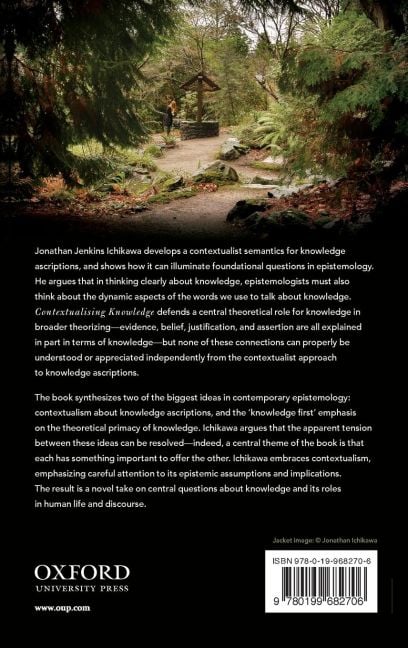
Jonathan Ichikawa develops a contextualist semantics for knowledge ascriptions, and shows how it can illuminate foundational questions in epistemology. He argues that in thinking clearly about knowledge, epistemologists must also think about the dynamic aspects of the words we use to talk about knowledge. Contextualising Knowledge defends a central theoretical role for knowledge in broader theorising - evidence, belief, justification, and assertion are all explained in part in terms of knowledge - but none of these connections can properly be understood or appreciated independently from the contextualist approach to knowledge ascriptions. The book synthesizes two of the biggest ideas in contemporary epistemology: contextualism about knowledge ascriptions, and the 'knowledge first' emphasis on the theoretical primacy of knowledge. Ichikawa argues that the apparent tension between these ideas can be resolved-indeed, a central theme of the book is that each has something important to offer the other. Ichikawa embraces contextualism, emphasizing careful attention to its epistemic assumptions and implications. The result is a novel take on central questions about knowledge and its roles in human life and discourse.
Jonathan Ichikawa is Associate Professor of Philosophy at the University of British Columbia. He received his PhD from Rutgers University in 2008. To date, most of his work has centred around epistemology; his first book, The Rules of Thought (OUP), co-authored with Benjamin Jarvis, was on mental content, philosophical methodology, and the a priori.
- Introduction
- 1: 'Knowledge'
- 2: Sensitivity
- 3: Evidence
- 4: Justification
- 5: Action
- 6: Assertion
- 7: Belief