Und dann auf "Zum Home-Bildschirm [+]".

Stöbern
genialokal zum Startbildschirm hinzufügen
Installieren Sie die genialokal App auf Ihrem Startbildschirm für einen schnellen Zugriff und eine komfortable Nutzung.
Installieren Sie die genialokal App auf Ihrem Startbildschirm für einen schnellen Zugriff und eine komfortable Nutzung.
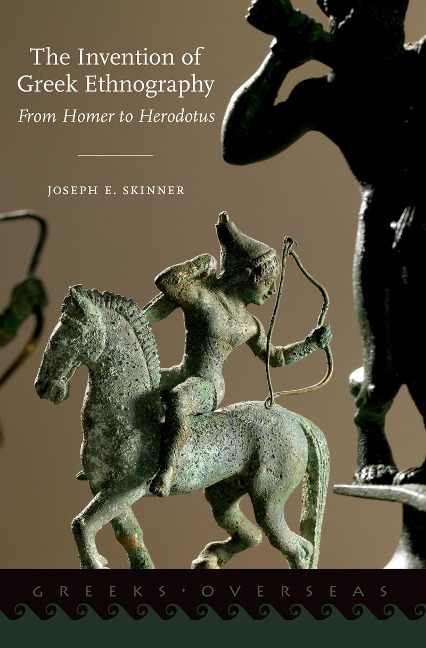
Greek ethnography is commonly believed to have developed in conjunction with the wider sense of Greek identity that emerged during the Greeks' "encounter with the barbarian"--Achaemenid Persia--during the late sixth to early fifth centuries BC. The dramatic nature of this meeting, it was thought, caused previous imaginings to crystallise into the diametric opposition between "Hellene" and "barbarian" that would ultimately give rise to ethnographic prose. The Invention of Greek Ethnography challenges the legitimacy of this conventional narrative. Drawing on recent advances in ethnographic and cultural studies and in the material culture-based analyses of the Ancient Mediterranean, Joseph Skinner argues that ethnographic discourse was already ubiquitous throughout the archaic Greek world, not only in the form of texts but also in a wide range of iconographic and archaeological materials. As such, it can be differentiated both on the margins of the Greek world, like in Olbia and Calabria and in its imagined centers, such as Delphi and Olympia. The reconstruction of this "ethnography before ethnography" demonstrates that discourses of identity and difference played a vital role in defining what it meant to be Greek in the first place long before the fifth century BC. The development of ethnographic writing and historiography are shown to be rooted in this wider process of "positioning" that was continually unfurling across time, as groups and individuals scattered the length and breadth of the Mediterranean world sought to locate themselves in relation to the narratives of the past. This shift in perspective provided by The Invention of Greek Ethnography has significant implications for current understanding of the means by which a sense of Greek identity came into being, the manner in which early discourses of identity and difference should be conceptualized, and the way in which so-called "Great Historiography," or narrative history, should ultimately be interpreted.
Joseph E. Skinner is University Teacher in Ancient History at the University of Liverpool.
CONTENTS Acknowledgements 1. Ethnography before Ethnography 2. Populating the Imaginaire 3. Mapping Ethnography 4. Mapping Identities 5. Ethnography and Identity, From Homer to Herodotus Abbreviations Bibliography Index
Dieses eBook wird im PDF-Format geliefert und ist mit einem Adobe Kopierschutz (DRM) versehen. Sie können dieses eBook mit allen Geräten lesen, die das PDF-Format und den Adobe Kopierschutz (DRM) unterstützen.
Zum Beispiel mit den folgenden Geräten:
• tolino Reader
Laden Sie das eBook direkt über den Reader-Shop auf dem tolino herunter oder übertragen Sie das eBook auf Ihren tolino mit einer kostenlosen Software wie beispielsweise Adobe Digital Editions.
• Sony Reader & andere eBook Reader
Laden Sie das eBook direkt über den Reader-Shop herunter oder übertragen Sie das eBook mit der kostenlosen Software Sony READER FOR PC/Mac oder Adobe Digital Editions auf ein Standard-Lesegeräte mit epub- und Adobe DRM-Unterstützung.
• Tablets & Smartphones
Möchten Sie dieses eBook auf Ihrem Smartphone oder Tablet lesen, finden Sie hier unsere kostenlose Lese-App für iPhone/iPad und Android Smartphone/Tablets.
• PC & Mac
Lesen Sie das eBook direkt nach dem Herunterladen mit einer kostenlosen Lesesoftware, beispielsweise Adobe Digital Editions, Sony READER FOR PC/Mac oder direkt über Ihre eBook-Bibliothek in Ihrem Konto unter „Meine eBooks“ - „online lesen“.
Schalten Sie das eBook mit Ihrer persönlichen Adobe ID auf bis zu sechs Geräten gleichzeitig frei.
Bitte beachten Sie, dass die Kindle-Geräte das Format nicht unterstützen und dieses eBook somit nicht auf Kindle-Geräten lesbar ist.