Und dann auf "Zum Home-Bildschirm [+]".

Stöbern
genialokal zum Startbildschirm hinzufügen
Installieren Sie die genialokal App auf Ihrem Startbildschirm für einen schnellen Zugriff und eine komfortable Nutzung.
Installieren Sie die genialokal App auf Ihrem Startbildschirm für einen schnellen Zugriff und eine komfortable Nutzung.
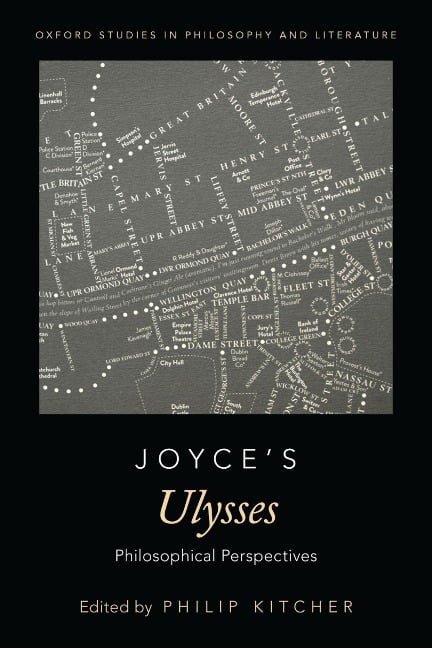
Though James Joyce was steeped in philosophy and humanism, he has received too little attention from contemporary philosophers in comparison to many of the other titans of modernist fiction. This book probes the possibilities for thinking philosophically about Joyce's masterpiece, Ulysses, presenting readings by renowned scholars such David Hills, Garry L. Hagberg, Vicki Mahaffey, Martha C. Nussbaum, Sam Slote, Wendy J. Truran, and Philip Kitcher, who also provides an introduction to the volume that considers broader themes and situates Ulysses as a work of philosophical interest. For the central characters of Ulysses--Leopold Bloom, Molly Bloom, and Stephen Dedalus, "How to live?" is an urgent question. Each must either start anew, or attempt to recover lost paths. Chapters plumb the depths of the philosophical quandaries that present themselves to these characters--reflections on death and overcoming disgust, Leopold Bloom's evocations of conscious thought, the dominance of vision in our thinking about the senses, identity, and the possibility of revising one's values are only a handful of the subjects covered in the volume. Ulysses is an intrinsically and deeply philosophical work, and these readings provide new inroads and firm orientation for Joyce's project. Readers will come away with renewed appreciation for one of our greatest works of literature in the English language, and deepened understanding of Joyce's attempt to offer alternative ways of structuring and enriching the world of our experience.
Philip Kitcher, John Dewey Professor of Philosophy, Emeritus, Columbia University Philip Kitcher is John Dewey Professor of Philosophy, Emeritus at Columbia. He is the author of numerous books, a Fellow of the American Academy of Arts and Sciences, and the first recipient of the Prometheus Prize, awarded by the American Philosophical Association for work in expanding the frontiers of Science and Philosophy. He has been named a "Friend of Darwin" by the National Committee on Science Education, and received a Lannan Foundation Notable Book Award for Living With Darwin (Oxford University Press, 2007). In 2019, he was awarded the Rescher Medal for contributions to systematic philosophy.
Introduction, Philip Kitcher Chapter 1. Between Detachment and Disgust: Bloom in Hades, Martha Nussbaum Chapter 2. A Portrait of Consciousness: Joyce's Ulysses as Philosophical Psychology, Garry Hagberg Chapter 3. Feeling Ulysses: An Address to the Cyclopean Reader, Vicki Mahaffey and Wendy J. Truran Chapter 4. Ulysses May Be a Legal Fiction, Sam Slote Chapter 5. Doing Dublin in Different Voices, David Hills Chapter 6. Something Rich and Strange: Joyce's Perspectivism, Philip Kitcher
Dieses eBook wird im PDF-Format geliefert und ist mit einem Adobe Kopierschutz (DRM) versehen. Sie können dieses eBook mit allen Geräten lesen, die das PDF-Format und den Adobe Kopierschutz (DRM) unterstützen.
Zum Beispiel mit den folgenden Geräten:
• tolino Reader
Laden Sie das eBook direkt über den Reader-Shop auf dem tolino herunter oder übertragen Sie das eBook auf Ihren tolino mit einer kostenlosen Software wie beispielsweise Adobe Digital Editions.
• Sony Reader & andere eBook Reader
Laden Sie das eBook direkt über den Reader-Shop herunter oder übertragen Sie das eBook mit der kostenlosen Software Sony READER FOR PC/Mac oder Adobe Digital Editions auf ein Standard-Lesegeräte mit epub- und Adobe DRM-Unterstützung.
• Tablets & Smartphones
Möchten Sie dieses eBook auf Ihrem Smartphone oder Tablet lesen, finden Sie hier unsere kostenlose Lese-App für iPhone/iPad und Android Smartphone/Tablets.
• PC & Mac
Lesen Sie das eBook direkt nach dem Herunterladen mit einer kostenlosen Lesesoftware, beispielsweise Adobe Digital Editions, Sony READER FOR PC/Mac oder direkt über Ihre eBook-Bibliothek in Ihrem Konto unter „Meine eBooks“ - „online lesen“.
Schalten Sie das eBook mit Ihrer persönlichen Adobe ID auf bis zu sechs Geräten gleichzeitig frei.
Bitte beachten Sie, dass die Kindle-Geräte das Format nicht unterstützen und dieses eBook somit nicht auf Kindle-Geräten lesbar ist.