Und dann auf "Zum Home-Bildschirm [+]".

Stöbern
genialokal zum Startbildschirm hinzufügen
Installieren Sie die genialokal App auf Ihrem Startbildschirm für einen schnellen Zugriff und eine komfortable Nutzung.
Installieren Sie die genialokal App auf Ihrem Startbildschirm für einen schnellen Zugriff und eine komfortable Nutzung.
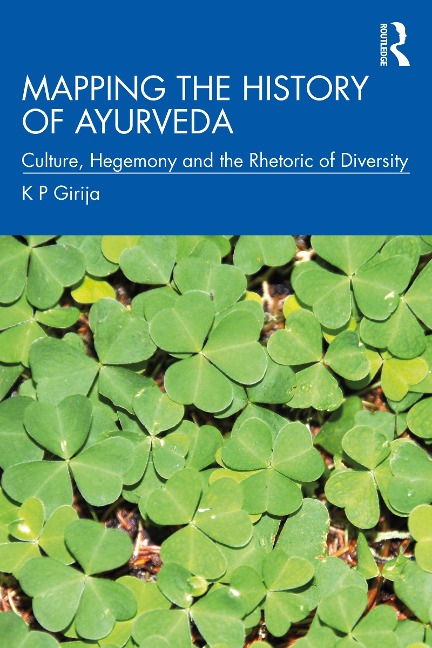
This book looks at the institutionalisation and refashioning of Ayurveda as a robust, literate classical tradition, separated from the assorted, vernacular traditions of healing practices. It focuses on the dominant perspectives and theories of indigenous medicine and various compulsions which led to the codification and standardisation of Ayurveda in modern India. Critically engaging with authoritative scholarship, the book extrapolates from some of these theories, raising significant questions on the study of alternative knowledge practices. By using case studies of the southern Indian state of Kerala - which is known globally for its Ayurveda - it provides an in-depth analysis of local practices and histories. Drawing from interviews of practitioners, archival documents, vernacular texts and rare magazines on Ayurveda and indigenous medicine, it presents a nuanced understanding of the relationships between diverse practices. It highlights the interactions as well as the tensions within them, and the methods adopted to preserve the uniqueness of practices even while sharing elements of healing, herbs and medicine. It also discusses how regulations and standards set by the state have estranged assorted healing practices, created uncertainties and led to the formation of categories like Ayurveda and nattuvaidyam (indigenous medicine/ayurvedas). Lucid and topical, the book will be useful for researchers and people interested in social medicine, history of medicine, Ayurveda, cultural studies, history, indigenous studies, and social anthropology.
K P Girija is an independent scholar based out of Kerala, India. She has a doctorate in cultural studies from the Centre for the Study of Culture and Society from Manipal University, Karnataka, India. She acquired a fellowship from the Centre for the Study of Developing Societies, New Delhi to pursue her PhD. She was a fellow at the Indian Institute of Advanced Study, Shimla (2017-19) and a grantee of the Kerala Council for Historical Research, Thiruvananthapuram (2019-20). Girija is interested in questions that explore the politics and history of knowledge formation, the liminal space of interaction among heterogenous knowledge practices and their philosophical and psychological foundations. Currently, she is working on a project that analyses the intersection between knowledge, caste and the subject through the life narratives of Ayurveda practitioners.
Introduction 1. The intersecting Triad: Kalari, Vishavaidyam and Ayurveda 2. Print Media and Indigenous Medicine: Imprinting Ayurveda in Twentieth-century Kerala 3. Refiguring of Ayurveda as Classical Tradition 4. Foregrounding a Functional Body: The Body in Indigenous Medicine 5. Reinventing Education: Consecrating Knowledge in Twentieth Century Kerala Conclusion Vidya to Vidyabhyasam: Ways of Knowing to Knowledge Glossary
Dieses eBook wird im PDF-Format geliefert und ist mit einem Adobe Kopierschutz (DRM) versehen. Sie können dieses eBook mit allen Geräten lesen, die das PDF-Format und den Adobe Kopierschutz (DRM) unterstützen.
Zum Beispiel mit den folgenden Geräten:
• tolino Reader
Laden Sie das eBook direkt über den Reader-Shop auf dem tolino herunter oder übertragen Sie das eBook auf Ihren tolino mit einer kostenlosen Software wie beispielsweise Adobe Digital Editions.
• Sony Reader & andere eBook Reader
Laden Sie das eBook direkt über den Reader-Shop herunter oder übertragen Sie das eBook mit der kostenlosen Software Sony READER FOR PC/Mac oder Adobe Digital Editions auf ein Standard-Lesegeräte mit epub- und Adobe DRM-Unterstützung.
• Tablets & Smartphones
Möchten Sie dieses eBook auf Ihrem Smartphone oder Tablet lesen, finden Sie hier unsere kostenlose Lese-App für iPhone/iPad und Android Smartphone/Tablets.
• PC & Mac
Lesen Sie das eBook direkt nach dem Herunterladen mit einer kostenlosen Lesesoftware, beispielsweise Adobe Digital Editions, Sony READER FOR PC/Mac oder direkt über Ihre eBook-Bibliothek in Ihrem Konto unter „Meine eBooks“ - „online lesen“.
Schalten Sie das eBook mit Ihrer persönlichen Adobe ID auf bis zu sechs Geräten gleichzeitig frei.
Bitte beachten Sie, dass die Kindle-Geräte das Format nicht unterstützen und dieses eBook somit nicht auf Kindle-Geräten lesbar ist.