Und dann auf "Zum Home-Bildschirm [+]".

Stöbern
genialokal zum Startbildschirm hinzufügen
Installieren Sie die genialokal App auf Ihrem Startbildschirm für einen schnellen Zugriff und eine komfortable Nutzung.
Installieren Sie die genialokal App auf Ihrem Startbildschirm für einen schnellen Zugriff und eine komfortable Nutzung.
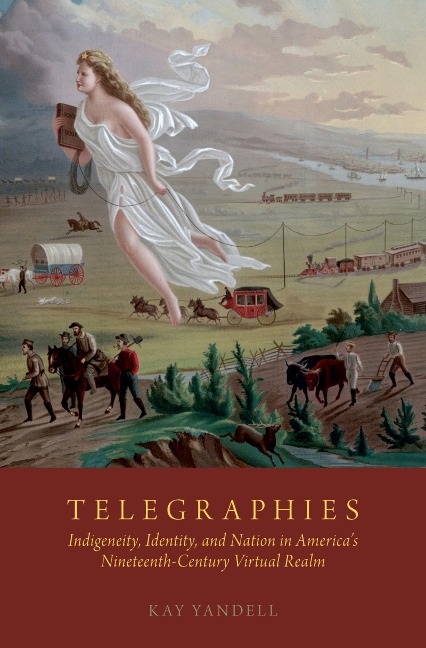
Telegraphies explores literatures envisioning the literary, societal, even the perceived metaphysical effects of various cultures' telecommunications technologies, to argue that nineteenth-century Americans tested in the virtual realm new theories of self, place, nation, and god. The book opens by discussing such Native American telecommunications technologies as smoke signals and sign language chains, to challenge common notions that long-distance speech practices emerged only in conjunction with capitalist industrialization. Kay Yandell analyzes the cultural interactions and literary productions that arose as Native telegraphs worked with and against European American telecommunications systems across nineteenth-century America. Into this conversation Telegraphies integrates visions of Morse's electromagnetic telegraph, with its claim to speak new, coded words and to send bodiless, textless prose instantly across the miles. Such writers as Frederick Douglass, Walt Whitman, and Ella Cheever Thayer crafted memoirs, poetic odes, and novels that envision how the birth of instantaneous communication across a vast continent forever alters the way Americans speak, write, build community, and conceive of the divine. While some writers celebrated far-speaking technologies as conduits of a metaphysical Manifest Destiny to overspread America's primitive cultures, others revealed how telecommunication could empower previously silenced voices to range free in the disembodied virtual realm, even as bodies remained confined by race, class, gender, disability, age, or geography. Ultimately, Telegraphies broadens the way literary scholars conceive of telecommunications technologies while providing a rich understanding of similarities between literatures often considered to have little in common.
Kay Yandell is Assistant Professor of English at the University of Arkansas. She lives in Fayetteville, Arkansas with her husband and children.
Introduction: A Virtual Realm in Morse's Dot and Dash Chapter 1: Moccasin Telegraph: Telecommunication Across Native America Chapter 2: Crossing Border Wires: Telegraphers' Literatures and the State of American Union Chapter 3: Corsets with Copper Wire: Victorian America's Cyborg Feminists Chapter 4: Emily Dickinson's Telegrams from God Chapter 5: Engineering Eden in Walt Whitman's "Passage to India" Conclusion: Hawthorne's Celestial Telegraph and the Cycle of History
Dieses eBook wird im PDF-Format geliefert und ist mit einem Adobe Kopierschutz (DRM) versehen. Sie können dieses eBook mit allen Geräten lesen, die das PDF-Format und den Adobe Kopierschutz (DRM) unterstützen.
Zum Beispiel mit den folgenden Geräten:
• tolino Reader
Laden Sie das eBook direkt über den Reader-Shop auf dem tolino herunter oder übertragen Sie das eBook auf Ihren tolino mit einer kostenlosen Software wie beispielsweise Adobe Digital Editions.
• Sony Reader & andere eBook Reader
Laden Sie das eBook direkt über den Reader-Shop herunter oder übertragen Sie das eBook mit der kostenlosen Software Sony READER FOR PC/Mac oder Adobe Digital Editions auf ein Standard-Lesegeräte mit epub- und Adobe DRM-Unterstützung.
• Tablets & Smartphones
Möchten Sie dieses eBook auf Ihrem Smartphone oder Tablet lesen, finden Sie hier unsere kostenlose Lese-App für iPhone/iPad und Android Smartphone/Tablets.
• PC & Mac
Lesen Sie das eBook direkt nach dem Herunterladen mit einer kostenlosen Lesesoftware, beispielsweise Adobe Digital Editions, Sony READER FOR PC/Mac oder direkt über Ihre eBook-Bibliothek in Ihrem Konto unter „Meine eBooks“ - „online lesen“.
Schalten Sie das eBook mit Ihrer persönlichen Adobe ID auf bis zu sechs Geräten gleichzeitig frei.
Bitte beachten Sie, dass die Kindle-Geräte das Format nicht unterstützen und dieses eBook somit nicht auf Kindle-Geräten lesbar ist.