Und dann auf "Zum Home-Bildschirm [+]".

Stöbern
genialokal zum Startbildschirm hinzufügen
Installieren Sie die genialokal App auf Ihrem Startbildschirm für einen schnellen Zugriff und eine komfortable Nutzung.
Installieren Sie die genialokal App auf Ihrem Startbildschirm für einen schnellen Zugriff und eine komfortable Nutzung.
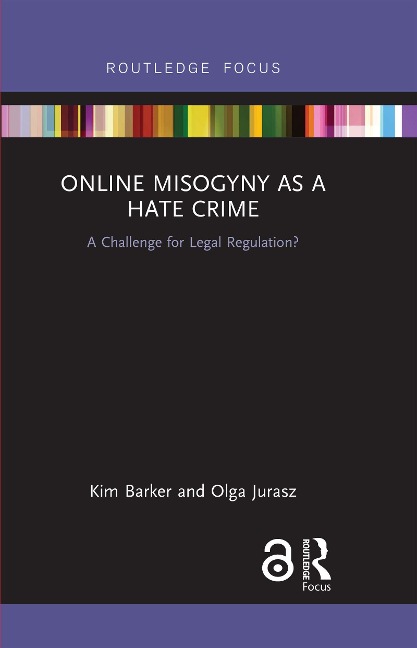
The ideal of an inclusive and participatory Internet has been undermined by the rise of misogynistic abuse on social media platforms. However, limited progress has been made at national - and to an extent European - levels in addressing this issue. In England and Wales, the tackling of underlying causes of online abuse has been overlooked because the law focuses on punishment rather than measures to prevent such abuses. Furthermore, online abuse has a significant impact on its victims that is underestimated by policymakers. This volume critically analyses the legal provisions that are currently deployed to tackle forms of online misogyny, and focuses on three aspects; firstly, the phenomenon of social media abuse; secondly, the poor and disparate legal responses to social media abuses; and thirdly, the similar failings of hate crime to tackle problems of online gender-based abuses. This book advances a compelling argument for legal changes to the existing hate crime, and communications legislation.
Dr Kim Barker is Lecturer in Law at Stirling University. Dr Olga Jurasz is Senior Lecturer in Law at The Open University.
Table of Contents Acknowledgments Terminology Chapter 1 - Online Misogyny: Law and the Digital Feminist - Introduction - Why this book and why now - What this book is (not) about - Addressing online misogyny through law: the limitations - Jurisdiction - Platform Regulation - Feminism, law and the fight against (online) misogyny - The rise of the digital feminist Chapter 2 - [Online] Misogyny: Old Problems, New Media? 2.1. Introduction - An open, participatory ideal? 2.2. Social Media Abuse as a Modern Phenomenon 2.3. From Offline to Online: the digital misogyny 'switch' 2.3.1. The Normalisation of Online Abuse 2.3.2. Political Campaigning & The 'Techlash' 2.3.3. Intersectional Abuse - Still Misogyny, Still a Techlash? 2.4. Conclusion Chapter 3 - Online Communications: The Legal Landscape 3.1. Introduction - Comprehension, Competence, and Cohesion? 3.2. The Limitation Paradox 3.2.1. The Devolution Settlement 3.2.2. The European Union Remit 3.2.3. Limitations - Competence v Cohesion? 3.3. Legal Challenges of Online Communications - Where Does the Problem Lie? Part I - Threats & Threats to Kill 3.4. Threats & Threats to Kill Part II - Stalking & Harassment 3.5. Stalking 3.6. Harassment Part III - Communications 3.7. Communications Networks 3.8. Conclusions Chapter 4 - Hate Crime: The Limits of the Law 4.1. Introduction 4.2. Hate crime: development and classifications 4.2.1. Defining hate crime 4.2.2. Hate crime v Hate speech 4.2.3. Hate speech and human rights 4.2.4. Hate crime: the current legal framework in England & Wales 4.2.5. Who is protected against hate crime? 4.3. Extending the boundaries of hate crime: hate (re)defined 4.3.1. Why the need to include gender in hate crime laws 4.3.2. Gender as a protected characteristic: towards law reform 4.4. Online hate (crimes) 4.4.1. Does online make it different? 4.5. Online misogyny as a hate crime 4.6. Conclusions Chapter 5 - #OVAW, The Internet & Hate: Unfinished (Legal) Business 5.1. The realities of everyday, gender-based hate 5.2. Online misogyny: not a legislative priority 5.3. Implications for legal response and regulation 5.4. Final Thought Index
Dieses eBook wird im PDF-Format geliefert und ist mit einem Adobe Kopierschutz (DRM) versehen. Sie können dieses eBook mit allen Geräten lesen, die das PDF-Format und den Adobe Kopierschutz (DRM) unterstützen.
Zum Beispiel mit den folgenden Geräten:
• tolino Reader
Laden Sie das eBook direkt über den Reader-Shop auf dem tolino herunter oder übertragen Sie das eBook auf Ihren tolino mit einer kostenlosen Software wie beispielsweise Adobe Digital Editions.
• Sony Reader & andere eBook Reader
Laden Sie das eBook direkt über den Reader-Shop herunter oder übertragen Sie das eBook mit der kostenlosen Software Sony READER FOR PC/Mac oder Adobe Digital Editions auf ein Standard-Lesegeräte mit epub- und Adobe DRM-Unterstützung.
• Tablets & Smartphones
Möchten Sie dieses eBook auf Ihrem Smartphone oder Tablet lesen, finden Sie hier unsere kostenlose Lese-App für iPhone/iPad und Android Smartphone/Tablets.
• PC & Mac
Lesen Sie das eBook direkt nach dem Herunterladen mit einer kostenlosen Lesesoftware, beispielsweise Adobe Digital Editions, Sony READER FOR PC/Mac oder direkt über Ihre eBook-Bibliothek in Ihrem Konto unter „Meine eBooks“ - „online lesen“.
Schalten Sie das eBook mit Ihrer persönlichen Adobe ID auf bis zu sechs Geräten gleichzeitig frei.
Bitte beachten Sie, dass die Kindle-Geräte das Format nicht unterstützen und dieses eBook somit nicht auf Kindle-Geräten lesbar ist.