Und dann auf "Zum Home-Bildschirm [+]".

Stöbern
genialokal zum Startbildschirm hinzufügen
Installieren Sie die genialokal App auf Ihrem Startbildschirm für einen schnellen Zugriff und eine komfortable Nutzung.
Installieren Sie die genialokal App auf Ihrem Startbildschirm für einen schnellen Zugriff und eine komfortable Nutzung.
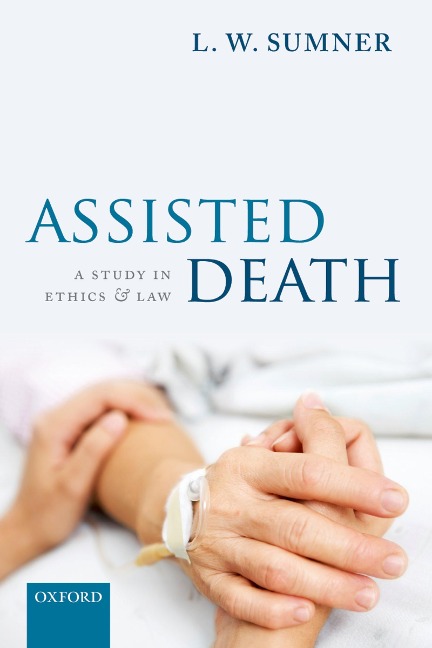
Ethical and legal issues concerning physician-assisted suicide and euthanasia are very much on the public agenda in many jurisdictions. In this timely book L.W. Sumner addresses these issues within the wider context of palliative care for patients in the dying process. His ethical conclusion is that a bright line between assisted death and other widely accepted end-of-life practices, including the withdrawal of life-sustaining treatment, pain control through high-dose opioids, and terminal sedation, cannot be justified. In the course of the ethical argument many familiar themes are given careful and thorough treatment: conceptions of death, the badness of death, the wrongness of killing, informed consent and refusal, the ethics of suicide, cause of death, the double effect, the sanctity of life, the 'active/passive' distinction, advance directives, and nonvoluntary euthanasia. The legal discussion opens with a survey of some prominent prohibitionist and regulatory regimes and then outlines a model regulatory policy for assisted death. Sumner concludes by defending this policy against a wide range of common objections, including those which appeal to slippery slopes or the possibility of abuse, and by asking how the transition to a regulatory regime might be managed in three common law prohibitionist jurisdictions.
L.W. Sumner is University Professor Emeritus in the Department of Philosophy at the University of Toronto. He is the author of four books: Abortion and Moral Theory (1981); The Moral Foundation of Rights (1987); Welfare, Ethics, and Happiness (1996); and The Hateful and the Obscene: Studies in the Limits of Free Expression (2004). He is a Fellow of the Royal Society of Canada and recipient of the 2009 Molson Prize in Social Sciences and Humanities from the Canada Council for the Arts.
- Preface - 1: Prologue - I: Ethics - 2: Consent and Refusal - 3: Indirect Death - 4: Death by Request - 5: Deciding for Others - II: Law - 6: The Legal Landscape - 7: From Prohibition to Regulation - 8: Epilogue - Cases Cited - Works Cited - Index
Dieses eBook wird im PDF-Format geliefert und ist mit einem Adobe Kopierschutz (DRM) versehen. Sie können dieses eBook mit allen Geräten lesen, die das PDF-Format und den Adobe Kopierschutz (DRM) unterstützen.
Zum Beispiel mit den folgenden Geräten:
• tolino Reader
Laden Sie das eBook direkt über den Reader-Shop auf dem tolino herunter oder übertragen Sie das eBook auf Ihren tolino mit einer kostenlosen Software wie beispielsweise Adobe Digital Editions.
• Sony Reader & andere eBook Reader
Laden Sie das eBook direkt über den Reader-Shop herunter oder übertragen Sie das eBook mit der kostenlosen Software Sony READER FOR PC/Mac oder Adobe Digital Editions auf ein Standard-Lesegeräte mit epub- und Adobe DRM-Unterstützung.
• Tablets & Smartphones
Möchten Sie dieses eBook auf Ihrem Smartphone oder Tablet lesen, finden Sie hier unsere kostenlose Lese-App für iPhone/iPad und Android Smartphone/Tablets.
• PC & Mac
Lesen Sie das eBook direkt nach dem Herunterladen mit einer kostenlosen Lesesoftware, beispielsweise Adobe Digital Editions, Sony READER FOR PC/Mac oder direkt über Ihre eBook-Bibliothek in Ihrem Konto unter „Meine eBooks“ - „online lesen“.
Schalten Sie das eBook mit Ihrer persönlichen Adobe ID auf bis zu sechs Geräten gleichzeitig frei.
Bitte beachten Sie, dass die Kindle-Geräte das Format nicht unterstützen und dieses eBook somit nicht auf Kindle-Geräten lesbar ist.