Und dann auf "Zum Home-Bildschirm [+]".

Stöbern
genialokal zum Startbildschirm hinzufügen
Installieren Sie die genialokal App auf Ihrem Startbildschirm für einen schnellen Zugriff und eine komfortable Nutzung.
Installieren Sie die genialokal App auf Ihrem Startbildschirm für einen schnellen Zugriff und eine komfortable Nutzung.
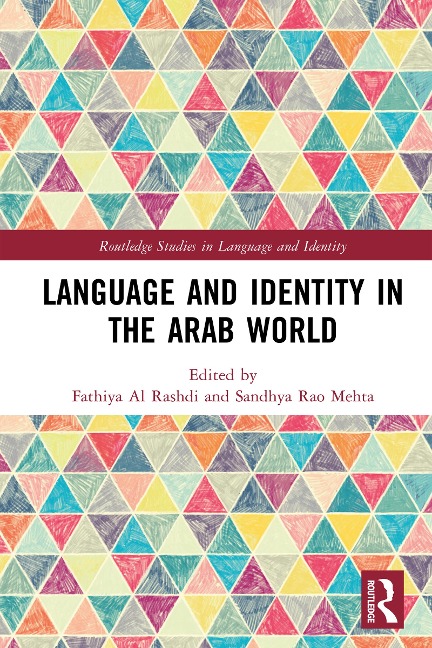
Language and Identity in the Arab World explores the inextricable link between language and identity, referring particularly to the Arab world. Spanning Indonesia to the United States, the Arab world is here imagined as a continually changing one, with the Arab diaspora asserting its linguistic identity across the world. Crucial questions on transforming linguistic landscapes, the role and implications of migration, and the impact of technology on language use are explored by established and emerging scholars in the field of applied and socio-linguistics. The book asks such crucial questions as how language contact affects or transforms identity, how language reflects changing identities among migrant communities, and how language choices contribute to identity construction in social media. As well as appreciating the breadth and scope of the Arab world, this anthology focuses on the transformative role of language within indigenous and migrant communities as they negotiate between their heritage languages and those spoken by the wider society. Investigating the ways in which identity continues to be imagined and re-constructed in and among Arab communities, this book is indispensable to students, teachers, and anyone who is interested in language contact, linguistic landscapes, and minority language retention as well as the intersections of language and technology.
Fathiya Al Rashdi is Assistant Professor in Sociolinguistics and Discourse Analysis, Sultan Qaboos University, Oman, and Editorial Board Member of Discourse, Context and Media . Sandhya Rao Mehta is Associate Professor of Global Literature, Sultan Qaboos University, Oman, and Editor of three critical anthologies, including Language Studies: Stretching the Boundaries and Language and Literature in a Glocal World.
- List of Tables - List of Figures - List of Maps - List of Contributors - Preface INTRODUCTION Sandhya Rao Mehta PART 1: LINGUISTIC LANDSCAPES - Persia and Oman: A Historical and Linguistic Intersection Roberta Morano - Landscaping in Moroccan Arabic: Practices, Ideologies and Inertias Adil Moustaoui - Arabic in Michigan: An American Linguistic Landscape Camelia Suleiman - Translanguaging in Gulf Higher Education Sarah Hopkyns - Linguistic and Conceptual Challenges of Public Opinion Surveys in the Arab Gulf States Russell Lucas PART II: UNPACKING IDENTITIES - A Place to Belong: The Social Construction of Badu identity in Harub, Saudi Arabia Julie Lowry - Intersecting Scapes, Global Flows, and New Identity Options: Female Qatari Students' Informal Learning of Turkish Language Sarah Hillman - Arab Influencers and Social Media: A Sociolinguistic Study of a New Culture Mai Zaki and Meis Al-Kaisi - Multilingualism in Lebanon: Code-switching as a Cultural Representation Lubna Bassam - Perceptions towards Codeswitching and Identity in the Egyptian Context Nadia A. Shalaby PART III: ARABIC IN MIGRANT COMMUNITIES - Dialect Variation among Omani Migrants in Muscat: The Construction of Social Identity through Style Shifting Suaad Ambu-Saidi - Identity Suppression as a Coping Strategy: The Case of Socotri Africans Eleonora Esposito and Sarali Gintsburg - The Role of Education and Dialect Contact in the Realization of DHAA & THAA in a Community of Palestinian Refugees in Syria Ourooba Shetewi - Family Language Policy between Ideology and Practice: A Domain-based Exploration of Arabic as a Heritage Language in the USA Reda Mohammed - The Linguistics of -ärami Arabic in the Speech of -ärami-descent Community of Indonesia Abdullah Al Saqqaf Index
Dieses eBook wird im PDF-Format geliefert und ist mit einem Adobe Kopierschutz (DRM) versehen. Sie können dieses eBook mit allen Geräten lesen, die das PDF-Format und den Adobe Kopierschutz (DRM) unterstützen.
Zum Beispiel mit den folgenden Geräten:
• tolino Reader
Laden Sie das eBook direkt über den Reader-Shop auf dem tolino herunter oder übertragen Sie das eBook auf Ihren tolino mit einer kostenlosen Software wie beispielsweise Adobe Digital Editions.
• Sony Reader & andere eBook Reader
Laden Sie das eBook direkt über den Reader-Shop herunter oder übertragen Sie das eBook mit der kostenlosen Software Sony READER FOR PC/Mac oder Adobe Digital Editions auf ein Standard-Lesegeräte mit epub- und Adobe DRM-Unterstützung.
• Tablets & Smartphones
Möchten Sie dieses eBook auf Ihrem Smartphone oder Tablet lesen, finden Sie hier unsere kostenlose Lese-App für iPhone/iPad und Android Smartphone/Tablets.
• PC & Mac
Lesen Sie das eBook direkt nach dem Herunterladen mit einer kostenlosen Lesesoftware, beispielsweise Adobe Digital Editions, Sony READER FOR PC/Mac oder direkt über Ihre eBook-Bibliothek in Ihrem Konto unter „Meine eBooks“ - „online lesen“.
Schalten Sie das eBook mit Ihrer persönlichen Adobe ID auf bis zu sechs Geräten gleichzeitig frei.
Bitte beachten Sie, dass die Kindle-Geräte das Format nicht unterstützen und dieses eBook somit nicht auf Kindle-Geräten lesbar ist.