Und dann auf "Zum Home-Bildschirm [+]".

Stöbern
genialokal zum Startbildschirm hinzufügen
Installieren Sie die genialokal App auf Ihrem Startbildschirm für einen schnellen Zugriff und eine komfortable Nutzung.
Installieren Sie die genialokal App auf Ihrem Startbildschirm für einen schnellen Zugriff und eine komfortable Nutzung.
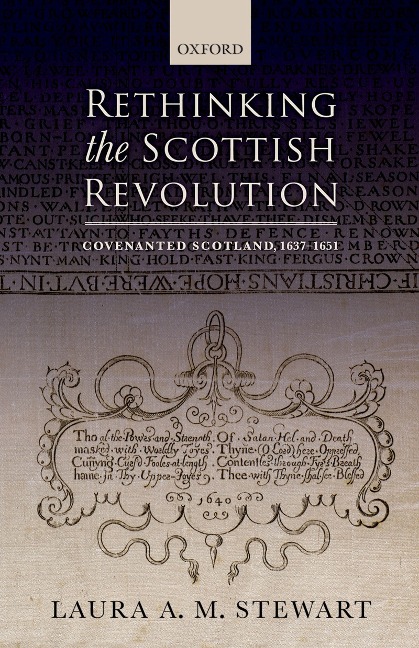
The English revolution is one of the most intensely-debated events in history; parallel events in Scotland have never attracted the same degree of interest. Rethinking the Scottish Revolution argues for a new interpretation of the seventeenth-century Scottish revolution that goes beyond questions about its radicalism, and reconsiders its place within an overarching 'British' narrative. In this volume, Laura Stewart analyses how interactions between print and manuscript polemic, crowds, and political performances enabled protestors against a Prayer Book to destroy Charles I's Scottish government. Particular attention is given to the way in which debate in Scotland was affected by the emergence of London as a major publishing centre. The subscription of the 1638 National Covenant occurred within this context and further politicized subordinate social groups that included women. Unlike in England, however, public debate was contained. A remodelled constitution revivified the institutions of civil and ecclesiastical governance, enabling Covenanted Scotland to pursue interventionist policies in Ireland and England - albeit at terrible cost to the Scottish people. War transformed the nature of state power in Scotland, but this achievement was contentious and fragile. A key weakness lay in the separation of ecclesiastical and civil authority, which justified for some a strictly conditional understanding of obedience to temporal authority. Rethinking the Scottish Revolution explores challenges to legitimacy of the Covenanted constitution, but qualifies the idea that Scotland was set on a course to destruction as a result. Covenanted government was overthrown by the new model army in 1651, but its ideals persisted. In Scotland as well as England, the language of liberty, true religion, and the public interest had justified resistance to Charles I. The Scottish revolution embedded a distinctive and durable political culture that ultimately proved resistant to assimilation into the nascent British state.
Laura A.M. Stewart is senior lecturer in early modern British history at Birkbeck, University of London. After completing her PhD at Edinburgh University (2003), she was awarded a British Academy Postdoctoral Research Fellowship (2005). Her first book, Urban Politics and the British Civil Wars: Edinburgh, 1617-53 was published in 2006. She has published widely on seventeenth-century Scottish history in peer-reviewed journals and edited collections, and will soon complete a new textbook, covering the period 1625-1750, for the Edinburgh University Press series The New History of Scotland. This is her second book.
- Introduction - PART ONE: The making of Covenanted Scotland - 1: People, politics, and publics: the Scottish crisis, 1637-41 - 2: Politics in the parishes: the National Covenant - 3: The Covenanted commonwealth: history, people, and nation - PART TWO: Authority and governance in Covenanted Scotland - 4: The formation of the Covenanted state - 5: Authority and governance in Covenanted Scotland - 6: Print, petitioning, and public debate: the Engagement crisis of 1648 - Conclusion
Dieses eBook wird im PDF-Format geliefert und ist mit einem Adobe Kopierschutz (DRM) versehen. Sie können dieses eBook mit allen Geräten lesen, die das PDF-Format und den Adobe Kopierschutz (DRM) unterstützen.
Zum Beispiel mit den folgenden Geräten:
• tolino Reader
Laden Sie das eBook direkt über den Reader-Shop auf dem tolino herunter oder übertragen Sie das eBook auf Ihren tolino mit einer kostenlosen Software wie beispielsweise Adobe Digital Editions.
• Sony Reader & andere eBook Reader
Laden Sie das eBook direkt über den Reader-Shop herunter oder übertragen Sie das eBook mit der kostenlosen Software Sony READER FOR PC/Mac oder Adobe Digital Editions auf ein Standard-Lesegeräte mit epub- und Adobe DRM-Unterstützung.
• Tablets & Smartphones
Möchten Sie dieses eBook auf Ihrem Smartphone oder Tablet lesen, finden Sie hier unsere kostenlose Lese-App für iPhone/iPad und Android Smartphone/Tablets.
• PC & Mac
Lesen Sie das eBook direkt nach dem Herunterladen mit einer kostenlosen Lesesoftware, beispielsweise Adobe Digital Editions, Sony READER FOR PC/Mac oder direkt über Ihre eBook-Bibliothek in Ihrem Konto unter „Meine eBooks“ - „online lesen“.
Schalten Sie das eBook mit Ihrer persönlichen Adobe ID auf bis zu sechs Geräten gleichzeitig frei.
Bitte beachten Sie, dass die Kindle-Geräte das Format nicht unterstützen und dieses eBook somit nicht auf Kindle-Geräten lesbar ist.