Und dann auf "Zum Home-Bildschirm [+]".

Stöbern
genialokal zum Startbildschirm hinzufügen
Installieren Sie die genialokal App auf Ihrem Startbildschirm für einen schnellen Zugriff und eine komfortable Nutzung.
Installieren Sie die genialokal App auf Ihrem Startbildschirm für einen schnellen Zugriff und eine komfortable Nutzung.
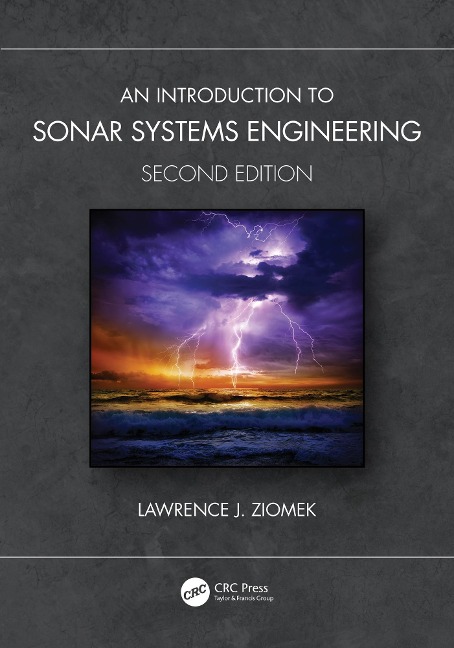
An Introduction to Sonar Systems Engineering Second Edition Important topics that are fundamental to the understanding of modern-day sonar systems engineering are featured. Linear, planar, and volume array theory, including near-field and far-field beam patterns, beam steering, and array focusing, are covered. Real-world arrays such as the twin-line planar array and a linear array of triplets, which are solutions to the port/starboard (left/right) ambiguity problem associated with linear towed arrays, are examined in detail. Detailed explanations of the fundamentals of side-looking (side-scan) and synthetic-aperture sonars are presented. Bistatic scattering with moving platforms is explored with derivations of exact solutions for the time delay, time-compression/time-expansion factor, and Doppler shift at a receiver for both the scattered and direct acoustic paths. Time-domain and frequency-domain descriptions, and the design of CW, LFM, and Doppler-invariant HFM pulses, are explained. Target detection in the presence of reverberation and noise is examined. Time-domain and frequency-domain descriptions of MFSK, MQAM, and OFDM underwater acoustic communication signals are also discussed. Although the book is mathematically rigorous, it is written in a tutorial style. Many useful, practical design and analysis equations for both passive and active sonar systems are derived from first principles. No major steps in the derivation of important results are skipped - all assumptions and approximations are clearly stated. Particular attention is paid to the correct units for functions and parameters. Many figures, tables, examples, and practical homework problems at the end of each chapter are included to aid in the understanding of the material covered. New to the Second Edition - Chapter 15 Synthetic-Aperture Sonar - Chapter 13, Section 13.3, The Rectangular-Envelope HFM Pulse - Chapter 10, Section 10.7, Moving Platforms, was rewritten, which allowed for the elimination of Appendix 10C from the first edition - New explanations/discussions were added to Subsections 1.2.1 and 1.3.1 in Chapter 1 - Appendix 1A was rewritten and the new Table 1A-1 was added to Chapter 1 - A solutions manual is available for adopting professors
Dr. Lawrence J. Ziomek is a Professor Emeritus with the Department of Electrical and Computer Engineering at the Naval Postgraduate School in Monterey, CA, where he was also a member of the Undersea Warfare Executive Committee and the Undersea Warfare Academic Group. With over 37 years of research and teaching experience, his research and teaching interests include underwater acoustics, sonar systems engineering and signal processing, Biosonar, communication theory, and signal detection and estimation theory. He received a B.E. degree in electrical engineering from Villanova University, a M.S.E.E. degree from the University of Rhode Island, and a Ph.D. degree in acoustics (underwater acoustics specialization) from The Pennsylvania State University, with a minor in electrical engineering.
1. Complex Aperture Theory - Volume Apertures - General Results. 2. Complex Aperture Theory - Linear Apertures. 3 Complex Aperture Theory - Planar Apertures. 4. Time-Average Radiated Acoustic Power. 5 Side-Looking Sonar. 6. Array Theory - Linear Arrays. 7. Array Gain. 8. Array Theory - Planar Arrays. 9. Array Theory - Volume Arrays. 10. Bistatic Scattering. 11. Real Bandpass Signals and Complex Envelopes. 12. Target Detection in the Presence of Reverberation and Noise. 13. The Auto-Ambiguity Function and Signal Design. 14. Underwater Acoustic Communication Signals. 15 Synthetic-Aperture Sonar.
Dieses eBook wird im PDF-Format geliefert und ist mit einem Adobe Kopierschutz (DRM) versehen. Sie können dieses eBook mit allen Geräten lesen, die das PDF-Format und den Adobe Kopierschutz (DRM) unterstützen.
Zum Beispiel mit den folgenden Geräten:
• tolino Reader
Laden Sie das eBook direkt über den Reader-Shop auf dem tolino herunter oder übertragen Sie das eBook auf Ihren tolino mit einer kostenlosen Software wie beispielsweise Adobe Digital Editions.
• Sony Reader & andere eBook Reader
Laden Sie das eBook direkt über den Reader-Shop herunter oder übertragen Sie das eBook mit der kostenlosen Software Sony READER FOR PC/Mac oder Adobe Digital Editions auf ein Standard-Lesegeräte mit epub- und Adobe DRM-Unterstützung.
• Tablets & Smartphones
Möchten Sie dieses eBook auf Ihrem Smartphone oder Tablet lesen, finden Sie hier unsere kostenlose Lese-App für iPhone/iPad und Android Smartphone/Tablets.
• PC & Mac
Lesen Sie das eBook direkt nach dem Herunterladen mit einer kostenlosen Lesesoftware, beispielsweise Adobe Digital Editions, Sony READER FOR PC/Mac oder direkt über Ihre eBook-Bibliothek in Ihrem Konto unter „Meine eBooks“ - „online lesen“.
Schalten Sie das eBook mit Ihrer persönlichen Adobe ID auf bis zu sechs Geräten gleichzeitig frei.
Bitte beachten Sie, dass die Kindle-Geräte das Format nicht unterstützen und dieses eBook somit nicht auf Kindle-Geräten lesbar ist.