Und dann auf "Zum Home-Bildschirm [+]".

Stöbern
genialokal zum Startbildschirm hinzufügen
Installieren Sie die genialokal App auf Ihrem Startbildschirm für einen schnellen Zugriff und eine komfortable Nutzung.
Installieren Sie die genialokal App auf Ihrem Startbildschirm für einen schnellen Zugriff und eine komfortable Nutzung.

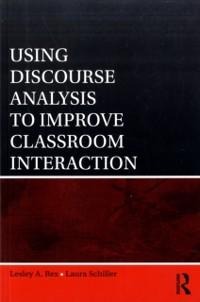
This accessible 'how to' text is about classroom interaction - how to study it and how to use that knowledge to improve teaching and learning. Actually showing what critical, constructionist, sociocultural perspectives on teaching, learning, and schooling are and what they can do, it makes discourse analysis understandable and useful to teachers and other nonlinguists. Using Discourse Analysis to Improve Classroom Interaction: - offers teachers the powerful tools of discourse analysis as a way of understanding the complex dynamics of human interaction that constitute effective, equitable teaching and learning - guides readers step-by-step through how to build their interactional awareness to improve their teaching - includes 'Try It Out' exercises to engage readers in learning how to respond to the social dynamics of their classrooms for the purpose of improving classroom interaction. Proceeding from simple illustrations to more complex layering of analytical concepts, short segments of talk, transcribed to highlight important points, are used to explain and illustrate the concepts. By the time readers get to the complicated issues addressed in this text they are ready to deal with some of teaching's toughest challenges, and have the tools to build positive relationships among their students so that all can participate equally in the classroom.
Lesley A. Rex is Faculty Leader of Secondary English Teacher Education, Co-Chair of the Joint Program in English and Education, and Associate Professor at the University of Michigan. Laura Schiller is a National Board Certified teacher, Director of the Oakland (MI) Writing Project, Literacy Consultant for Oakland (MI) Intermediate School District, and University of Michigan doctoral student.
Preface Acknowledgments PART ONE: "Reading" Conversations, Opening Possibilities Chapter 1: Talking and Learning Chapter 2: Assuming & Choosing Chapter 3: Interacting & Positioning Chapter 4: Identity & Worlds Chapter 5: Interdiscursivity Chapter 6: Power Chapter 7: Building Knowledge PART TWO: CURRICULUM Introduction Chapter 8: Positioning, Alignment, Stake, and Identity 1 Chapter 9: Positioning, Alignment, Stake, and Identity 2 Chapter 10: Minimizing Face Threats While Challenging Practice PART THREE: DIFFERENCE Introduction Chapter 11: Clashes and Intersections of the Different Worlds of Teacher and Students, Case 1 Chapter 12: Clashes and Intersections of the Different Worlds of Teacher and Student, Case 2 PART FOUR: Accountability and Assessment Introduction Chapter 13: The Discursive Qualities of Inclusive Diverse Classrooms Chapter 14: Interrogating Timed Prompted Writing in Professional Development Communities Chapter 15: Reframing Accountability Measures: Repositioning Teachers and Students Epilogue