Und dann auf "Zum Home-Bildschirm [+]".

Stöbern
genialokal zum Startbildschirm hinzufügen
Installieren Sie die genialokal App auf Ihrem Startbildschirm für einen schnellen Zugriff und eine komfortable Nutzung.
Installieren Sie die genialokal App auf Ihrem Startbildschirm für einen schnellen Zugriff und eine komfortable Nutzung.
Ihr gewünschter Artikel ist in 0 Buchhandlungen vorrätig - wählen Sie hier eine Buchhandlung in Ihrer Nähe aus:

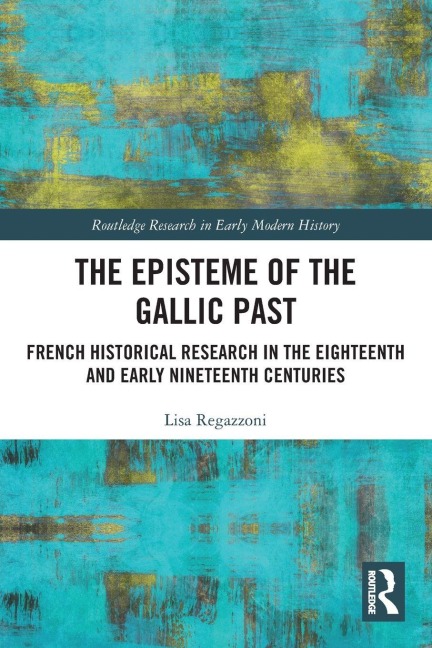
This book aims to reconceive the field of knowledge of the "Gallic past" in French discourse of the eighteenth and early nineteenth centuries by focusing on the monument as an object capable of underpinning insights into that past, the evolution of the concept, and the epistemic practices used to produce it. Through monuments, the book redirects our gaze toward the French provinces, where material and immaterial evidence of the Gallic past was "discovered" and transformed into epistemic objects. This perspective results in a "provincialization" of Paris as a site of knowledge production and sheds light on the crucial role of provincial scholarship, not only in the "invention" of the Gallic past but also in methodological and epistemological renewal. The result is a revision of recent historiography, which interpreted the narrative of an "autochthonous" pre-Roman, Gallic past as nation-building. This volume offers a pioneering contribution toward new directions in historical epistemology focused on the historicity of the "species" of evidence of each epoch.
Lisa Regazzoni is a professor of the Theory of History and head of the Center for Theories in Historical Research at the University of Bielefeld. Her research interests focus on the theory and epistemology of historical materials, the history of historiography, and the history of knowledge in France.
Introduction. Prologue: Monuments as "Materials for Our Historical Work": A Problem-Oriented Excursus on the Monument as an Epistemological Object 1. Monuments - What Were They? 2. Gallic Monuments Between Christian Universalism and an Autochthonous Past 3. Provincializing Paris: Gallic Monuments Viewed from the Provinces 4. Monuments for the French People: The People as Monument. Epilogue