Und dann auf "Zum Home-Bildschirm [+]".

Stöbern
genialokal zum Startbildschirm hinzufügen
Installieren Sie die genialokal App auf Ihrem Startbildschirm für einen schnellen Zugriff und eine komfortable Nutzung.
Installieren Sie die genialokal App auf Ihrem Startbildschirm für einen schnellen Zugriff und eine komfortable Nutzung.
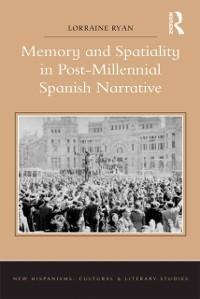
Focusing on literary texts produced from 2000 to 2009, Lorraine Ryan examines the imbrication between the preservation of Republican memory and the transformations of Spanish public space during the period from 1931 to 2005. Accordingly, Ryan analyzes the spatial empowerment and disempowerment of Republican memory and identity in Dulce Chacón's Cielos de barro, Ãngeles López's Martina, la rosa número trece, Alberto Méndez's 'Los girasoles ciegos,' Carlos Ruiz ZafónÂ-s La sombra del viento, Emili Teixidor's Pan negro, Bernardo Atxaga's El hijo del acordeonista, and José MarÃa Merino's La sima. The interrelationship between Republican subalternity and space is redefined by these writers as tense and constantly in flux, undermined by its inexorable relationality, which leads to subjects endeavoring to instill into space their own values. Subjects erode the hegemonic power of the public space by articulating in an often surreptitious form their sense of belonging to a prohibited Republican memory culture. In the democratic period, they seek a categorical reinstatement of same on the public terrain. Ryan also considers the motivation underlying this coterie of authors' commitment to the issue of historical memory, an analysis which serves to amplify the ambits of existing scholarship that tends to ascribe it solely to postmemory.
Lorraine Ryan is a Birmingham fellow at the University of Birmingham, United Kingdom.
Introduction; Chapter 1 Degenerative Space, Fertility, and Post-Transitional Justice in Dulce Chacón's Cielos de barro; Chapter 2 The City and the Body in Ángeles López's Martina, la rosa número trece; Chapter 3 The Nullification of Domestic Space in Alberto Méndez's "Los girasoles ciegos"; Chapter 4 Spatial Assimilation and the Corruption of the Child in Emili Teixidor's Pan negro; Chapter 5 A Resistant Barcelona: Hidden Transcripts in Carlos Ruiz Zafón's La sombra del viento; Chapter 6 Rurality, the Second Space, and Global Memory Structures in Bernardo Atxaga's El hijo del acordeonista; Chapter 7 Rememory, Hybridity, and in-between Space in José María Merino's La sima; conclusion Conclusion;
Dieses eBook wird im PDF-Format geliefert und ist mit einem Adobe Kopierschutz (DRM) versehen. Sie können dieses eBook mit allen Geräten lesen, die das PDF-Format und den Adobe Kopierschutz (DRM) unterstützen.
Zum Beispiel mit den folgenden Geräten:
• tolino Reader
Laden Sie das eBook direkt über den Reader-Shop auf dem tolino herunter oder übertragen Sie das eBook auf Ihren tolino mit einer kostenlosen Software wie beispielsweise Adobe Digital Editions.
• Sony Reader & andere eBook Reader
Laden Sie das eBook direkt über den Reader-Shop herunter oder übertragen Sie das eBook mit der kostenlosen Software Sony READER FOR PC/Mac oder Adobe Digital Editions auf ein Standard-Lesegeräte mit epub- und Adobe DRM-Unterstützung.
• Tablets & Smartphones
Möchten Sie dieses eBook auf Ihrem Smartphone oder Tablet lesen, finden Sie hier unsere kostenlose Lese-App für iPhone/iPad und Android Smartphone/Tablets.
• PC & Mac
Lesen Sie das eBook direkt nach dem Herunterladen mit einer kostenlosen Lesesoftware, beispielsweise Adobe Digital Editions, Sony READER FOR PC/Mac oder direkt über Ihre eBook-Bibliothek in Ihrem Konto unter „Meine eBooks“ - „online lesen“.
Schalten Sie das eBook mit Ihrer persönlichen Adobe ID auf bis zu sechs Geräten gleichzeitig frei.
Bitte beachten Sie, dass die Kindle-Geräte das Format nicht unterstützen und dieses eBook somit nicht auf Kindle-Geräten lesbar ist.