Und dann auf "Zum Home-Bildschirm [+]".

Stöbern
genialokal zum Startbildschirm hinzufügen
Installieren Sie die genialokal App auf Ihrem Startbildschirm für einen schnellen Zugriff und eine komfortable Nutzung.
Installieren Sie die genialokal App auf Ihrem Startbildschirm für einen schnellen Zugriff und eine komfortable Nutzung.
Ihr gewünschter Artikel ist in 0 Buchhandlungen vorrätig - wählen Sie hier eine Buchhandlung in Ihrer Nähe aus:

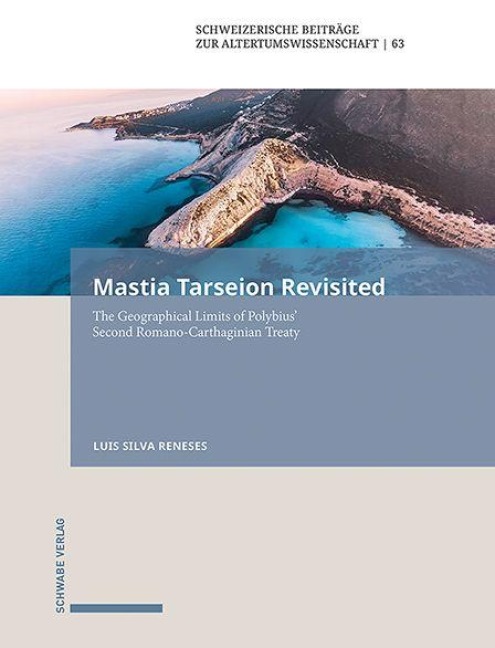
Polybius reports that the second Romano-Carthaginian treaty included a clause forbidding the Romans to pillage, trade, or found cities beyond the Fair Promontory (modern Cape Bon) and a mysterious place called Mastia Tarseion. On the assumption that Mastia Tarseion was located in southern Iberia, modern scholars have used the treaty as evidence for a proactive and enduring Carthaginian presence in the Iberian Peninsula as early as 348 BCE. A close examination of the treaty's contents, Polybius' comments on it, and the other evidence available - including two problematic entries in Stephanus of Byzantium's Ethnika - reveals that Mastia Tarseion was in fact a promontory on the North African coast, west of but not very far from the city of Carthage. The treaty thus emerges as a key document for understanding the nature and evolution of Carthaginian imperialism in the western Mediterranean.
Luis Silva Reneses is Research and Teaching Fellow in Ancient History at the University of Geneva. His research focuses on imperialism, diplomacy, population transfers, and processes of identity construction in the Hellenistic Mediterranean.