Und dann auf "Zum Home-Bildschirm [+]".

Stöbern
genialokal zum Startbildschirm hinzufügen
Installieren Sie die genialokal App auf Ihrem Startbildschirm für einen schnellen Zugriff und eine komfortable Nutzung.
Installieren Sie die genialokal App auf Ihrem Startbildschirm für einen schnellen Zugriff und eine komfortable Nutzung.



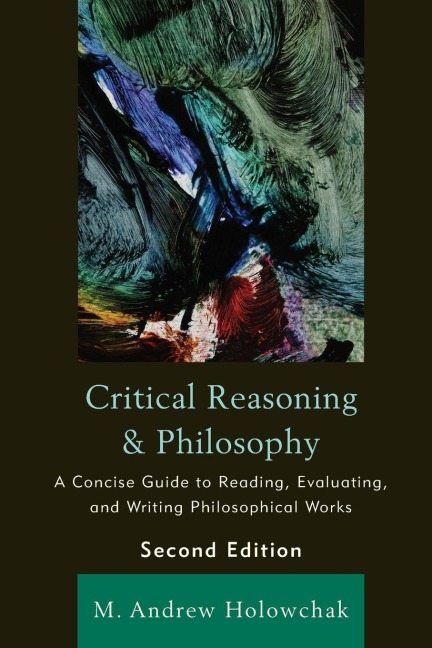
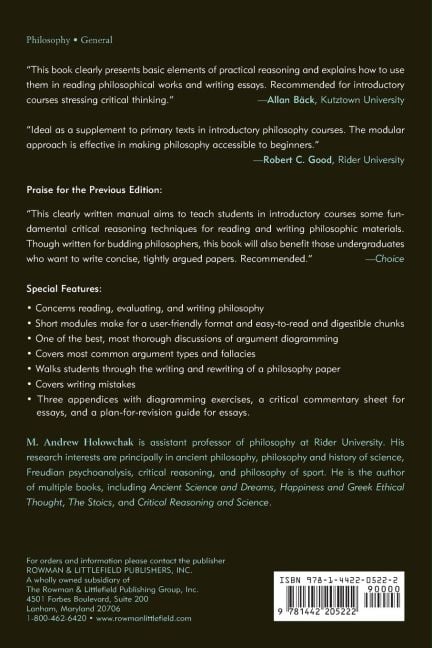
Critical Reasoning and Philosophy is an innovative and clearly written handbook that teaches students how to read critically, think critically while they read, and write thoughtful, sound arguments in response.
M. Andrew Holowchak, Ph.D., is a professor of philosophy and history who taught at institutions such as the University of Pittsburgh, the University of Michigan, and Rutgers University, Camden. He is the editor of 'Journal of Thomas Jefferson and His Time' and author/editor of over 50 books and over 200 published essays on topics such as ethics, ancient philosophy, science, psychoanalysis, and critical thinking. His current research is on Thomas Jefferson-he is acknowledged by many scholars as the world's foremost authority-and has published nearly 165 essays and 23 books on Jefferson.
Preface Acknowledgements Part I: Introductory Concerns Module 1: What is Philosophy? Module 2: Philosophy & Critical Reasoning Part II: Reading Philosophy Module 3: General Form of a Philosophical Work Module 4: Four Helpful Steps Part III: Evaluating Philosophy Section A: Argument Recognition & Reconstruction Module 5: Elements of Argument Recognition Module 6: Standard Argument Form Section B: Argument Evaluation Module 7: Setting the Logical Boundaries Module 8: Conditions of Acceptance & Rejection Module 9: Three Common Deductive Arguments Module 10: Common Inductive Arguments Module 11: Common Fallacies Section C: Reconstruction through Diagramming Module 12: Fundamentals of Diagramming Module 13: 10 Diagrammatical Tips Part IV: Writing Philosophy Section A: Preliminaries for Philosophical Essays Module 14: 13 General Tips for Writing Module 15: Tips of Avoidance Module 16: Common Mistakes Section B: Writing Philosophical Essays Module 17: Preparing an Outline Module 18: Writing a Philosophical Thesis Module 19: Simple Critical Essay Module 20: Synthetic Critical Essay Section C: Revising & Rewriting Philosophical Essays Module 21: Motivating a Rewrite Module 22: Suggestions for Revising and Rewriting Essays Appendices Appendix A: Some Exercises for Diagramming Appendix B: Teacher/Student Comment Sheet Appendix C: Plan-for-Revision Sheet List of Sources Cited