Und dann auf "Zum Home-Bildschirm [+]".

Stöbern
genialokal zum Startbildschirm hinzufügen
Installieren Sie die genialokal App auf Ihrem Startbildschirm für einen schnellen Zugriff und eine komfortable Nutzung.
Installieren Sie die genialokal App auf Ihrem Startbildschirm für einen schnellen Zugriff und eine komfortable Nutzung.
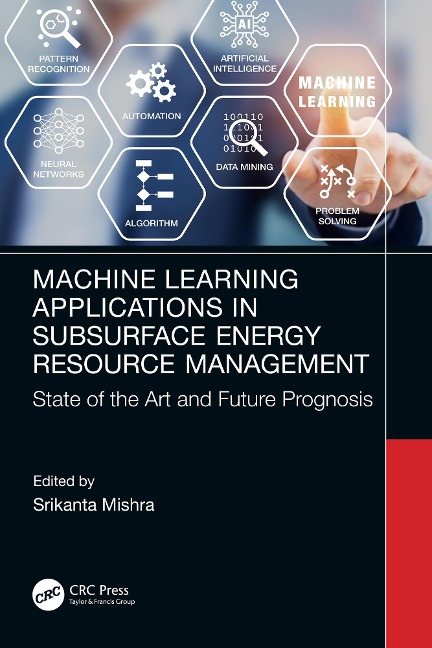
The utilization of machine learning (ML) techniques to understand hidden patterns and build data-driven predictive models from complex multivariate datasets is rapidly increasing in many applied science and engineering disciplines, including geo-energy. Motivated by these developments, Machine Learning Applications in Subsurface Energy Resource Management presents a current snapshot of the state of the art and future outlook for ML applications to manage subsurface energy resources (e.g., oil and gas, geologic carbon sequestration, and geothermal energy). - Covers ML applications across multiple application domains (reservoir characterization, drilling, production, reservoir modeling, and predictive maintenance) - Offers a variety of perspectives from authors representing operating companies, universities, and research organizations - Provides an array of case studies illustrating the latest applications of several ML techniques - Includes a literature review and future outlook for each application domain This book is targeted at practicing petroleum engineers or geoscientists interested in developing a broad understanding of ML applications across several subsurface domains. It is also aimed as a supplementary reading for graduate-level courses and will also appeal to professionals and researchers working with hydrogeology and nuclear waste disposal.
Dr. Srikanta Mishra is Senior Research Leader and Technical Director for Geo-energy Resource Modeling and Analytics at Battelle Memorial Institute, the world's largest independent contract R&D organization. He is nationally and internationally recognized for his expertise in developing and communicating physics-based and data-driven predictive models for subsurface resource management. Dr. Mishra currently serves as the Technical Lead of the SMART (Science Informed Machine Learning for Accelerating Real-time Decisions for Subsurface applications) initiative, organized by the US Department of Energy and involving multiple national laboratories and universities. He was a recipient of the Society of Petroleum Engineers (SPE) Distinguished Member Award in 2021, and also served as a Global Distinguished Lecturer on Big Data Analytics for SPE during 2018-19 and received the 2022 SPE Data Science and Engineering Analytics Award.
Section I: Introduction, 1. Machine Learning Applications in Subsurface Energy Resource Management: State of the Art, 2. Solving Problems with Data Science, Section II: Reservoir Characterization Applications, 3. Machine Learning-Aided Characterization Using Geophysical Data Modalities, 4. Machine Learning to Discover, Characterize, and Produce Geothermal Energy, Section III: Drilling Operations Applications, 5. Real-Time Drilling and Completion Analytics: From Cloud Computing to Edge Computing and Their Machine Learning Applications, 6. Using Machine Learning to Improve Drilling of Unconventional Resources, Section IV: Production Data Analysis Applications, 7. Machine Learning Assisted Production Data Filtering and Decline Curve Analysis in Unconventional Plays, 8. Hybrid Data-Driven and Physics-Informed Reservoir Modeling for Unconventional Reservoirs, 9. Role of Analytics in Extracting Data-Driven Models from Reservoir Surveillance, 10. Machine Learning Assisted Forecasting of Reservoir Performance, Section V: Reservoir Modeling Applications, 11. An Efficient Deep Learning Based Workflow Incorporating a Reduced Physics Model for Drainage Volume Visualization in Unconventional Reservoirs, 12. Reservoir Modeling Using Fast Predictive Machine Learning Algorithms for Geological Carbon Storage, 13. Physics-Embedded Machine Learning for Modeling and Optimization of Mature Fields, 14. Deep Neural Network Surrogate Flow Models for History Matching and Uncertainty Quantification, 15. Generalizable Field Development Optimization Using Deep Reinforcement Learning with Field Examples, Section VI: Predictive Maintenance Applications, 16. Case Studies Involving Machine Learning for Predictive Maintenance in Oil and Gas Production Operations, 17. Machine Learning for Multiphase Flow Metering, Section VII: Summary and Future Outlook, 18. Machine Learning Applications in Subsurface Energy Resource Management: Future Prognosis
Dieses eBook wird im PDF-Format geliefert und ist mit einem Adobe Kopierschutz (DRM) versehen. Sie können dieses eBook mit allen Geräten lesen, die das PDF-Format und den Adobe Kopierschutz (DRM) unterstützen.
Zum Beispiel mit den folgenden Geräten:
• tolino Reader
Laden Sie das eBook direkt über den Reader-Shop auf dem tolino herunter oder übertragen Sie das eBook auf Ihren tolino mit einer kostenlosen Software wie beispielsweise Adobe Digital Editions.
• Sony Reader & andere eBook Reader
Laden Sie das eBook direkt über den Reader-Shop herunter oder übertragen Sie das eBook mit der kostenlosen Software Sony READER FOR PC/Mac oder Adobe Digital Editions auf ein Standard-Lesegeräte mit epub- und Adobe DRM-Unterstützung.
• Tablets & Smartphones
Möchten Sie dieses eBook auf Ihrem Smartphone oder Tablet lesen, finden Sie hier unsere kostenlose Lese-App für iPhone/iPad und Android Smartphone/Tablets.
• PC & Mac
Lesen Sie das eBook direkt nach dem Herunterladen mit einer kostenlosen Lesesoftware, beispielsweise Adobe Digital Editions, Sony READER FOR PC/Mac oder direkt über Ihre eBook-Bibliothek in Ihrem Konto unter „Meine eBooks“ - „online lesen“.
Schalten Sie das eBook mit Ihrer persönlichen Adobe ID auf bis zu sechs Geräten gleichzeitig frei.
Bitte beachten Sie, dass die Kindle-Geräte das Format nicht unterstützen und dieses eBook somit nicht auf Kindle-Geräten lesbar ist.