Und dann auf "Zum Home-Bildschirm [+]".

Stöbern
genialokal zum Startbildschirm hinzufügen
Installieren Sie die genialokal App auf Ihrem Startbildschirm für einen schnellen Zugriff und eine komfortable Nutzung.
Installieren Sie die genialokal App auf Ihrem Startbildschirm für einen schnellen Zugriff und eine komfortable Nutzung.
Ihr gewünschter Artikel ist in 0 Buchhandlungen vorrätig - wählen Sie hier eine Buchhandlung in Ihrer Nähe aus:

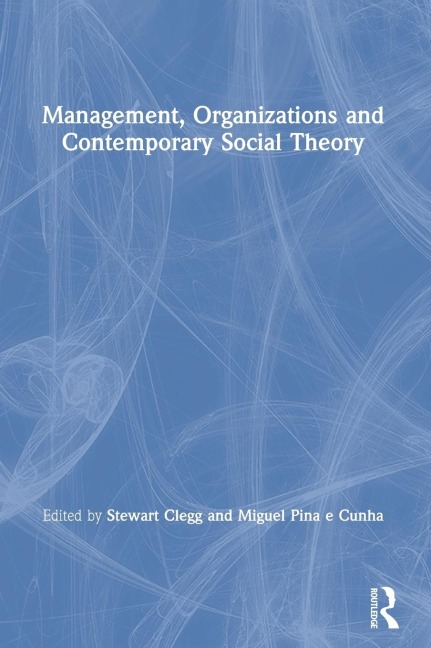

Social theorists speculate about large-scale social questions, asking of any phenomenon, how is it possible? This book addresses how social theories contribute key insights into the nature of organizations and management. Chapters include objectives, reflective questions and a glossary.
Stewart Clegg is Distinguished Professor in Management at UTS Business School and a Visiting Professor at Nova School of Business and Economics, Lisbon, Portugal. The central focus of his theoretical work has always been on power relations, enabling him to write on many diverse and ubiquitous topics - as power relations are everywhere. He is the co-author of two widely used textbooks and a prolific contributor to leading journals in the fields of organization studies, political power and management. Miguel Pina e Cunha is the Fundação Amélia de Mello Professor of Leadership and a member of the Leadership for Impact Center at Nova School of Business and Economics, Lisbon, Portugal. His research deals with the surprising (paradox, improvisation, serendipity, zemblanity, vicious circles) and the extreme (positive organizing, genocide). He recently co-authored Positive Organizational Behavior (Routledge, 2019).
List of contributors. 1. Management, organizations and contemporary social theory. 2. Harold Garfinkel and ethnomethodology. 3. Actor-Network Theory: Michel Callon, Bruno Latour, John Law. 4. Anthony Giddens and structuration theory. 5. Morphogenesis and reflexivity: Margaret Archer, critical realism and organizational analysis. 6. Pierre Bourdieu and Elites: making the hidden visible. 7. Theodore Schatzki's practice theory and its implications for organization studies. 8. Mary Douglas and institutions. 9. Norbert Elias and organizational analysis: towards process-figurational theory. 10. Niklas Luhmann and organizations as social systems. 11. Organizing Michel Foucault: power, knowledge and governmentality. 12. The Frankfurt School and critical theory. 13. Judith Butler and performativity. 14. Manuel Castells and informationalism. 15. Liquefying modernity: Zygmunt Bauman as organization theorist. 16. Management, organizations and contemporary social theory: an index of possibilities. Index.