Und dann auf "Zum Home-Bildschirm [+]".

Stöbern
genialokal zum Startbildschirm hinzufügen
Installieren Sie die genialokal App auf Ihrem Startbildschirm für einen schnellen Zugriff und eine komfortable Nutzung.
Installieren Sie die genialokal App auf Ihrem Startbildschirm für einen schnellen Zugriff und eine komfortable Nutzung.
Ihr gewünschter Artikel ist in 0 Buchhandlungen vorrätig - wählen Sie hier eine Buchhandlung in Ihrer Nähe aus:

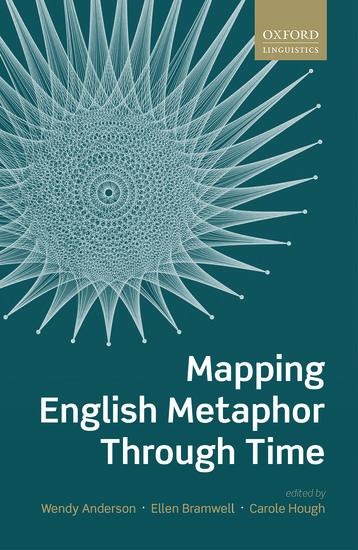
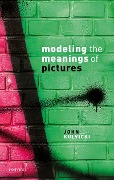
This volume offers an empirical and diachronic investigation of the foundations and nature of metaphor in English, based on evidence from The Historical Thesaurus of English. It offers case studies of a number of semantic domains and provides a significant step forward in the data-driven understanding of metaphor.
Wendy Anderson is Senior Lecturer in English Language at the University of Glasgow. Her research and teaching interests include semantics, metaphor, corpus linguistics, collocation and phraseology, and intercultural language education. She was Principal Investigator for the AHRC-funded project 'Mapping Metaphor with the Historical Thesaurus' (2012-2015), which sought to trace metaphor throughout the history of English, and the follow-on project 'Metaphor in the Curriculum' (2015-2016), which created materials on metaphor for use in secondary education. She is the author, with John Corbett, of Exploring English with Online Corpora (Palgrave MacMillan, 2009).
Ellen Bramwell is a Research Associate working on metaphor and education at the University of Glasgow. She was Research Associate on the 'Mapping Metaphor with the Historical Thesaurus' project and the follow-on project 'Metaphor in the Curriculum', and previously worked on the Historical Thesaurus of English (published as the Historical Thesaurus of the Oxford English Dictionary) and the 'Scots Words and Place-names' project. In addition to her research interests in digital humanities, semantics, and lexicography, she specializes in onomastics and sociolinguistics, with a particular interest in personal naming systems.
Carole Hough is Professor of Onomastics at the University of Glasgow, where she has taught for over 20 years. She is a historical linguist who specializes in name studies, Old English, and historical semantics. She has published widely in these and other fields. Her most recent book is 'An Ald Reht': Essays on Anglo-Saxon Law (2014), and her most recent edited volume is The Oxford Handbook of Names and Naming (2016). She has served as President of the International Council of Onomastic Sciences and President of the International Society of Anglo-Saxonists, and is currently Vice-President of the Society for Name Studies in Britain and Ireland.
List of figures
List of tables
List of abbreviations
List of contributors
Preface: Mapping Metaphor with the Historical Thesaurus
1: Andrew Prescott: Introduction: The pursuit of metaphors
Part I: The External World
2: Carole Hough: The metaphorical landscape
3: Judith Paterson: Metaphorical beasts in the history of English
4: Carole P. Biggam: Plants as metaphorical headgear in English
5: Christian Kay: Food as a fruitful source of metaphor
6: Beth Ralston: Metaphors of death in the Historical Thesaurus of English
Part II: The Mental World
7: Rachael Hamilton: The metaphorical qualities of cool, clear, and clashing colours
8: Wendy Anderson: Waves of excitement, waves of metaphor
9: Kenneth Austin: Metaphors of religious anxiety in Early Modern England
10: Ellen Bramwell: Madness, sanity, and metaphor
11: Antonette diPaolo Healey: The importance of Old English head
Part III: The Social World
12: Marc Alexander: The metaphorical understanding of power and authority
13: Fraser Dallachy: The dehumanized thief
14: Daria Izdebska: Metaphors of weapons and armour through time
15: Jane Roberts: Silent reading
16: Irma Taavitsainen: The case of address terms
Appendix: Mapping Metaphor categories
References
Index